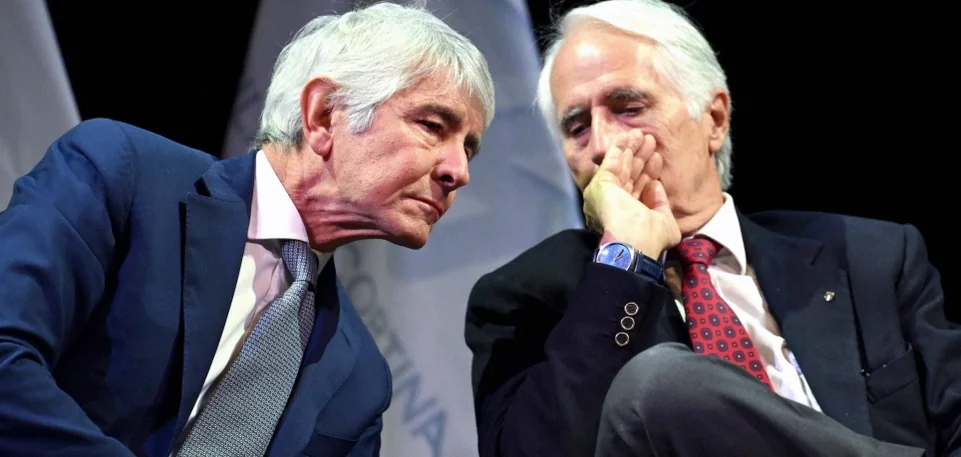
Italian football is trying to rebuild after three World Cups watched from home, yet its latest institutional argument has centred on Giovanni Malagò’s membership card rather than the reforms the game has long said it needs.
Key takeaways
- The dispute involves FIGC president Giovanni Malagò, Sports Minister Andrea Abodi and CONI president Luciano Buonfiglio.
- CONI’s executive body is expected to address the matter on Tuesday, including responsibilities, the seriousness of any breach and possible sanctions.
- Roberto Mancini is working to give Italy a clearer identity on the pitch while football’s institutions remain divided away from it.
- UEFA is not expected to remove the European Championship from Italy over the dispute, although concerns remain over the country’s stadium preparations.
- Malagò is Italy’s only individual member of the IOC and holds relationships built across international sport.
A rebuilding project delayed by institutional conflict
For years, the conversation around Italian football has returned to the same themes: academies, youth development, football schools and patient planning. There were ambitions of a deeper reset after repeated failures to qualify for the World Cup, even dreams of attracting a figure such as Pep Guardiola to reshape the national game.
Instead, the immediate debate has become an argument over paperwork and eligibility. Malagò, elected FIGC president with broad backing at the time, has found himself at the centre of a row over his membership status. Abodi, whose involvement in football matters dates back to the Calciopoli era, and Buonfiglio, once considered close to Malagò before becoming a leading opponent in this procedural battle, are among the principal figures in the contest.
The relevant sporting bodies must decide where authority lies, whether any rule has been broken, how serious any violation might be and whether a penalty would be proportionate. Those are legitimate questions. The wider concern is that Italian football has allowed an administrative dispute to dominate a moment when its energy should be directed towards recovery.
The national side needs coherence and progress under Mancini. Its governing landscape, however, has projected something very different: rival positions, legal appeals, competing interpretations of regulations and a lack of common direction. In a country seeking to restore sporting credibility, each day spent on internal conflict is a day not spent on the long-term work of reconstruction.
International standing and the cost of lost time
There is no suggestion that UEFA, led by Aleksander Ceferin, will strip Italy of hosting duties for the European Championship because of this episode. Yet the country still has to establish which five stadiums will meet the required standard, and public institutional conflict hardly strengthens the image of a host nation preparing for a major tournament.
The dispute also reaches beyond domestic football. Malagò is Italy’s only IOC member appointed in an individual capacity, with a network developed over years among senior figures in world sport. That does not place him above sporting rules. It does, however, underline how quickly a country can lose influence in international institutions and how slowly that influence can be rebuilt.
Italy has an interest in protecting its relationships with UEFA, FIFA and the IOC if it wants to remain a credible host for major sporting occasions. All three bodies attach importance to the autonomy of sport. That principle does not exempt sporting organisations from national law, nor does it deny government the right to exercise its powers. But any impression of political interference immediately draws attention in Nyon, Zurich and Lausanne.
Tuesday’s CONI meeting may establish who has the stronger legal or procedural case. The more consequential question is what remains afterwards. Italian football, already marked by three missed World Cups, cannot afford another period in which internal battles take priority over the work required to move the game forward.