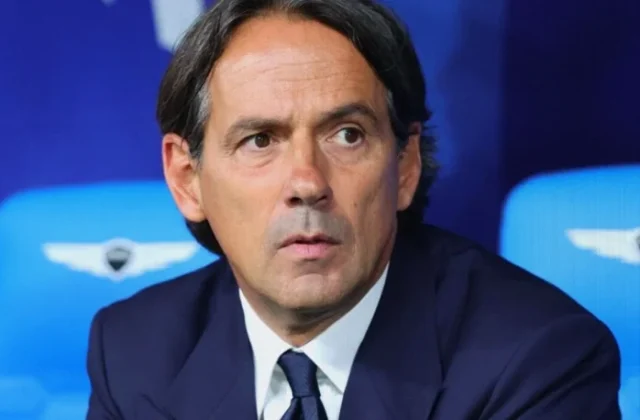
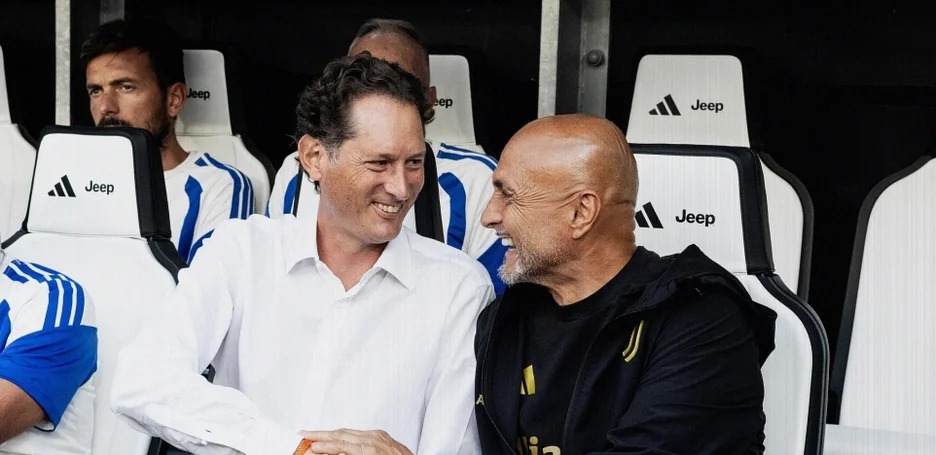
Juventus are preparing a €250 million capital increase designed to do more than cover immediate losses. The club’s ownership is backing a longer route back towards sporting competitiveness, regular Champions League football and financial balance, with investment capacity expected to be spread across the squad, the brand and potentially the Allianz Stadium.
Key takeaways
- Juventus expect only €112 million to €125 million of the €250 million increase to be required for projected losses across 2026-27 and 2027-28.
- Exor will provide an immediate €60 million advance and has committed to underwriting its 65.4% share, worth €164 million, as well as any unsubscribed portion.
- The full recapitalisation is scheduled to be completed by December.
- At least €100 million could be available over time for strategic development, including the playing squad.
- Juventus remain bound by UEFA and FIGC cost-control rules, alongside the additional conditions of their settlement agreement with UEFA.
A financial plan tied to the Champions League
The club’s own projections indicate that around 45% to 50% of the delegated capital increase will be needed to reinforce the balance sheet over the current and following financial year. Those forecasts are based on sporting results over the 2026-27 to 2028-29 period returning to levels seen before the season just ended.
The remaining funds have a broader purpose. Juventus intend to support sporting objectives while progressively improving their economic and financial position, developing key property assets where appropriate and strengthening the club’s commercial identity.
For John Elkann and Exor, the central football objective is a return to the Champions League. It is viewed as essential to restoring a sustainable financial model. Juventus recorded losses of €66 million in 2025-26, while a Europa League campaign is expected to bring €50 million to €70 million less revenue than Champions League participation and should result in another substantial deficit.
The target for financial equilibrium is 2029. That timetable does not mean unrestricted spending, even with a financially strong ownership group behind the club. Juventus must continue to operate within the cost controls imposed by domestic and European authorities, and their agreement with UEFA adds further limits to the room available for manoeuvre.
Chief executive Giovanni Carnevali and the club’s management therefore have to make investment decisions with their accounting impact in mind. The advantage is that Juventus have an ownership structure willing and able to support the project, while expecting the team to re-establish itself among Serie A’s leading sides.
Recruitment, departures and stadium opportunities
Juventus have already been reducing their underlying costs. Operating expenditure fell by €42 million in 2025-26, including an €11 million reduction in registered-player wages. That work sits alongside significant activity in the market: acquisitions worth €216 million in 2024-25 created a negative net financial impact of €100 million, followed by €71 million in 2025-26 from €132 million of purchases and a further €94 million this summer, when arrivals totalled €109 million.
The club’s approach is not based on a fixed transfer budget. The eventual scale of future recruitment will depend on sales, wages, amortisation and the way individual deals affect the annual accounts. Players leaving can create further room; Teun Koopmeiners, for example, currently carries an annual accounting cost of €17 million.
The change at centre-forward offers an example of the intended calculation. Kolo Muani’s transfer fee was €42 million, yet his combined salary and amortisation cost is lower than the burden previously associated with Dusan Vlahovic, whose contract was not renewed. In accounting terms, Juventus regard the switch as a positive balance at the position, leaving greater scope to shape the squad responsibly.
The extra resources from the capital increase should not be read as a fund reserved for the January window. They form part of a wider plan that may also include investment away from the pitch. Small-scale works at the Allianz Stadium are the most likely infrastructure option after summer changes made for concerts. Juventus are considering improvements to services and, if feasible, an expanded hospitality offering, with the aim of lifting matchday income that has already reached record levels in league fixtures.
Several architecture practices have been sounded out in recent months. The next decision is whether one of those ideas can become part of a longer Juventus rebuild: one measured not by a single market, but by the club’s ability to reconnect results, revenue and stability over the seasons ahead.