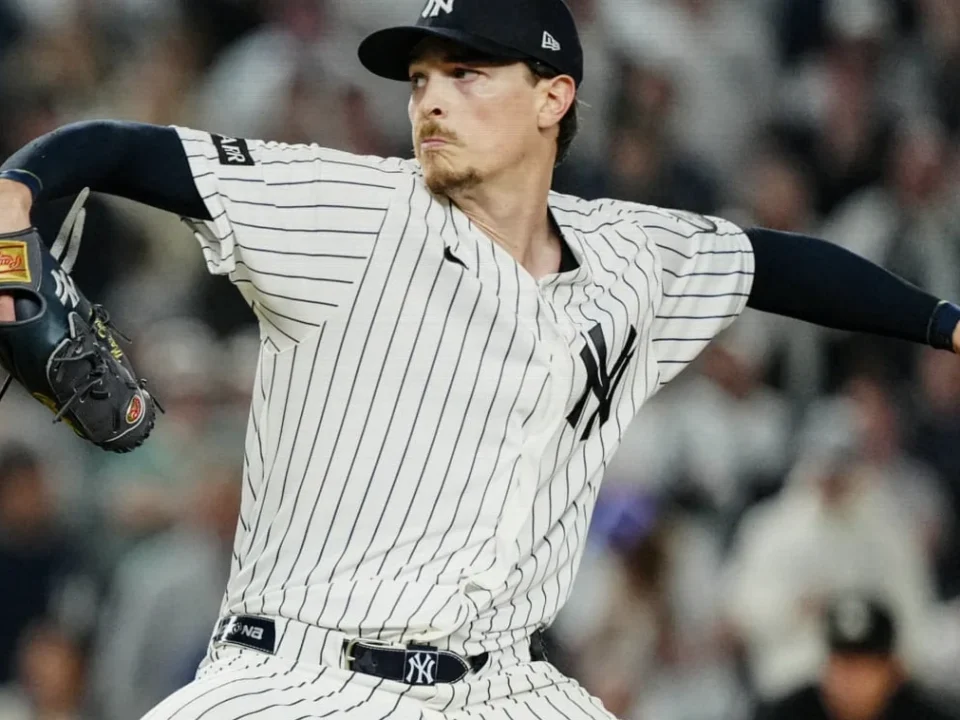
Max Fried gave the Yankees exactly the October start they had been waiting to see from a rotation that finally has its principal arms healthy at the same time. New York finished off Boston with a 9-2 win in Game 2 of the American League Wild Card Series, and Fried’s six steady innings cleared the way for an ALDS meeting with the Rays.
Key takeaways
- Fried permitted one run on three hits over six innings, walking one and striking out six.
- The Yankees completed the Wild Card Series sweep after a 9-0 Game 1 victory and Wednesday’s 9-2 clincher.
- New York’s starter used 98 pitches, featuring his sweeper 25 times.
- Luis García Jr.’s fourth-inning solo homer sparked the Yankees’ offense.
- Will Warren covered innings in relief, allowing the club to keep its late-inning relievers rested.
- The Yankees will carry a fully healthy group of Cam Schlittler, Fried, Gerrit Cole and Carlos Rodón into the next round.
Fried settles after a demanding opening frame
The sold-out Yankee Stadium crowd of 49,004 had reason to appreciate the first out of the night. Fried struck out leadoff hitter Jahmai Jones on a four-seam fastball at the bottom of the zone, but the at-bat lasted six pitches and hinted at the work required in the opening inning. Fried needed 21 pitches to get through it.
He did not have his cleanest command immediately, yet he avoided the sort of free baserunners that can turn a postseason inning sideways. Fried said his priority was to attack Boston rather than let an uncertain start create trouble, and he found his rhythm as the game moved along.
The lone run against him came in the sixth, when Willson Contreras drove an opposite-field home run that just carried the right-center-field wall. Otherwise, Boston had little to show for its contact. The Red Sox produced an average exit velocity of 85.3 mph against Fried, nearly matching the 85.9 mph mark he posted during the regular season, a figure that ranked in the 96th percentile across the Majors.
Fried’s work also offered a cleaner postseason memory after his difficult Game 2 appearance against Toronto in the 2025 AL Division Series. The victory moved him to 3-6 in 24 career playoff appearances.
A deeper pitching menu and a rested bullpen
Fried and catcher Austin Wells came in prepared to show Boston the full range of the left-hander’s arsenal. The sweeper became his most frequent offering, appearing 25 times, while the cutter and four-seam fastball were each thrown 23 times. Those three pitches accounted for all nine whiffs Fried recorded.
His curveball, changeup and sinker filled out the plan. Wells said the objective was to throw all six pitches for strikes, change speeds and shapes, and work deep enough into the game to keep zeros on the board. Once the Yankees built their lead, the approach became especially valuable.
Fried’s six innings gave New York room to use converted starter Will Warren for length rather than push its high-leverage bullpen arms into a stressful game. That matters with the Rays next on the schedule, particularly after the Yankees spent much of the regular season trying to get their projected front four aligned.
Fried, Rodón and Ryan Weathers all spent time on the injured list, while Cole did not make his 2026 debut until several months into the season. Even so, the Yankees remained among the Major League leaders in opponent batting average and WHIP, and their 3.30 rotation ERA led the Majors. By late August, Schlittler, Fried, Cole and Rodón were all available together.
Schlittler opened the Wild Card Series by blanking Boston for 6 1/3 innings with 10 strikeouts. Fried followed with another composed performance, reinforcing the confidence around a staff built around Cole’s track record, the acquisitions of Fried and Rodón, and Schlittler’s rise.
Fried said the group is well positioned and properly lined up for the coming series. The expectation, he said, is simple: whichever starter gets the ball must keep the Yankees in the game long enough for the lineup to do its part, whether that requires a long 100-pitch effort or a shorter assignment. For a staff that spent much of the season waiting for the right timing, October has finally brought the full picture into view.