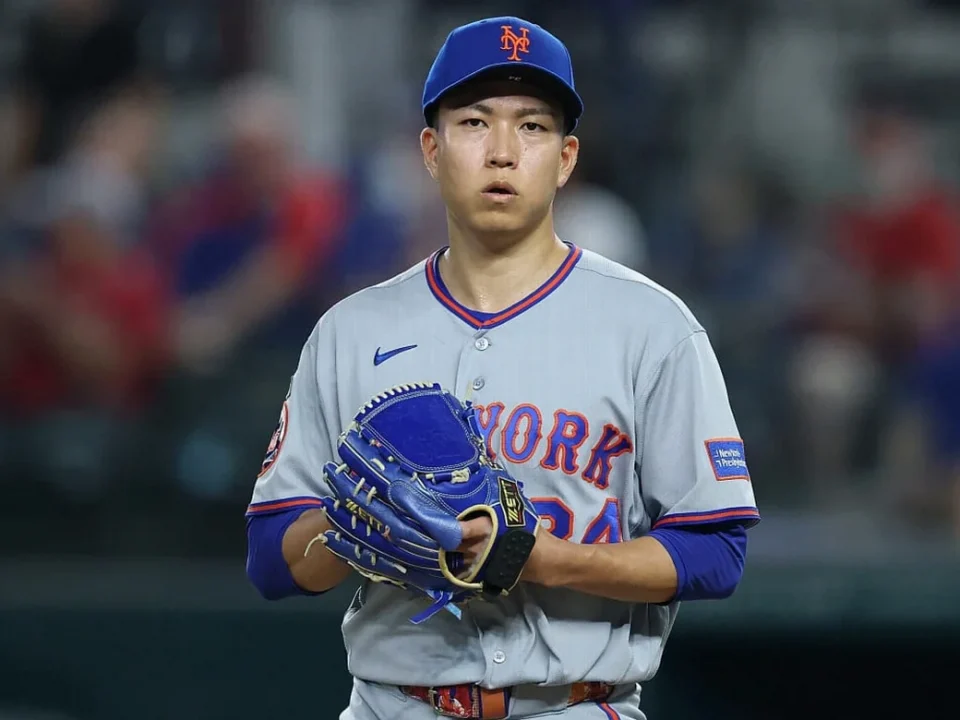
Kodai Senga is set for one more outing on Sunday in Washington, then comes an offseason that may shape the rest of his Mets tenure. He has found a measure of traction in relief over the last two months, but the role he wants and the role New York may need from him in 2027 remain two different things.
A bullpen answer with a rotation question behind it
Senga’s move into leverage work has produced useful results. In 16 2/3 relief innings, he has posted a 3.78 ERA and struck out 22 hitters. His stuff has looked sharper in shorter bursts, giving the Mets another late-game option alongside closer Devin Williams.
Williams has been impressed by the package: triple-digit velocity and a forkball capable of putting hitters away. He said Senga has been “punching tickets,” adding that there is little else a bullpen could ask from a high-leverage arm.
The closer would welcome Senga as part of the late-inning group in 2027. Williams, who remains under contract for two more seasons, called him a potentially excellent high-leverage reliever while acknowledging that Senga’s own preference is another matter.
That preference has been consistent. Senga signed with the Mets to start, and he continues to view himself as a starter. Manager Andy Green said the right-hander has made that feeling clear throughout the season.
How Senga’s role shifted
- Senga arrived as a starter and made an immediate mark in 2023, finishing with a 2.98 ERA and earning an National League All-Star selection.
- Green still points to that rookie season as evidence of Senga’s ceiling, saying his production then stood apart from the rest of the club’s pitching options.
- At the beginning of August, Senga became a full-time reliever, a change that simplified his attack.
- His four-seam fastball and forkball have become much bigger parts of his mix, while usage of his other five pitches has fallen. Those secondary offerings have rated well below average by Stuff+.
- That more direct approach has helped the Mets learn what Senga can provide in a bullpen, even as his long-term assignment remains unsettled.
Green said the club now has a clearer idea of Senga’s relief value. But he also stressed that the winter roster picture has not been completed, with free agency and other offseason moves still ahead.
A crowded path back to the rotation
The Mets have watched several young starters emerge this year, making it unlikely that Senga will arrive in Spring Training holding one of the top five rotation jobs. Nolan McLean, Christian Scott, Zac Thornton, Jonah Tong and Sean Manaea are among the internal candidates, and the club could add starters from outside the organization.
New York could choose to keep Senga stretched out as rotation insurance rather than use him for one inning at a time. That route could involve additional work at Triple-A Syracuse, however, and it is not certain that Senga would accept such an arrangement.
The other option is to retain him in the bullpen and build a late-game bridge toward Williams. Green said the organization will place Senga wherever he best fits the roster, rather than promise a role before the offseason plays out.
Senga’s final season under contract also raises the possibility of another winter filled with trade talk. He has one year and $15 million remaining on his deal. His success in relief, combined with that manageable commitment, could make him a more appealing trade piece than he has been since the early part of 2024.
Senga plans to reset in Japan
The pitcher said his destination and assignment are decisions beyond his control. His responsibility, he said, is to improve himself enough to perform in any job the club gives him.
After the season, Senga plans to return to Japan and work with his personal pitching instructor. The goal is to revisit how his body moves and how he can best repeat his delivery. He believes the All-Star version of himself from 2023 is still there.
He has also learned the demands of relief work firsthand. A reliever has to prepare every day, be available every day and handle a different kind of pressure than a starter does. Senga called that routine difficult, particularly in a league with so little margin for error.
Still, his preference has not changed. The Mets may see a valuable bullpen weapon, a depth starter or a trade asset. Senga continues to see a starter trying to find his way back to the form that first made him one of the most distinctive arms in the National League.