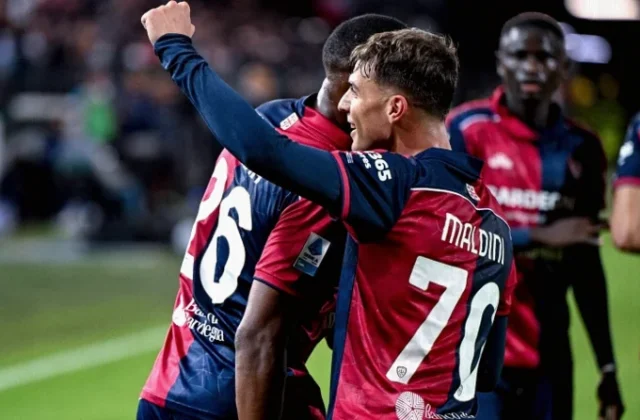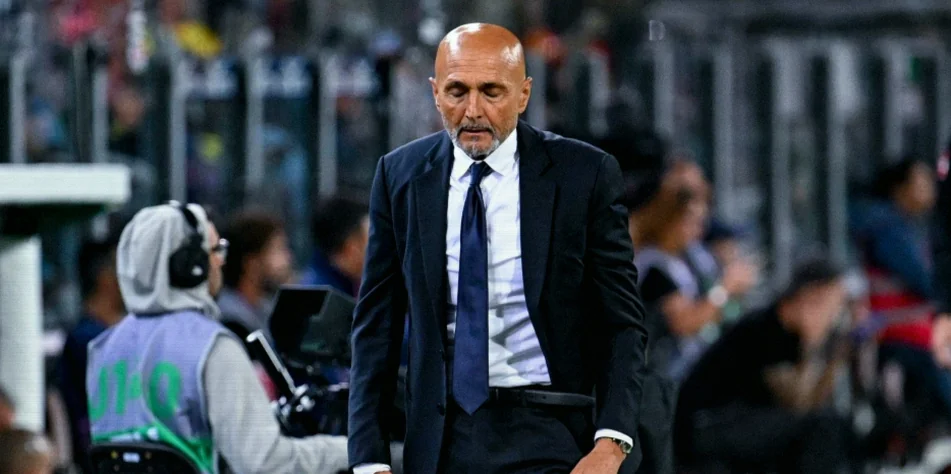
Juventus left Cagliari with a point, but not with the sense of a side that has solved its early-season problems. Kolo Muani’s late header rescued a 1-1 draw after Daniel Maldini had put the hosts ahead, yet the result left Luciano Spalletti’s team five points behind Inter after six rounds and still searching for a more convincing route through matches that become crowded around the opposition penalty area.
Key takeaways
- Kolo Muani equalised in the 81st minute, arriving ahead of Adam Obert to meet Alajbegovic’s cross.
- Cagliari remained fourth despite being denied a victory they had appeared close to protecting.
- Juventus finished with 73% possession and nearly 900 touches, but struggled to turn territorial control into clear chances.
- Inter benefited from Juventus’ fourth draw of the campaign, following stalemates in Milan, Como and Rome.
- Spalletti and Cagliari coach Fabio Pisacane were both sent off after an angry confrontation at full time.
A familiar problem in a different setting
The trip to Cagliari was supposed to offer Juventus a chance to steady their league season after a long interruption, but their first-half display instead underlined concerns that have followed them since the opening weeks. The side lacked urgency and, more importantly, a coherent collective idea once they had possession.
Spalletti initially selected a three-man defence, only to restore a back four after around half an hour. The extra defender had offered little against Mendy, whose physical presence and runs in behind repeatedly troubled Juventus. Cagliari did not need many openings: their break for Maldini’s goal began with a midfield turnover by Conceiçao and moved quickly through Maldini, Obert and Mendy before returning to Maldini in the area. Deflections involving Bremer and Kalulu helped the ball on, but the finish was still a fine one.
It recalled an uncomfortable pattern from the previous season, when Juventus had generated roughly 20 chances before Mazzitelli scored with Cagliari’s only meaningful effort. This time, Juventus again spent long periods attacking without making the game feel under their control.
Conceiçao endured a difficult afternoon, with a succession of crosses blocked by Cagliari defenders. Douglas Luiz also failed to give the midfield the direction expected of a playmaker, although Sarr covered considerable ground and recovered possession. Nico offered more threat around goal, while Kolo Muani often looked isolated as the central forward.
Cagliari defended their advantage with discipline. Yerry Mina dominated the aerial contest, making Juventus’ repeated high deliveries increasingly predictable against an area occupied by smaller attackers. Romano worked hard from midfield, increasingly operating as a box-to-box presence, while Massolin was less influential than Maldini before Pisacane eventually changed him.
Late changes bring a response, not a resolution
Spalletti’s substitutions gave Juventus the momentum they had lacked. Zhegrova came on to the right and Alajbegovic took up the left-sided role as Juventus shifted into a 4-2-3-1 shape, pinning Cagliari deep with compact defensive lines and Mendy left as the lone outlet.
Zhegrova repeatedly cut inside from the right to shoot across goal, producing five attempts and forcing Elia Caprile into important saves. With Woltemade also introduced, Juventus crowded the box with four attacking players and finally found the movement that had been missing. Alajbegovic, quiet for much of his time on the pitch but decisive at the key moment, delivered an accurate cross from which Kolo Muani headed beyond Caprile.
The Frenchman nearly completed the turnaround soon afterwards, hitting the crossbar from close range when scoring seemed easier. His equaliser nevertheless carried weight, both for Juventus and for a forward who had spent much of the match without support.
Cagliari have shown they can make games difficult for anyone. Before this draw, their only defeat had been a 1-0 loss to Inter, while they had won every other league match. Their response against Juventus was built on the resources available to them: quick transitions, defending their box and a willingness to suffer through the closing stages.
For Juventus, though, the larger question remains. The squad appears better suited to transitions and open space than to breaking down a packed defence. When an early goal does not force opponents to come forward, their attacks too often become a slow circulation of the ball around a crowded area.
The draw may have been rescued, but it did not remove the need for decisions. Juventus need greater imagination in midfield, more runners arriving from deeper positions, and a partner capable of linking play with Kolo Muani. Nico may offer more speed of thought than Douglas Luiz in a creative role, while Woltemade’s arrival alongside the Frenchman showed the value of having another forward to connect attacks. Some answers could come in January, but Spalletti must shape others immediately from the players already at his disposal.