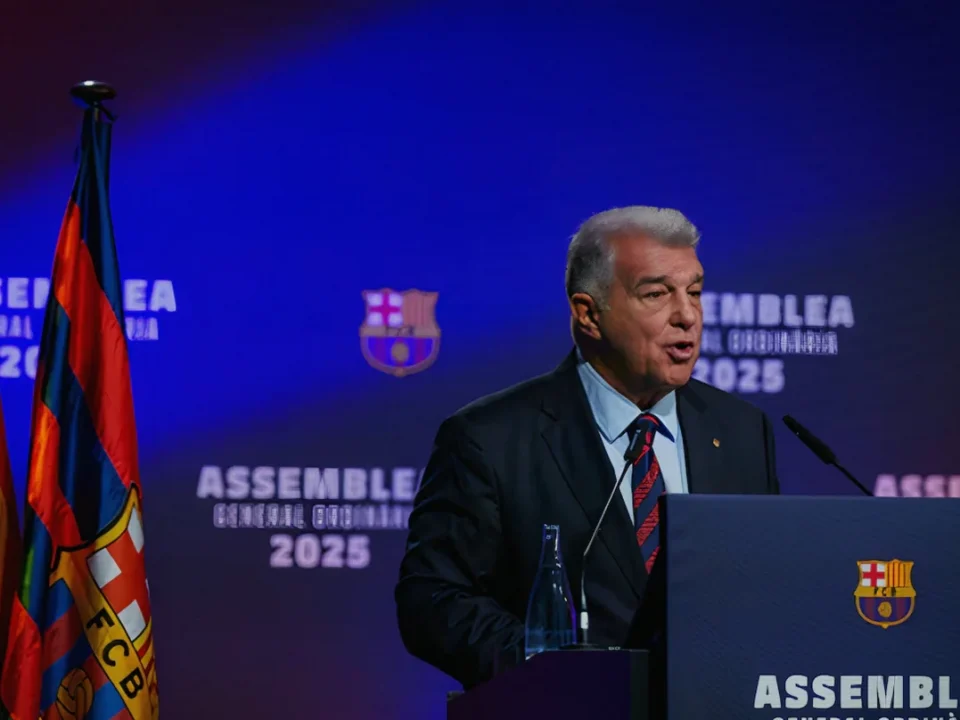
Barcelona’s Champions League ambition is being framed against a wider financial and sporting reset, with president Joan Laporta telling the club’s General Assembly that completing Spotify Camp Nou is central to sustaining a competitive side in Europe.
| Item | Figure or date |
|---|---|
| Existing Espai Barça financing | €1.485 billion |
| Requested additional stadium financing | €300 million |
| Proposed bond issue | €210 million |
| Initial construction interventions | 800 |
| Current intervention total | 3,000 |
| Target revenue | €1.25 billion |
| Works affected from | April 2023 |
Laporta said the first-team blend of academy graduates and new arrivals had created “perfect harmony”, crediting Hansi Flick for his management and sporting director Deco for building the squad. Barcelona want to win the Liga, Copa del Rey, Spanish Super Cup and Champions League, he said, adding that confidence in the group could turn those objectives into reality.
Camp Nou financing put before members
The assembly was asked to approve a further €300 million for the Espai Barça project, as well as authorisation for a €210 million bond issue. Laporta said Palau Blaugrana was not included in the extra €300 million and that separate solutions were being explored for that venue.
The proposed bonds would provide liquidity and help Barcelona remain competitive on the sporting side, Laporta said. Members were also due to vote on the annual accounts and budget, with the president describing the decisions as defining for the club’s next decade.
Barcelona had secured €1.485 billion in financing intended to be repaid from stadium-generated income, but construction delays and higher costs have altered the plan. Laporta said the project had expanded dramatically, from an initial estimate of 800 interventions to 3,000, while the impact of armed conflicts on material prices had added to the overspend.
He insisted that the requested update to Espai Barça funding would neither affect the club’s accounts nor change its sporting policy.
A stadium designed to support European ambitions
Laporta called the completion of Spotify Camp Nou essential to Barcelona’s future growth, describing it as a future focal point for supporters and an unprecedented source of revenue for the club.
He said Barcelona’s commercial income had continued to rise, producing record levels in sponsorship and merchandising. The club had met its financial-balance objectives despite the restrictions imposed by reduced stadium capacity.
Returning to Spotify Camp Nou in November, he said, enabled Barcelona to pass €1 billion in revenue and reverse the income decline experienced while matches were played at the Johan Cruyff Stadium and the Olympic Stadium. The next target is €1.25 billion.
Pressure to keep moving forward
Laporta said Barcelona could not afford complacency and had to keep developing across every department, calling for imagination and courage. He also took a swipe at unnamed rivals, suggesting their problems were resolved through land reclassification.
The president said the club was approaching the future with optimism and argued that the collective effort of recent years had helped Barcelona overcome a period of severe difficulty and restore economic strength.
Barcelona’s wider sporting structure remains part of that message. Laporta pointed to the club’s 50 European titles and called Barça the world’s leading multi-sport institution. He said the handball and futsal teams would continue pursuing success, while the hockey and basketball sections had been strengthened. In basketball’s centenary year, he highlighted changes made alongside Sekulic and the sporting director, and described the women’s team as a global reference point.