Roma’s Champions League night at the Olimpico became a cruel lesson in the margin between a strong collective performance and the depth available to Europe’s richest sides. Gian Piero Gasperini’s team had led Real Madrid 3-1 and twice found the net through Malen, only to concede three times from late corners and fall 4-3 to a Rüdiger winner.
Key takeaways
- Roma lost a 3-1 advantage in the closing stages after Real Madrid scored three goals from corner kicks.
- Malen scored twice for the Giallorossi after Kone and Dybala had left the field.
- Mbappé’s first-half goal gave Real an undeserved 1-1 interval scoreline after Roma had created the clearer openings.
- Mourinho changed the contest by replacing Vinicius with Endrick, while Gasperini’s options steadily diminished.
- Italian clubs took no points from four Champions League matches, conceding 14 goals across two evenings.
Roma’s best football deserved more
For much of the match, Roma looked the more coherent side. Their play carried purpose, their pressing and passing gave them control, and Real often appeared to be relying on isolated moments from their individual stars rather than a connected team display.
The right side of Roma’s attack was particularly productive. Soulé and Wesley repeatedly caused problems for Cucurella and the Madrid back line, with Vinicius offering little defensive protection for his full-back. That imbalance allowed Roma to establish a foothold that should have brought a greater reward before the interval.
Instead, Mbappé struck to make it 1-1 by half-time. It was a sharp reminder of Real’s ability to survive difficult passages through one decisive intervention. Roma had played with personality and created enough to enter the break ahead, yet the score had been reset.
Gasperini’s evening was complicated by events around his squad. Roma spent an hour without their regular midfield unit, while Kone’s eventual departure removed an important source of physical force. Dybala was withdrawn with a muscular problem, Mancini went off after receiving a booking, Soulé could not continue because he was unwell, and Hermoso later made way for Koulierakis.
Those changes were understandable, but each one reduced Roma’s technical and athletic resources. Even so, Malen’s two goals put the home side 3-1 ahead. Real’s approach had often been direct, with Courtois looking to send long passes beyond a midfield that was struggling to generate possession, but Roma had still found enough quality to establish a commanding position.
Real’s bench changed the ending
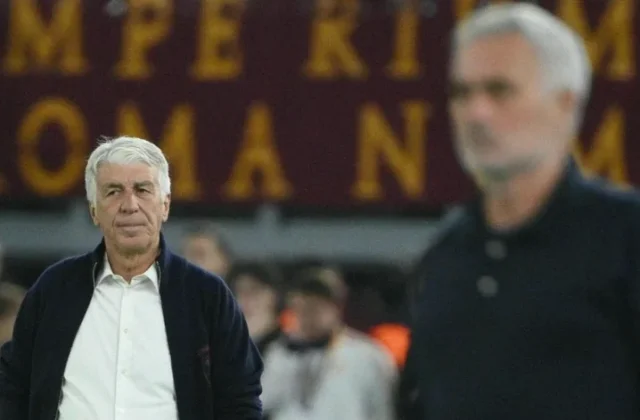
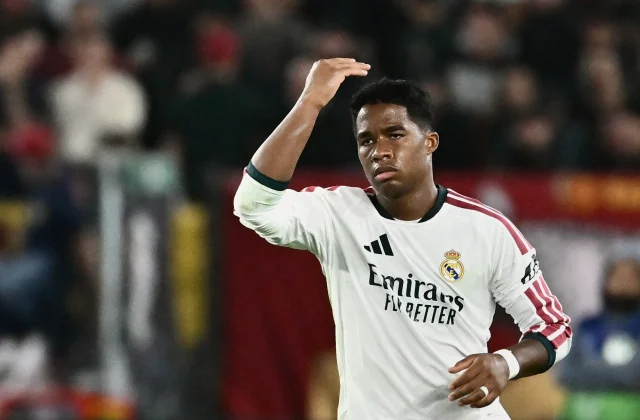
Mourinho’s return to Rome had begun with the Curva Sud’s embrace, but it was threatening to end in defeat. With the situation deteriorating, he turned to the depth on his bench. Vinicius, subdued throughout and unable to influence either end of the pitch, was taken off, and Endrick entered to alter the rhythm of the match.
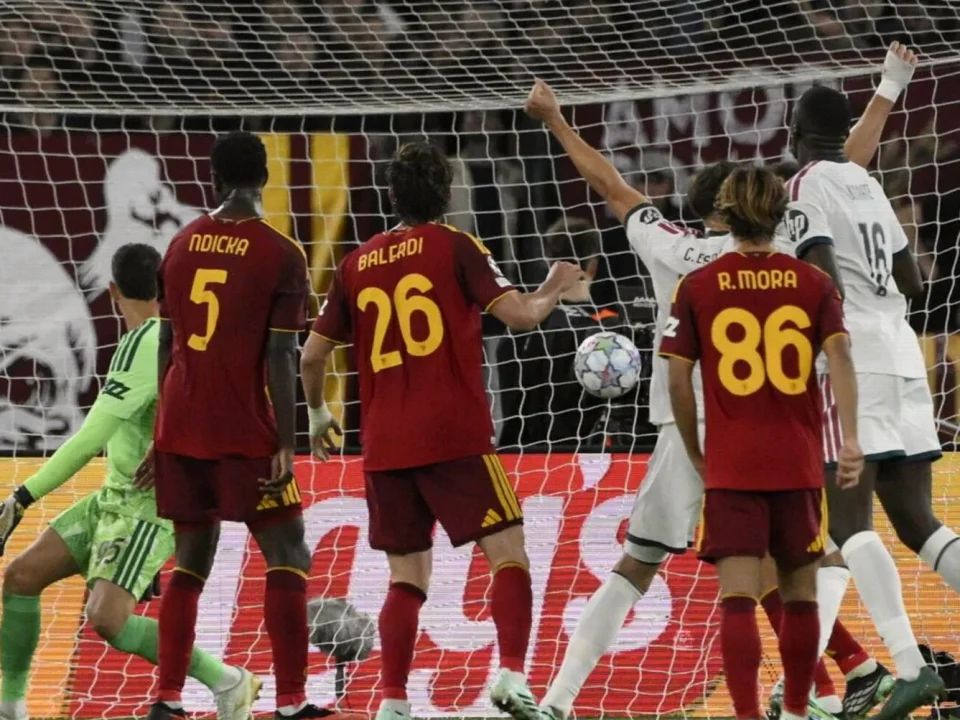
The contrast between the benches became increasingly clear. Roma had lost key players and energy; Real were able to introduce further elite quality. The patterns that had favoured Gasperini’s side earlier in the evening began to reverse as the home team dropped deeper, lost height and physical presence, and struggled to organise themselves at set pieces.
Three Real corners in the final minutes produced three goals. What had been a controlled Roma performance became an extraordinary collapse, with Endrick central to Madrid’s surge and former Roma player Rüdiger delivering the final 4-3 blow.
It was a defeat that will hurt because Roma had shown so much of what Gasperini wants from his team: initiative, combinations, courage and a clear plan. Yet this was also a Champions League chapter shaped by resources. Roma’s collective work brought them to the edge of a memorable victory, but Real’s individual quality and late set-piece strength turned the night upside down.