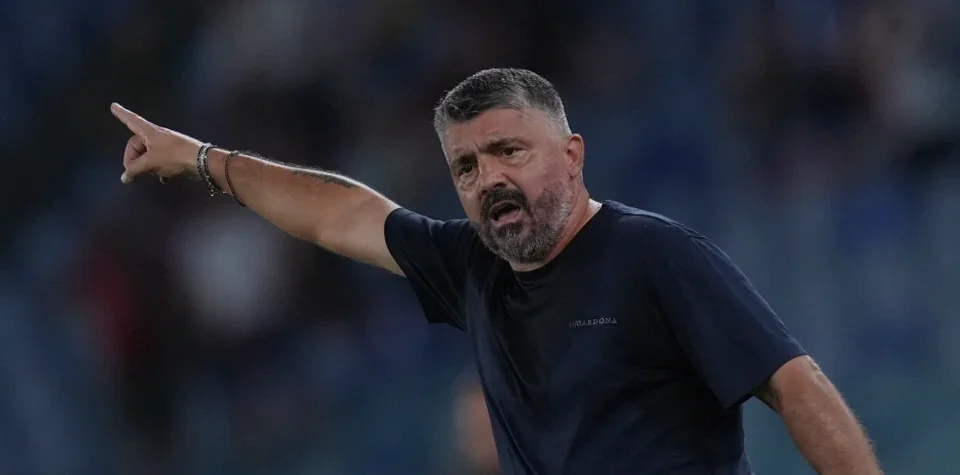
Lazio’s place alongside Inter at the top has turned the opening weeks of the season into a wider question for the club: is this simply a bright start, or the beginning of a genuine push back into Europe? In Rome, the answer is being shaped as much by the board’s planning as by Gennaro Gattuso’s work on the pitch.
The coach and the club
Sporting director Angelo Fabiani has set out the club’s target plainly: Lazio must return to European football. Gattuso has responded more cautiously, asking that his players are not burdened by excessive expectation — a request that also protects the coach from a season being judged too early.
Those positions are not necessarily in conflict. The club has made commitments that make a European place important. Frattesi, Pinamonti and Sutalo arrived through paid loans with compulsory purchases or conditions considered readily achievable, leaving Lazio with significant obligations for June. After two successive seasons outside the international competitions, the financial value of getting back into that circle cannot be ignored.
The summer had carried an atmosphere of mistrust around the club, and the decision to invest can be read as an attempt to give the season a stronger direction. Fabiani’s public call for responsibility and full commitment therefore reflected more than optimism: it was a statement of what Lazio need from this campaign.
Gattuso and his squad have supplied the most persuasive response. Their Coppa Italia elimination against Mantova brought sporting disappointment as well as another financial setback, but the league form that followed has been outstanding. Lazio have collected five victories and one draw from six Serie A matches, the best start of its kind in the club’s history.
A team with a recognisable idea
The results have not come only through resilience and sacrifice. Lazio are averaging close to two goals per game and have offered football that has been both productive and enjoyable. With one exception — Tavares scoring from outside the box against Monza — every goal has been completed inside the opposition area after a constructed attacking move.
That pattern points to a side working from clear instructions. Lazio have played with direct, well-defined attacking routes and have found the final player in the penalty area rather than relying on individual improvisation.
The fixture list has been manageable apart from the meeting with Milan, and that should remain part of any assessment. Yet a favourable schedule does not diminish what Lazio have done with it. A team cannot choose its opening opponents, and Gattuso’s side have taken the points with authority.
The value of a clear week
Lazio’s absence from Europe is not a source of pride, but it may become a major advantage across the season. With no continental commitments, Gattuso can prepare exclusively for Serie A while rivals divide their energy between competitions.
The next test illustrates the point. Lazio meet Juventus on Sunday, only 72 hours after Juventus travel to face Celta Vigo. It is impossible to measure in advance how much that journey will affect the Turin side, but the difference in preparation is a factor that will return repeatedly over the campaign.
Lazio must also continue in a difficult home environment, with much of their usual support absent amid the continuing dispute involving the ownership. That issue remains a complication even during a period when the team’s football has given the season fresh momentum.
Europe before predictions
It is too early to define a final ceiling for Lazio. Napoli, Roma, Como, Milan, Juventus and Atalanta began the season with declared ambitions of their own, and the established contenders will expect to occupy the European places.
For Lazio, Europe is the credible objective: taking at least one place from those more conventional favourites and remaining ready should one or more sides above them fall short. The table has opened a door, the club has explained why it matters, and Gattuso has given his team a platform from which to pursue it.