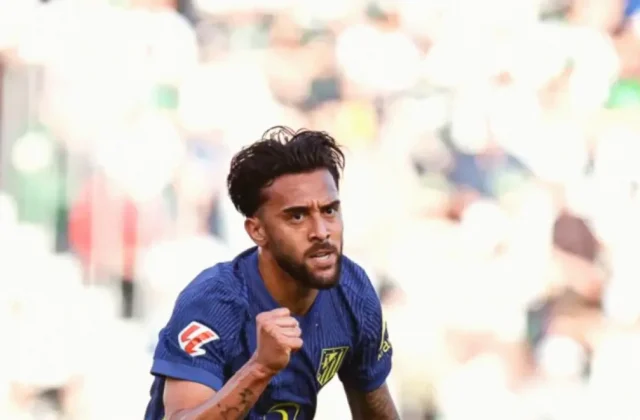
M’Baye Niang’s return to Dunkerque in Ligue 2 opens another chapter in a career that has repeatedly crossed Italy without ever settling into the shape once imagined for him. At 32, the forward is with the 16th club of a nomadic senior career, after spells in France, Italy, England, Saudi Arabia, Turkey and Morocco. Talent has never been the disputed part of the story; continuity, discipline and the ability to turn promise into a lasting body of work have been harder to find.
The coach and the club
Italian football first met Niang as an extraordinary prospect. Milan brought him from Caen in December 2012, when he was 18, with Adriano Galliani accompanying him on a private jet. The comparisons arrived quickly and extravagantly: Thierry Henry, Zlatan Ibrahimovic and Didier Drogba were all invoked. Niang possessed elements that encouraged such talk — an elegant touch, physical confidence and pace and power — but the distance between a gifted teenager and those three established champions was always immense.
His defining Milan image may remain the Champions League last-16 tie at Camp Nou in March 2013. Barcelona led 1-0 when Niang struck the post. He was 19 and, for a moment, appeared close to changing both the match and the direction of his own rise. Years later, he reflected that the miss may have altered his career.
There were nevertheless important Italian contributions. Niang wore the shirts of Milan, Genoa, Torino, Empoli and Sampdoria, with his final Empoli spell producing a particularly meaningful conclusion. His goals during the spring of 2024 were decisive in keeping Empoli in Serie A, a reminder that even after years of interrupted momentum he could still make an impact when a club needed it most.
- In December 2012, Milan signed Niang from Caen as one of Europe’s most watched young forwards.
- In March 2013, he hit the post against Barcelona in the Champions League at Camp Nou.
- During spring 2024, his goals helped Empoli secure Serie A survival.
A difficult record beyond the pitch
Niang’s football has often been accompanied by episodes that strained the patience of clubs and coaches. As a teenager, he received an 18-month suspended sentence after driving without a licence, crashing a Ferrari and leaving the scene. When stopped, he claimed to be teammate Traorè rather than himself.
At Empoli, another early-morning car incident caused further embarrassment. The club said he had been returning at 6.30am from a prayer meeting after an SUV damaged a parked vehicle.
There were also repeated disciplinary problems during international duty. While with France’s Under-21 squad at Le Havre, Niang and three teammates left the training camp by taxi for a night in Paris. The outing became public after photographs appeared on his Facebook account.
Milan experienced the same volatility. During a match against Crotone at San Siro under Vincenzo Montella, Niang took the ball from Gianluca Lapadula, who had been preparing to take a penalty. Niang insisted on the kick, but his effort was saved. He later drew criticism for sharing on social media a supporter’s insulting message aimed at then-Milan coach Massimiliano Allegri.
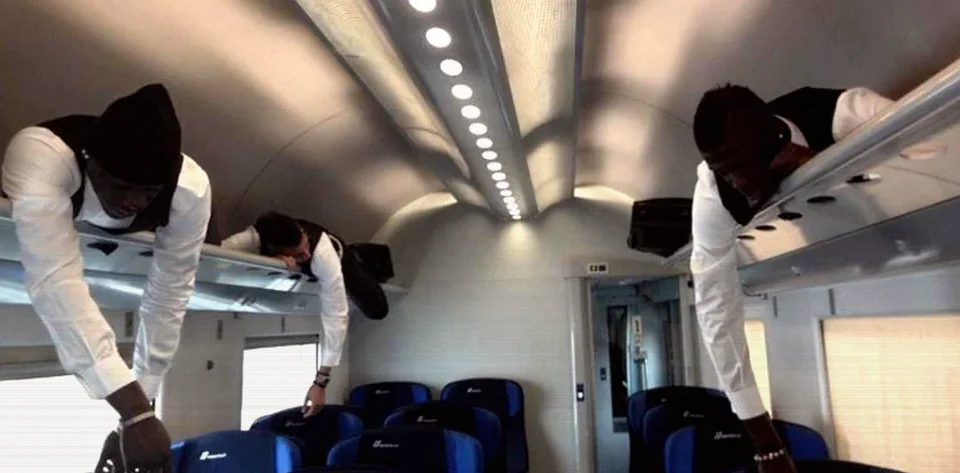
Other episodes added to an image that was difficult for any dressing room or board to manage: a social-media photograph with Mario Balotelli and Stephan El Shaarawy during a Milan train journey, and a “balconing” incident while he was at home recovering from injury. His private life also became the subject of public controversy following comments made by Guendalina Rodriguez.
What remains of the promise
Niang’s career cannot be reduced to its disorder. He was a genuine phenomenon at 16 in Caen, and the footballing qualities that persuaded Milan to act so early did not disappear. Yet each new setting seemed to offer another fresh start rather than a foundation. Clubs across several countries gave him opportunities; few became a long-term home.
Dunkerque now represents another attempt to make the next part less about recovery from the previous one. For Italian football, he remains a player associated with one of the great unanswered questions of the past decade: what might have happened if the striker who arrived at Milan amid comparisons with Henry, Ibrahimovic and Drogba had found the steadiness to match his ability.
His decisive work for Empoli in 2024 showed that a career can still contain useful, important pages after many false starts. The question at Dunkerque is no longer whether Niang can make mistakes — the record is already clear — but whether he can finally make a sustained contribution worthy of the talent that brought him to Serie A in the first place.