Manchester City’s long-running financial case has moved from the back rooms of English football into a moment of consequence for the whole European game. An independent Premier League commission has found the club guilty on 114 of 115 alleged breaches connected to financial reporting between 2009 and 2018, leaving sanctions, an appeal and potential claims from domestic rivals still to be resolved.
Key takeaways
- The findings concern alleged efforts to disguise the scale of City’s spending and income under the league’s profitability and sustainability framework.
- The commission identified off-book payment arrangements involving players and former manager Roberto Mancini.
- It also concluded that much of the club’s declared commercial income was funded indirectly by ownership interests.
- City is preparing its response to the ruling, meaning the disciplinary process is unlikely to end quickly.
- Possible consequences range from substantial fines and points deductions to compensation cases brought by clubs claiming sporting losses.
The accounting questions at the centre of the case
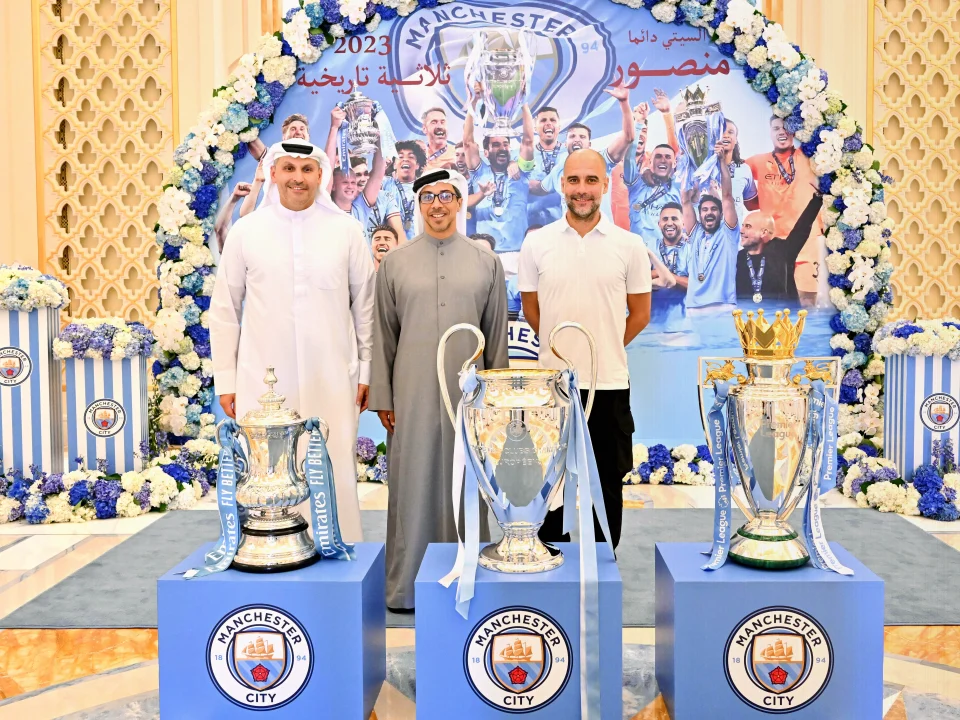
The allegations first emerged from Football Leaks material published in November 2018. England’s investigation began the following year, although City were not formally charged until February 2023. The eventual verdict arrives after a period in which the club collected five league titles, seven domestic cups and the 2022-23 Champions League.
At the heart of the commission’s conclusions were two recurring methods. The first concerned payments said to have been made beyond the club’s recorded accounts. Offshore companies, arrangements involving other clubs and contracts judged to lack genuine commercial substance were allegedly used to supplement remuneration for players and Mancini, while reducing the losses shown in official financial statements.
Such reporting would have given City greater room under financial controls to recruit players and present a smaller wage burden than the true one, the commission found.
The larger issue was a series of advertising and sponsorship agreements described as a disguised funding operation. City reported £949.94 million in commercial revenue across the 2009-18 period, but the commission concluded that only £119.25 million was genuinely earned from the partner companies. It placed the difference at £830.69 million, suggesting that less than 13% of the declared total came from the contracts themselves.
The finding is that the balance was covertly supplied by the Abu Dhabi United Group, the club’s ownership vehicle. Recording that money as commercial income, rather than a direct owner contribution, would have changed its treatment under the financial rules.
Abu Dhabi United Group is presented as the private business of Sheikh Mansour bin Zayed Al Nahyan, the United Arab Emirates’ deputy prime minister and a member of Abu Dhabi’s ruling family. City’s ownership is not formally designated as a state holding in the way that Paris Saint-Germain is linked to Qatar’s sovereign wealth structure.
Yet state-connected Emirati companies have been closely associated with City since the 2008 takeover. Etihad Airways holds the shirt sponsorship and stadium naming rights, while Etisalat, Ohana Development and Aldar Properties have also been linked to the club. City’s anticipated argument is that the major sums came from those companies rather than from its owner, with sponsorship valuation inherently difficult to define through an objective benchmark.
The case echoes an earlier European dispute. UEFA imposed a two-season ban from its competitions and a €30 million fine in February 2020 for Financial Fair Play breaches. Five months later, the Court of Arbitration for Sport removed the exclusion, ruling that some allegations had not been established and that others fell outside the relevant time limits.
Sanctions, rival claims and a wider political setting
No final sporting punishment has yet been set in the Premier League case. Heavy financial penalties and a points deduction, potentially severe enough to bring relegation into view, remain among the possibilities. Everton and Nottingham Forest have recently lost points for breaches involving comparable regulations, albeit on a far smaller scale.
There could also be financial ramifications beyond City’s own sanction. Burnley, relegated in 2022, has argued that Everton’s breach created an unfair sporting benefit which contributed to its demotion and financial damage. The relevant commission accepted that the argument deserved consideration, though it has not delivered a final judgment on that claim.
For City’s competitors, the stakes would be wider still. A multi-season advantage could be argued to have affected league positions, Champions League qualification and trophy outcomes. Liverpool, Manchester United, Arsenal and Tottenham have previously been reported to be considering compensation claims of at least £100 million.
The affair also sits in a sensitive relationship between Britain and the Gulf. The United Arab Emirates is the United Kingdom’s largest trade partner in the Middle East, with investment in Britain estimated at £30 billion, and it is a major purchaser of British-made weapons. Those ties have become more delicate amid Iranian attacks affecting the UAE during the Middle East war and economic pressures in Britain following Brexit.
Manchester’s own political and urban landscape adds another dimension. Prime Minister Andy Burnham built much of his political profile during his period as mayor of Manchester, when Gulf-backed regeneration projects played a prominent role. He is also known as an Everton supporter and has championed supporter protections and football regulation, including the recently created Independent Football Regulator.
That leaves the City proceedings as more than a contest over balance sheets. Any perceived effort to soften the consequences could carry political costs for Burnham and the Labour Party, while an uncompromising outcome risks discomfort with an important international partner. For the Premier League, the eventual punishment—or absence of one—will be read across European football as a measure of whether financial regulation can operate credibly against its most powerful clubs.