In South Bermondsey, a short walk from the railway lines and the memory of Cold Blow Lane, Millwall and West Ham United met again in a derby that carries far more than points. Their 2-2 draw at The Den marked the first renewal of the fixture in 14 years, with the old London hostility contained inside a heavily policed but largely peaceful afternoon.
Key takeaways
- Millwall and West Ham drew 2-2 at The Den in their first meeting for 14 years.
- West Ham’s relegation to the EFL Championship made the reunion with Millwall possible.
- The Metropolitan Police deployed 400 officers, including mounted units and dogs, around four times the normal London match operation.
- Supporters of the two clubs were carefully kept apart, and the occasion passed without the violence associated with earlier decades.
- The fixture is known as the Docker’s Derby, rooted in the working communities around the Thames and Isle of Dogs.
A rivalry shaped by London’s docks
The meeting brought West Ham from east London to Millwall’s corner of the south-east, reviving one of English football’s most uneasy local rivalries. The clubs’ supporters emerged from closely related dockland and industrial communities, yet inherited a bitter divide fuelled by neighbourhood loyalties, labour disputes and accusations of strike-breaking.
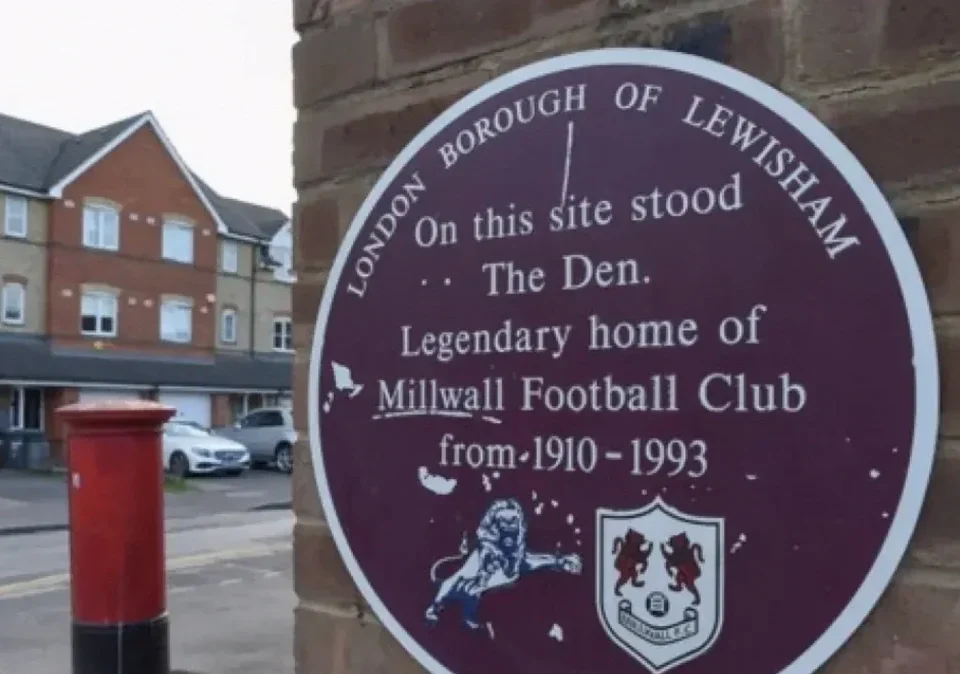
For generations, the contest was wrapped in the darker side of British football culture. The old Millwall ground, known as the Old Den, became especially notorious for its intimidating reception of visiting West Ham fans. It was a compact industrial stadium beside the tracks, where metal structures and tightly packed terraces amplified the noise.
The modern fixture retains its emotional edge, but Saturday’s return took place in a markedly different climate. There were chants, taunts and insults from both ends, as expected for a derby of this history, but separation measures and the exceptional security presence helped ensure the match stayed sporting.
One Millwall follower summed up the inherited nature of the feud: “You grow up with it. It is part of your history.”
The Den keeps the old identity close
Millwall’s current stadium opened in 1993, only around 500 metres from its predecessor, in the South Bermondsey area spanning Lewisham and Southwark. It replaced the former Cold Blow Lane home, a name preserved by the present-day South Stand.
The newer ground cannot fully recreate the physical confines of the old one, but it deliberately holds on to its character. Before the derby, the stadium DJ played The Jam’s “A Town Called Malice” and The Clash’s “London Calling” at full volume for the home crowd, while Millwall’s defining refrain again rang around the stands: “No one likes us, we don’t care.”
That slogan reflects the club’s long-held self-image: a community shaped by working-class roots, distance from London’s more celebrated football institutions and a willingness to embrace an outsider’s reputation. The 2-2 result offered neither side victory, but the return of the Docker’s Derby restored a piece of the capital’s football map—this time with the intensity on the terraces rather than beyond them.