Napoli’s future home has become a parallel story to the club’s footballing season: the city is pursuing a renewed Stadio Diego Armando Maradona for Euro 2032, while Aurelio De Laurentiis is pressing ahead with plans for a wholly new, privately owned ground in the eastern part of Naples. The two projects are not presently designed to meet in the middle, yet both the mayor, Gaetano Manfredi, and the Napoli president have left open the possibility that each could serve the city in different ways.
Manfredi has confirmed that Naples is working on its European Championship candidacy, following final approval of funding for the Maradona redevelopment. The Municipality of Naples and the Campania Region have received authorisation from Cipess for €150 million, with the complete renovation estimated at €200 million. The next administrative steps concern tenders and the allocation of construction work.
The municipal vision is an international-standard overhaul of the stadium once known as the San Paolo. It includes a capacity of 62,000, removal of the athletics track, the reopening and reconstruction of the third tier, 36 skyboxes, a larger roof and the incorporation of photovoltaic panels. The wider Fuorigrotta district is also included in the regeneration plans, placing the stadium within a broader urban intervention rather than treating it as an isolated venue.
Two routes for Napoli’s stadium future
For Manfredi, the Maradona remains an asset that must be brought up to modern standards. He said the city and De Laurentiis have discussed the question repeatedly and continue to speak, but acknowledged that they are working from different premises. Napoli’s owner wants a new stadium; the municipality intends to make a major investment in the existing one.
At the same time, the mayor offered encouragement to De Laurentiis over the proposed Q8 site at Napoli Est. Manfredi said that a concrete private investment capable of regenerating a complex industrial zone would be welcomed by the city. The area still hosts significant petroleum activity, and he described the prospect of redeveloping it as positive for Naples, provided the project becomes real.
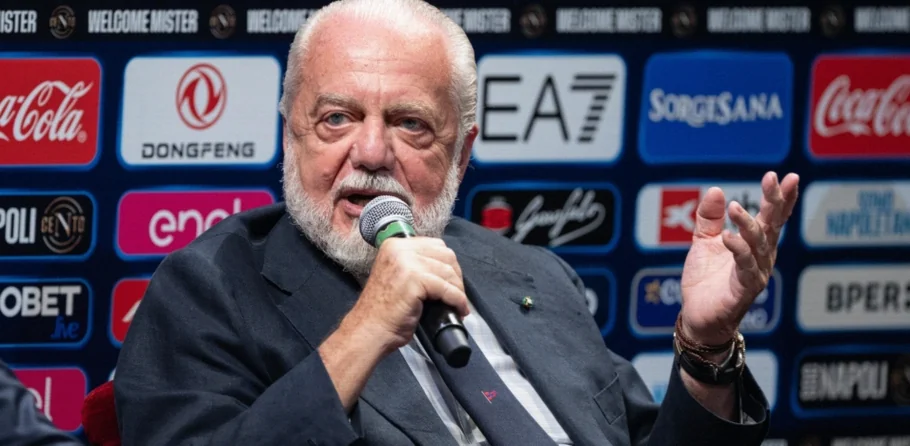
De Laurentiis has outlined a considerably larger plan. Speaking recently at the Foreign Press Association after receiving a lifetime sporting achievement award, he said he had signed a letter of intent with Q8 around a month earlier. His proposal is for a 70,000-seat stadium in eastern Naples, with 120 skyboxes and an interactive museum.
The Napoli president again questioned the economics of remaining at the Maradona. He dismissed the suggestion that the club pays €900,000 annually for its use, stating that Napoli’s total yearly cost exceeds €2 million. He also complained that the club has access only on matchdays and must return the facility cleaned immediately after the game.
His assessment of renovation is harsher still. De Laurentiis believes €200 million would not be enough to transform the present stadium properly, arguing that the Maradona should instead make way for housing. He has said a new ground could be built within 24 months without public money, and has frequently voiced his frustration with a venue he considers outdated after 22 years of using it.
Behind the disagreement lies more than architecture. De Laurentiis has regularly pointed to the commercial distance between Napoli and leading European clubs, citing the stadium-driven revenues enjoyed by Paris Saint-Germain and Arsenal. For the president, ownership and year-round control of a modern arena are part of Napoli’s financial future. For the city, the Maradona is a public landmark that can be renewed for the next generation and potentially for Euro 2032.
There is no shared blueprint yet, but there is a rare point of agreement: both sides see stadium development as necessary for Naples. Manfredi wants the Maradona restored to contemporary standards; De Laurentiis wants to create a new home elsewhere. The next chapter will depend less on their public exchanges than on funding, planning approvals and whether either vision can move from declaration to building site.