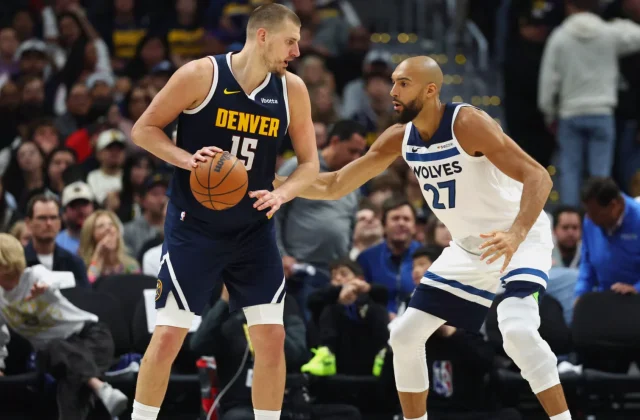
The NBA’s 2026-27 officiating points of emphasis will put a sharper lens on the possession-by-possession details that shape rotations, late-game challenges and half-court spacing: theatrical flops, forceful off-arm separation, illegal two-hand screens, dangerous closeouts and delays before free throws.
League officials have outlined the focus areas for players, coaches and referees, with team visits planned to review video examples and answer questions before the season. The message is not a wholesale rewrite of the rulebook. It is an instruction to call existing boundaries with more consistency as every club enters a season in which the league says the revised anti-tanking measures give all 30 teams reason to compete nightly.
James Jones, the NBA’s executive vice president and head of basketball operations, said the league’s offseason changes created a more competitive environment and prompted officials to identify points that can improve both the game and its presentation.
“We made some changes in the summer,” Jones said. “We addressed tanking, which means in the NBA for the first time, we’ll have a season where every team is incentivized to play and compete and try to win every game.”
For coaches, the practical impact could show up in the margins: a primary ballhandler losing an offensive foul for an extended arm, a screening big being whistled while trying to spring a shooter, or a defense losing the chance to buy tablet-review time before a free throw.
From the locker room
Flopping gets the hardest look
Flopping remains an enforceable violation, but the NBA is drawing an important distinction between embellishment and a punishable act. Monty McCutchen, the league’s senior vice president and head of referee development and training, said a violation requires what he called “secondary, theatrical and exaggerated movement.”
That means a player can react to illegal contact or try to show an official what happened without automatically being charged with a flop. A head snap by itself will not trigger the penalty. The issue, McCutchen said, is creating a false impression of contact or force that the player knows did not occur.
When a flop is called on the floor, the player receives a non-unsportsmanlike technical foul and the opponent shoots one free throw. If referees miss it live, the league can review the sequence afterward, beginning with a warning and moving through escalating fines before a possible one-game suspension. Those postgame financial penalties and warnings do not apply when the violation was assessed during the game.
Jones said the league intends to take a particularly firm approach because exaggerated selling of calls does not fit the competitive product it wants on the floor or on television.
Off-arms, screens and space
Ballhandlers will still be allowed to use their non-dribbling arm to establish where a defender is. The line comes when that arm becomes a tool for clearing a defender out of the play.
McCutchen said “firming” and “feeling” contact remain legal offensive actions. Extending the arm fully or delivering a forceful push-off is not. Jones said officials had seen more players using the off-arm to manufacture separation, making an already difficult defensive assignment even tougher.
The league also plans to monitor screening action more closely, particularly two-handed screens that create an advantage by moving a defender toward the sideline or back toward midcourt. McCutchen noted that an NBA game includes more than 200 screens, making the consistency of those calls central to the emphasis.
Those screening fouls can alter the rhythm of a second unit as much as a starter group. A pocket-pass window disappears if the screen is illegal; a dribbler’s turn-the-corner lane can vanish with it. McCutchen said referees will be held accountable if they do not enforce this area properly.
Defenders retain their line
The NBA will continue to prioritize freedom of movement and straight-line pathways. A defender cannot knock a dribbler out of his route, but the defender is also entitled to occupy and defend a legal straight-line path.
Jones framed the objective as balance rather than tilting the rules toward either offense or defense. The league wants quality offense and quality defense to meet legally, while removing extreme tactics designed to exploit the edges of the rules.
Closeouts remain part of that balance. Officials will watch for contests that place shooters at risk of injury. A shooter who goes down into a seated fall while protecting himself from a closeout is not flopping simply because he ends up on the floor.
No more stalling at the stripe
The league also wants a cleaner free-throw routine, especially after a shooting foul that may be subject to a coach’s challenge.
Defenses have sometimes delayed taking their lane positions while assistants review the play on a tablet and relay whether a challenge is worthwhile. Players may switch spots along the lane or linger above the arc to stretch out that decision window.
McCutchen said referees will be directed to administer free throws promptly and in order. Players must get to their assigned spots without unnecessary delay, and officials can issue delay-of-game violations when needed.
It is a small procedural change with a direct bench consequence: coaches will have less opportunity to create review time by letting their players slow the march to the foul line.