NBA training camps are moving toward the 2026-27 finish line, with opening-night rosters due by 5 p.m. ET Monday, and the league’s central roster question is not hard to spot: how many playable answers does a team have after its stars?
Depth has become a working requirement rather than a luxury. The modern NBA asks teams to survive an 82-game grind, manage injuries and back-to-backs, toggle between sizes and styles, and still have fresh legs when a playoff series reaches its late possessions. Competitive balance has tightened the margins, too. Lottery changes and the current collective bargaining agreement have helped create a field in which several credible teams may still miss the postseason.
The championship picture has reflected that squeeze. Golden State remains the last repeat winner, taking titles in 2017 and 2018, while the Warriors were also the most recent club to reach consecutive Finals, in 2018 and 2019. Since then, the road has been less forgiving. Before New York’s Finals matchup with San Antonio in June, commissioner Adam Silver pointed to the expanded requirement, saying teams need deep rosters to succeed in today’s league.
Front offices and coaching staffs across the league are building with that in mind. Warriors coach Steve Kerr said the game now places greater value on having numerous players capable of contributing than on relying only on elite-end talent. Washington general manager Will Dawkins described depth as a way for Brian Keefe and his staff to choose nightly between big lineups, smaller groups, guard-heavy units or frontcourt-heavy looks.
Oklahoma City executive vice president and general manager Sam Presti has framed the Thunder’s progress around continuity, cohesion and roster options. Celtics president of basketball operations Brad Stevens made a similar point, noting that teams need players throughout the roster who can handle the ground covered, versatility and pace demanded by the current game.
New York’s run showed the value of the second unit
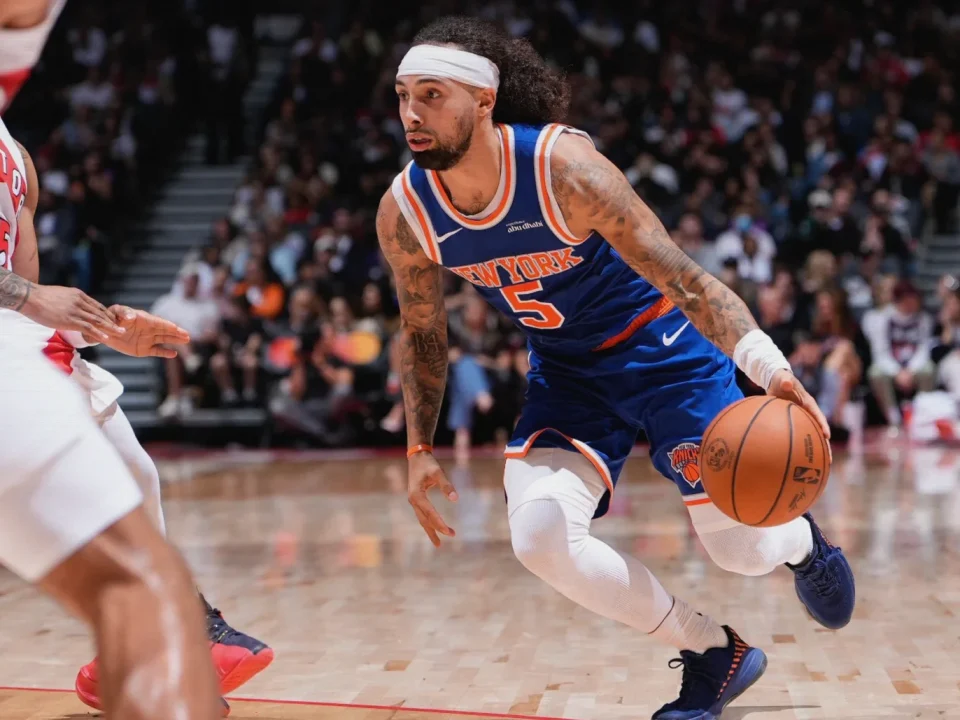
The Knicks’ 2026 title did not diminish the need for high-level stars. Jalen Brunson and Karl-Anthony Towns were essential, as was a starting group featuring Josh Hart, OG Anunoby and Mikal Bridges. But New York also leaned on its bench during the run: Jordan Clarkson, Jose Alvarado, Landry Shamet, Mitchell Robinson and Miles McBride all supplied pieces a champion needs over four rounds.
Alvarado posted eight points, three assists and two rebounds in New York’s Game 4 Finals win over San Antonio. Shamet went 16-for-35 from 3-point range across the Knicks’ final seven postseason games, including a 14-for-22 stretch over four games. Robinson collected 10 rebounds in the Game 5 clincher.
One veteran coach’s internal formula puts the split plainly: stars often decide roughly 12 of the 16 wins needed for a championship, while role players can swing the other four. That is the reason behind the familiar coaching demand that reserves become “stars” within their jobs rather than chase responsibilities outside them.
San Antonio brought similar rotation volume to last season’s Finals run. Ten Spurs appeared in at least 64 games while averaging at least 11.5 minutes, and the club carried a 10-man playoff rotation. Oklahoma City has treated lineup flexibility as a longer-term development tool. In the 72-game 2020-21 season, 12 Thunder players averaged at least 12 minutes across a minimum of 36 appearances. During the 2024-25 championship campaign, 12 Oklahoma City players logged at least 32 games and averaged 16 or more minutes.
Presti said the Thunder deliberately put players in difficult situations and expose them to different combinations, even if it costs the team ground at points in the regular season. The longer view, he said, is to develop individuals and build a group accustomed to changing lineups.
More than a long bench
Golden State’s championship era carried the “Strength in Numbers” identity, producing three championships in four years and four over an eight-year span. The Warriors are again trying to build enough cover for the nights when availability inevitably thins out. General manager Mike Dunleavy Jr. said the club assembled depth with the expectation that not every player will be available every night, while maintaining the belief it can still win.
The calculation goes beyond simply stockpiling bodies. Teams are looking for multiple rim protectors, shooting that can widen the floor, perimeter defenders capable of taking difficult assignments and additional playmakers. The right mix gives a coach counters in a series, helps limit the impact of injuries and allows a rotation to absorb the physical wear of the schedule.
It also creates competition for minutes. Players outside the primary group must stay ready, because a matchup, foul trouble, injury or a tactical adjustment can open a meaningful role without warning. Coaches may not use all of those options in a typical game, but they need them over a season and especially in a playoff bracket where opponents continually search for the next lineup advantage.
Nets coach Jordi Fernandez said successful clubs are not generally playing 12 men every night, but they need 12 to 14 players who are capable of stepping in and contributing. In a league built around speed, spacing and increasingly specialized matchups, the teams with those answers may have the best chance to still be standing in June.