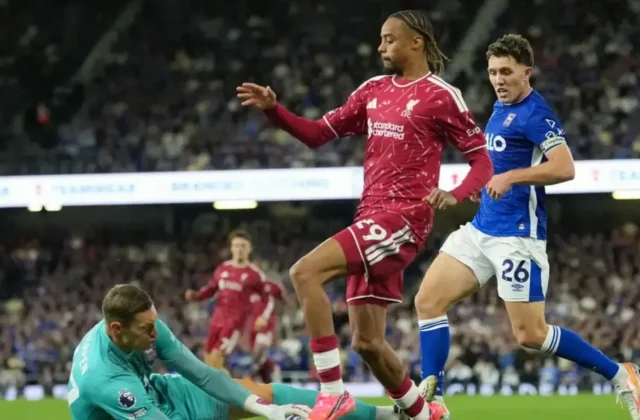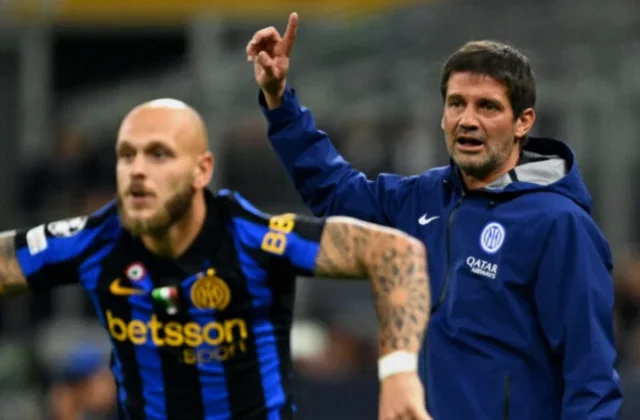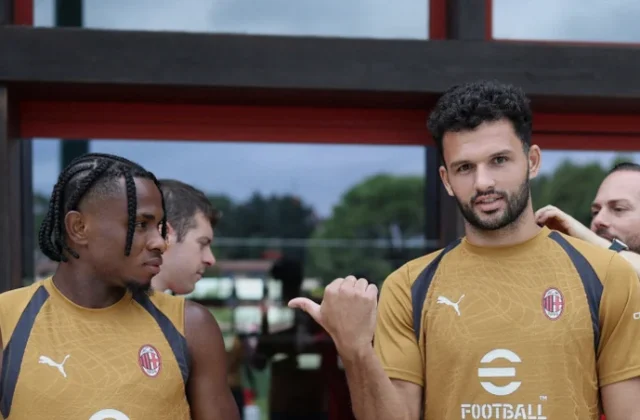
Daniele Orsato has chosen an unusually direct moment to address the early refereeing debate in Serie A, publicly accepting that serious mistakes have been made across the opening five rounds of the league season and in the Coppa Italia. His acknowledgement arrives with the championship already carrying a familiar tension: clubs are being asked to accept a firmer line in the penalty area and on the field, while several major incidents have escaped correction.
The list is substantial. There was the holding of Atalanta’s Rowe by Juventus defender Kalulu; Vlasic’s handball in Torino-Milan; and two disputed decisions in Frosinone’s match, where Monterisi was kicked by Dragusin without a penalty being awarded and Jimenez was not sent off after violent conduct involving Bracaglia. Como-Parma brought another forceful challenge, Caqueret’s foul on Britschgi, while Fiorentina-Pisa in the Coppa Italia included Caracciolo’s hold on Pellegrino inside the box.
Orsato did not attempt to deny the scale of those calls. “The mistakes are there,” he said, while making clear that his direction for the campaign will not be rewritten after each weekend. “I will carry on through to the end of the season. I do not change my mind from one week to the next.”
That is the central issue for a league trying to establish a coherent refereeing identity. The authorities can point to more active playing time, with the increase approaching six minutes, as a tangible improvement. Yet the previous fragmentation of matches did not occur in isolation: long interventions, uncertain decisions and repeated stoppages have also belonged to the refereeing landscape.
There is broad support for the stated intention to reduce soft penalties. But the harder question is who will distinguish a marginal appeal from an obvious offence, and how consistently that threshold will be applied. A tougher standard cannot become an excuse for overlooking clear infringements, particularly when the competition has a video system designed to intervene in cases of evident error.
The pressure therefore turns toward VAR and its operational centre in Lissone. If officials accept that incidents of this magnitude have already been missed, the question is not whether technology should dominate every contact. It is whether it should be used decisively when a serious on-field error is plain. For Serie A, the opening weeks have made that balance part of the season’s wider plot: authority must be firm, but it must also be credible.