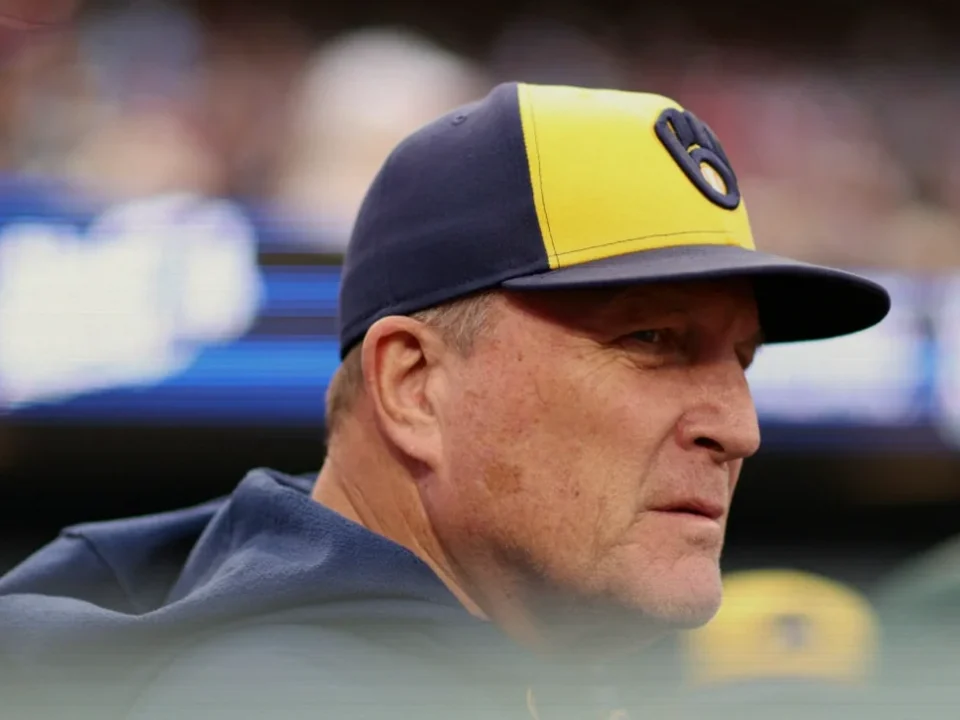
William Contreras made sure Pat Murphy saw the effort. One night after being removed for not running out a ground ball, Milwaukee’s catcher charged toward first on another routine roller and dove headfirst into the base. He was still out, but the Brewers dugout had its laugh — Murphy included.
That small moment has come to represent the manager’s hold on a 103-win club. Murphy has benched rookies and established stars, offered encouragement when a player needs it, and occasionally decided silence carries the better message. Milwaukee finished with baseball’s best record and the most wins in franchise history, and it now waits for either the Cubs or Padres in the National League Division Series.
The result
The Brewers’ regular season ended with 103 victories, putting them atop the Major League standings and setting a new club record. Their postseason road begins with the NLDS opener on Oct. 3, with Milwaukee scheduled to face the winner of the Cubs-Padres matchup. The franchise is still chasing its first World Series appearance.
Murphy, 67, has been voted National League Manager of the Year in each of his first two seasons leading Milwaukee. A third straight honor would put him in territory no manager has reached before: nobody has won the award three consecutive years.
His players know the standard is not reserved for the young. Contreras learned that after Murphy took him out of a game for failing to hustle on a ball in play. The following day’s headfirst dive at first base was an unmistakable response, delivered with enough humor for teammates to grin.
Christian Yelich, Milwaukee’s newly named captain, said Murphy’s approach works because the Brewers have players willing to accept direct accountability. After rookie Cooper Pratt was benched during an August game against the Mets, Yelich noted that not every roster would respond the same way.
“You need the right kind of player to play for Murph and play here,” Yelich said. “That style would not fit every club in the league.”
Murphy’s college-coaching roots remain visible. Before arriving in a Major League dugout, he coached at Notre Dame and Arizona State, and he is quick to address lapses whether they come from a rookie or a veteran. But the message depends on the person receiving it.
“I’m trying to work it out,” Murphy said. “There really isn’t a system.”
Sal Frelick has experienced both the correction and the support. He has been pulled from games himself, and he was among the Brewers who checked on Pratt after the rookie’s benching in New York. Frelick believes Murphy can enforce his standards because the players chosen for the club are able to handle the consequences.
“The players he wants playing his kind of baseball are the same ones he can sit if they do not play well,” Frelick said. “Something good can come from that.”
The rotation next
Robert Gasser has given Milwaukee a strong late-season run after a conversation with Murphy at Wrigley Field. When Murphy lifted Gasser against the Cubs on Sept. 1, the left-hander was unhappy with his performance. Murphy took extra time to point out what he liked in the outing, and Gasser said the exchange gave him confidence.
Gasser followed that meeting with four starts in which he allowed three runs across 22 innings. His recent work gives Milwaukee another encouraging option as the club prepares for October, though no Division Series starter was named.
Murphy’s touch has not always come in a meeting after an outing. On Sept. 8 against Chicago, young outfielder Luis Lara came up in extra innings with the bases loaded after starting 0-for-4. Murphy approached him before the at-bat, asked whether he was ready, and told him he believed in him. Lara answered with a walk-off single.
Murphy did not claim credit for the hit.
“I honestly do not think that talk mattered,” he said. “It may have been more for me, just so I felt involved.”
Craig Counsell, now the Cubs manager, has seen Murphy’s style from several angles. Counsell played for him at Notre Dame and later worked alongside him in Milwaukee. To Counsell, the defining trait is that Murphy does not manufacture a persona for the room.
“It’s genuine,” Counsell said. “That is the biggest thing. It is simply who he is.”
When asked about Murphy’s motivational methods during their Notre Dame days, Counsell joked that profanity was the first possibility that came to mind. He then described a shifting good-cop, bad-cop balance.
Murphy is more cautious about his own instincts. He said he has misunderstood players plenty of times, doubts anyone enjoys his speeches much more than his criticism, and learned during his years as Milwaukee’s bench coach that restraint can be the best choice.
“At times, no message is better than giving one,” Murphy said.
For the Brewers, the Contreras dive and the Pratt benching are parts of the same clubhouse equation. The standard applies to everyone, while the relationships are strong enough to absorb the correction. Murphy, as usual, points back to his roster rather than his own decision-making.
“A good team makes a manager’s decisions look good,” he said.
Milwaukee has done that 103 times so far. The next test comes in October, with a division series waiting and the Brewers still pursuing the one October destination this franchise has never reached.