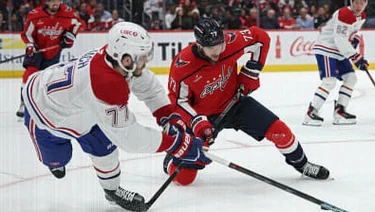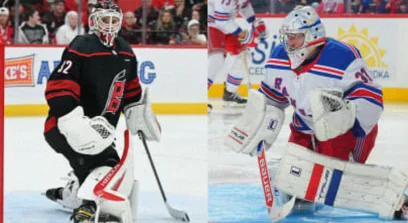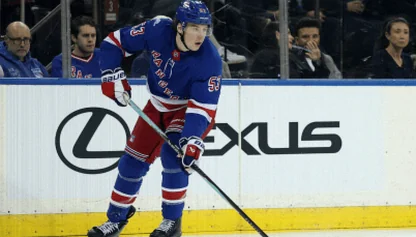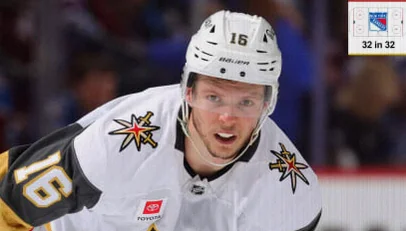
The New York Rangers have added a young finisher in Pavel Dorofeyev, and the numbers suggest he can give a retooling club a legitimate scoring centerpiece for 2026-27. With Igor Shesterkin still capable of stealing nights in net and Adam Fox driving possession from the blue line, New York has pieces that could push back into the Metropolitan Division race.
Key takeaways
- Pavel Dorofeyev arrived from the Vegas Golden Knights on June 26 and later signed a seven-year, $77 million deal with the Rangers.
- The 25-year-old winger has posted 35 or more goals in each of the past two seasons, a feat no Ranger under 26 has managed in consecutive years since Adam Graves.
- Igor Shesterkin posted a .926 save percentage at 5-on-5 last season, tied for third among NHL goaltenders.
- New York finished fifth on the power play at 24.7 percent and ranked second in power-play offensive-zone time percentage.
- Adam Fox, Mika Zibanejad and Dorofeyev all ranked among the NHL’s strongest players at keeping play in the attacking zone.
Dorofeyev brings a finishing touch to New York’s top six
Dorofeyev’s arrival gives the Rangers a scorer who can create chances from multiple shooting areas rather than relying on one look. During his final season in Vegas, he placed in at least the 90th percentile among NHL forwards for high-danger shots on goal, high-danger goals, mid-range shots, mid-range goals and long-range shots on goal.
- High-danger shots on goal: 82, in the 95th percentile among forwards
- High-danger goals: 15, in the 90th percentile
- Mid-range shots on goal: 77, in the 93rd percentile
- Mid-range goals: 10, in the 93rd percentile
- Long-range shots on goal: 23, in the 93rd percentile
He also registered a top shot speed of 93.33 mph, placing him in the 93rd percentile at his position. That gives New York another heavy release alongside J.T. Miller, whose 102.58 mph shot was second-fastest among NHL forwards, and Mika Zibanejad, who reached 96.39 mph and landed in the 98th percentile.
Dorofeyev did not disappear when the games tightened up. He scored 12 goals in the Stanley Cup Playoffs, second in the League behind Brett Howden’s 14, and his eight playoff high-danger goals matched Howden for the postseason lead as Vegas reached the Stanley Cup Final.
The immediate question at the rink will be where he fits best. Dorofeyev can build into either of the first two lines with Zibanejad or Miller, while his long contract gives the Rangers a potential foundation piece whether the club continues trying to reshape its roster on the fly or pivots toward a fuller rebuild. New York has missed the playoffs in each of the past two seasons, so the need for dependable goals is not subtle.
Shesterkin, Fox and zone time offer a path back
Shesterkin missed time with an injury last season but still made 51 starts, extending his streak of 50-plus-start campaigns to five. His underlying work remained among the League’s best. Among goaltenders who appeared in at least 40 games, he ranked fifth in high-danger save percentage at .843, shared sixth in mid-range save percentage at .906 and stopped 405 mid-range attempts, eighth-most in the NHL.
At even strength, Shesterkin was especially sharp. His .926 save percentage in 5-on-5 play tied him for third, one point behind Scott Wedgewood and Dan Vladar at .927. In close 5-on-5 situations — tied games in the first or second period, or one-goal games in the third — his .932 mark trailed only Logan Thompson’s .938.
The 2021-22 Vezina Trophy winner remains capable of putting himself back in the award conversation, and even in the Hart Trophy picture if New York leans heavily on him. Shesterkin and Tampa Bay Lightning goaltender Andrei Vasilevskiy share the best career save percentage among active NHL goalies at .917.
That goaltending matters in a division where Carolina enters as the Stanley Cup champion and Washington has strengthened its forward group with Alex Tuch and Jordan Kyrou. The Rangers have a plausible route to third place in the Metropolitan or an Eastern Conference wild-card berth, but they will need stronger 5-on-5 results after sitting in the NHL’s lower half in shot-attempt share since 2021-22. Their 48.9 percent over that span was tied for 22nd.
There was a more encouraging possession signal in Mike Sullivan’s first year behind the Rangers bench. New York tied for eighth in offensive-zone time percentage across all situations at 41.6, while its 61.3 percent on the power play ranked second. Those results came despite the February 4 trade that sent Artemi Panarin to the Los Angeles Kings.
Fox was central to that territorial edge despite being limited to 55 games by injury. His 48.0 offensive-zone time percentage ranked second among defensemen, behind Shayne Gostisbehere’s 49.6, and tied him for eighth among all NHL skaters. Fox also led NHL defensemen in power-play offensive-zone time percentage at 64.2.
Zibanejad was in the 91st percentile among forwards on the power play at 62.5 percent, while Dorofeyev brings another strong zone-time profile: 47.1 percent at all strengths, good for the 97th percentile, and 65.4 percent on the man advantage, fourth in the NHL. If Fox stays healthy, Shesterkin continues to cover mistakes and Alexis Lafreniere or Gabe Perreault takes a meaningful step forward, the Rangers could turn improved offensive-zone time into the even-strength production they lacked.
SEO Title: New York Rangers 2026-27 outlook: Dorofeyev, Shesterkin and Fox
SEO Description: Pavel Dorofeyev’s scoring profile, Igor Shesterkin’s elite 5-on-5 numbers and New York’s power-play zone time shape the Rangers’ 2026-27 outlook.