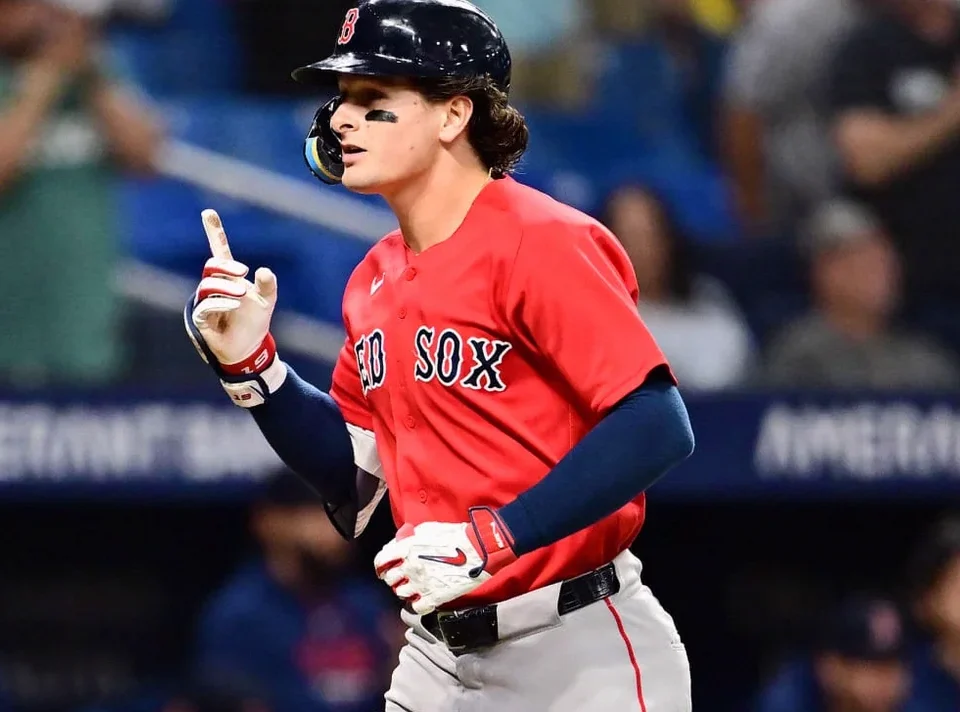
The Red Sox saw their postseason end in a two-game American League Wild Card Series sweep by the Yankees, and Roman Anthony’s October lasted only two at-bats. The outfielder re-injured his right hand and wrist in Game 1, then was removed from the roster after follow-up imaging revealed additional strains. Boston’s early read, though, is that Anthony can recover without surgery.
Rest, not an operation, is the current plan
Chief baseball officer Craig Breslow said Anthony has undergone several appointments and imaging examinations since the postseason setback. While the club is still sorting through the complete treatment plan, the expectation is that a full shutdown will be the best route.
Breslow said there is presently no surgical procedure planned or even clearly indicated. Doctors have not identified a specific operation that would make sense for the injury, leaving rest as the preferred course.
- Anthony suffered the new setback during his first two plate appearances of Game 1 against New York.
- Imaging the following day showed further strains, prompting Boston to take him off the postseason roster.
- The club believes the offseason offers a better chance for complete recovery because Anthony will not be trying to prepare for games while healing.
- Boston had expected Anthony to receive about 600 plate appearances in 2026, but he finished with 242 and a .735 OPS.
A difficult season for Anthony’s right hand
Anthony’s season was shaped by the original injury, a partial tear of the carpometacarpal ligament at the base of his right ring finger. The uncommon CMC ligament injury occurred May 4 in Detroit and kept him out until Aug. 30, making a reliable recovery timetable difficult to establish.
When Anthony returned late in the season, he later acknowledged that his hand had not fully returned to normal. He nevertheless believed he could play and contribute. Breslow said the club understood that Anthony might occasionally feel a brief sharp sensation during a swing, one that would fade quickly enough for him to continue an at-bat.
That changed in the Wild Card opener. The discomfort was significantly worse in both trips to the plate, and Anthony recognized that he could not continue.
Why the offseason could make the difference
Anthony’s first layoff lasted nearly four months, but it was not a purely passive recovery. He was working toward a return, taking dry swings and doing tee work as soon as he felt able. At times, he had to halt those efforts after the hand flared up, then try again later. The injury ultimately resurfaced about a month after his comeback, now with added strains.
Breslow said the difference this winter is simple: Anthony can make getting fully healthy the only priority. Rather than pushing through incremental baseball activity in an effort to rejoin the lineup, he can rest the hand completely and avoid advancing his rehab until each stage is finished.
The executive also defended the process that led to Anthony’s late-season return. Breslow said the club tried to weigh the player’s desire to compete and his ability to help Boston against the medical responsibility of not exposing him to undue risk. Although a new postseason injury emerged, Breslow said there had been a shared understanding among Anthony, the medical staff and the club about the original condition and the plan.
Durbin also played through a hand problem
Anthony was not the only Red Sox player trying to finish the year through a painful hand issue. Third baseman Caleb Durbin played from June 24 through the end of the season with a right pinkie that remained out of place after he subluxed it in Denver.
Durbin hit a game-winning home run the night after suffering that injury. Breslow praised both players for their willingness to stay available for the club, saying the roster was filled with players determined to compete for one another and for the fans.
Boston has not yet determined whether Durbin will need surgery on his finger.