Atlético de Madrid take on Manchester United at 21:00 with Ricardo López convinced that the balance of the tie now favours the Spanish side. The former goalkeeper, who played for both clubs, sees an Atlético built to compete at the highest level and a United still searching for the authority it lost after Sir Alex Ferguson.
“Atlético are clear favourites against the present Manchester United,” López said, admitting that the occasion will divide his loyalties. Atlético were his club from the age of 15 to 25, but Manchester also gave him the Premier League’s defining medal of his career.
For López, United’s current position is the result of a prolonged uncertainty rather than one isolated poor campaign. He believes the club have underperformed in both England and Europe across the last decade and need a more established figure than Michael Carrick, the former midfielder now in charge, to lead a serious return to the continent’s elite.
Atlético’s structure meets United’s search for direction
United were once, in López’s words, “the NBA of football” when he arrived in 2002: a global operation with standards that seemed far ahead of what he had known in Spain. But he believes Arsenal and Manchester City have become the leading English representatives in domestic and European competition, while Paris Saint-Germain have risen again under Luis Enrique, the reigning European champion.
He pointed to Arsenal’s own difficult years following Arsène Wenger as evidence that great clubs can recover if they find the right long-term leader. United, he said, are waiting for a similarly charismatic manager capable of imposing a clear footballing line and rebuilding confidence throughout the club.
That task goes beyond tactics. A manager must establish authority, make good strategic calls and handle the relationship between the president, directors and sporting department, López said. Winning early, convincing supporters and maintaining that trust are all part of the job.
Atlético, by contrast, arrive with what he considers a strong squad, a reliable structure and a coach who has sustained his work over many seasons. He singled out Baena as a player of major importance, describing him as among the best not only in Spain but in world football, while praising Diego Simeone for creating a highly competitive team.
Simeone’s contract expires at the end of the season, and López accepts that Atlético will inevitably change when their long-serving manager eventually leaves. Yet he believes the club’s foundations are strong enough to avoid a collapse, particularly if the successor understands Atlético from within.
His preferred name is Fernando Torres. López argued that a Torres appointment would offer continuity rather than a break from the stability forged under Simeone, whose contribution he called immeasurable. “He has earned the right to decide himself when the moment has come,” he said.
Lessons from Ferguson’s United
López’s view of United is informed by the standards he encountered at Carrington. The club’s facilities were carefully organised across every level: dining areas, gymnasium, heated pool and spaces designed around a player’s full working day. Boots would be ready after training, while young reserve players were expected to clean mud from first-team footwear as part of their education in club culture.
Eating breakfast at the training ground well before the session was routine in Manchester. López contrasted that with a Spain where players could once arrive only minutes before training and where gym equipment, he joked, sometimes looked barely used. He believes Spanish football has since adopted many of those ideas around physical preparation and daily professionalism.
He remembered Ferguson as warmer and more approachable than the intimidating public image suggested. The Scottish manager could show his temper after defeats, López said, but he remained attentive to detail and to the people around him.
One decisive intervention followed a 4-1 defeat to Manchester City. United had tended to split themselves socially, with English and French players together and Spanish-speaking players in another group that included Juan Sebastián Verón and Diego Forlán. Ferguson broke up those divisions in training rondos, at the hotel and at meal tables, discouraging the Spanish speakers from relying on their own language.
The result, López said, was a far more united dressing room. United were 10 points behind Arsenal in December but went on to win the Premier League. During a key match against Blackburn Rovers with three games remaining, López was called into action after conceding a penalty himself and then saving the spot-kick.
He recalls celebrating that title alongside teammates who made him feel part of the family from the beginning, including Gary Neville and David Beckham. Beckham, he said, was constantly laughing and was close to those around him. López developed particularly strong friendships with Quinton Fortune and Forlán; Ferguson asked Forlán to drive him between the hotel and Carrington when he first arrived.
The move to United began while López was at Valladolid. Jorge Mendes first informed him of United’s interest and asked him to keep it confidential. Before the flight to England, Mendes sent a cousin to stay with him in Valladolid for a couple of days. Pedro Bravo also worked on the operation and prepared the paperwork, while López insisted that Mendes be included before he would sign.
His first meeting with Ferguson was brief but memorable. López, then still uncomfortable speaking English, offered a nervous “Nice to meet you”. Ferguson, he said, was immediately welcoming and struck him as someone who did not leave details to chance.
An Atlético education
López came through Atlético’s academy after joining at 15 from Los Yébenes San Bruno in Aluche. Four players from his side were invited for a two-week trial. He was registered almost immediately, and his team won both league and cup that season.
His first wages were spent on octopus in the streets of Aluche with Javier Gómez Matallanas, who arrived on his 125cc motorbike singing songs by Leño and Barricada. López cannot remember the amount, only that it was paid in pesetas and likely came when he signed for Atlético Madrileño.
He went on to play for Valladolid, Manchester United, Racing Santander and Osasuna, where he became particularly established after leaving Atlético. His own father had also played in goal, and López believes that family image may have helped shape his attraction to the position.
Goalkeeping appealed because of its technical and mental demands: body shape, handling, timing, whether to advance or hold position, and the constant need to make the correct decision. While outfield players can often create through instinct, he sees the goalkeeper’s work as a direct personal challenge.
His Atlético reference point as a young player was Paulo Futre, whom he remembers arriving with extraordinary force and charisma. López recalled Futre once stopping his car, asking where he was going and driving him home.
He also remembers the togetherness of Radomir Antić’s Double-winning Atlético in 1996. Friday recovery sessions would be followed by an aperitif before afternoon work on finishing and set plays. The gathering strengthened the group, though López also joked that sponsors regularly turned up with gifts, including the squad’s first Motorola flip phones.
From goalkeeper to youth coach
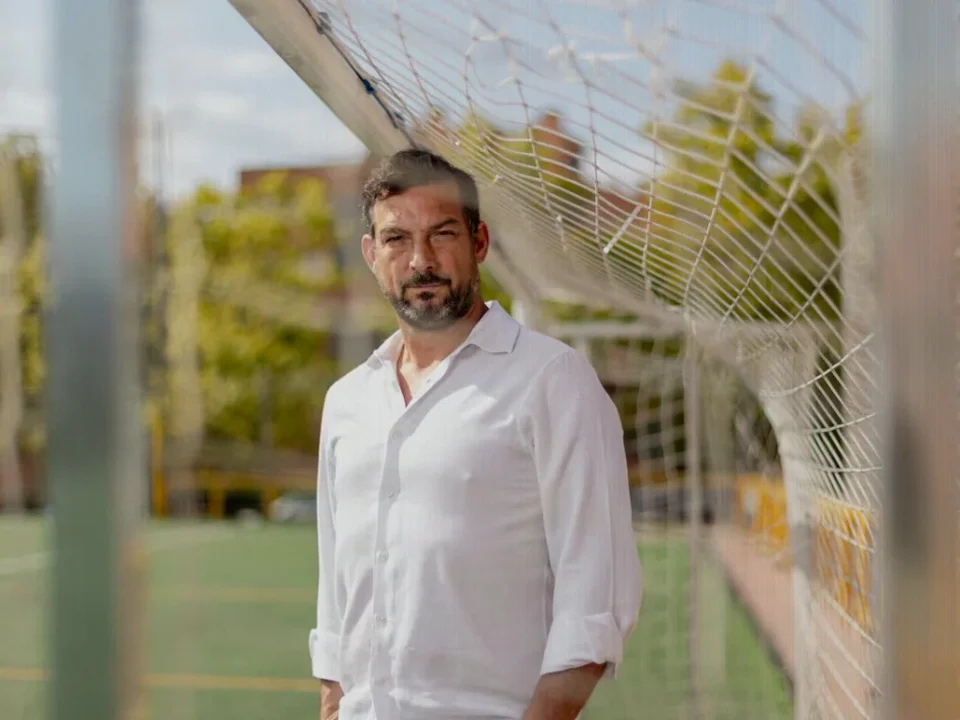
López is now working in youth football at Rayo Ciudad de Alcobendas, a club he says is growing under sporting director Germán “Mono” Burgos. He praised the club for placing teams from the youngest age groups through to youth level in the highest categories available to them.
He does not want to specialise as a goalkeeper coach. Instead, he wants to lead a group, encourage every one of his 22 players to take initiative and create what he calls a family environment. His own experiences as a player showed him shortcomings in many coaches, and he wants to put his own ideas into practice.
His Manchester years were also personal ones. His sons Ricardo and Fabio were born in the city in 2003 and 2005 respectively, while his daughter Claudia had been born in Valladolid before spending three years at school in England. He remembers Fabio going to nursery in a cap and English uniform.
Looking at Atlético’s present dressing room, López urged Julián to focus on his contract, his goals and his value to the team following the summer speculation around the player. Atlético, he said, are now a major club with ambitions to win every competition, and they need a forward of Julián’s quality.
He also praised Koke for his personality, charisma and character, describing the captain as an important example for children in Atlético’s academy. Those qualities, López believes, will matter again on a European night when one club can lean on an established identity and the other is still attempting to rediscover one.