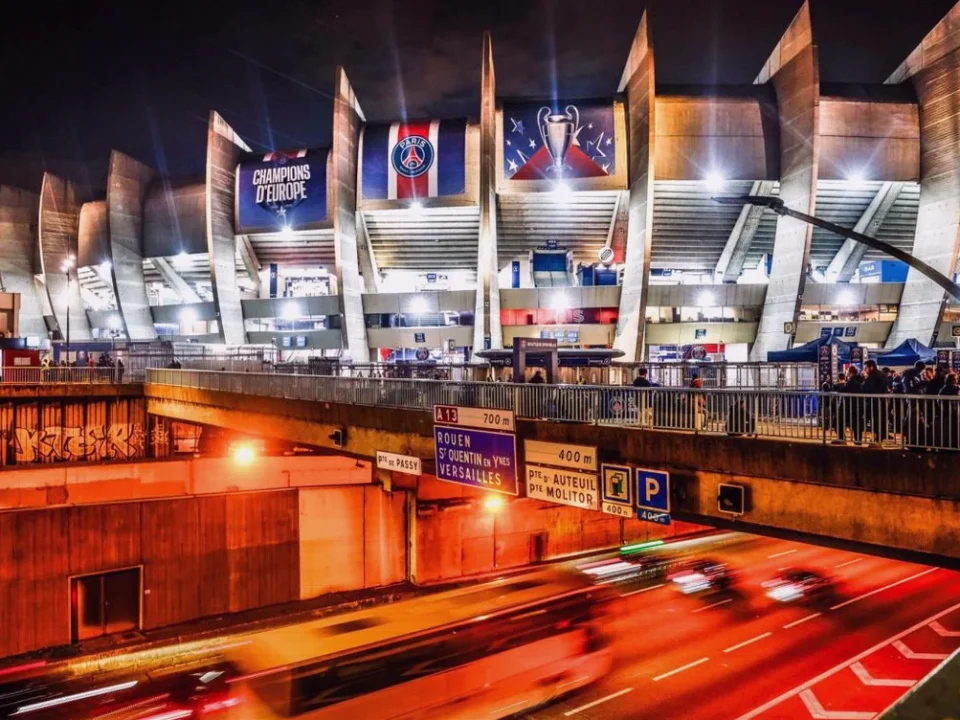
Paris Saint-Germain’s plans to make the Parc des Princes larger have met another barrier, this time from the family of the man who designed its distinctive concrete frame. Sophie Taillibert, daughter of stadium architect Roger Taillibert, has told the club she opposes the current proposal to raise capacity from 48,000 to as many as 70,000.
The architectural rights issue facing PSG
PSG had been discussing an expansion that could take the ground to either 60,000 or 70,000 spectators earlier this summer. But any redevelopment now depends not only on the club’s sporting and commercial ambitions, but also on approval from Taillibert’s heir.
- Sophie Taillibert was contacted by PSG chief executive Victoriano Melero at the end of June.
- The neuro-oncologist, who is based in the United Arab Emirates, has since attended three meetings with club representatives.
- She has made clear during those talks that she does not support the project presented to her.
- As Roger Taillibert’s rights holder following his death in 2019, she must legally be consulted and give prior consent before major expansion work can begin.
Her concern is the effect that the proposed changes could have on the integrity of the stadium’s original design. In her view, the work under consideration risks damaging the architectural identity of one of the most recognisable grounds in French football.
A family position stretching back to Roger Taillibert
The objection is not new within the Taillibert family. Before his death, Roger Taillibert himself took part in discussions over an increase of more than 10,000 seats and opposed it, believing that such a project would compromise the character of the stadium he created.
Sophie Taillibert insisted that she does want PSG to remain at the Parc des Princes, a point on which she and the club are aligned. Yet she said protecting her father’s work must come first.
“We all want PSG to stay at the Parc des Princes, so there are areas where we agree,” she said. “But my priority is preserving my father’s work. Any extension must begin with respect for the structure that defines the identity of the Parc des Princes, an exceptional piece of 20th-century architecture.”
She rejected the idea that her stance is personal obstruction, saying her role as guardian of her father’s legacy requires her to follow the principles he established for the building.
Talks continue, but no deal is close
PSG and Taillibert remain in contact, though there is no agreement on the proposal currently on the table. She described the exchanges as constructive rather than successful, stressing that a compromise acceptable to both sides remains some distance away.
- PSG are seeking a route to a significantly larger home stadium.
- Taillibert is prepared to continue discussions over a solution that respects the original structure.
- The existing project does not meet her approval.
- Without her agreement, redevelopment work cannot be launched.
Possible legal delay
If the negotiations collapse, the disagreement could move to the judicial court. Such a case could take between 18 months and three years to be decided, creating a lengthy hold-up to any attempt to begin construction.
For the double reigning European champions, the Parc des Princes question is therefore still unresolved: a capacity push remains under discussion, but the stadium’s silhouette and history have become central to whether it can happen at all.