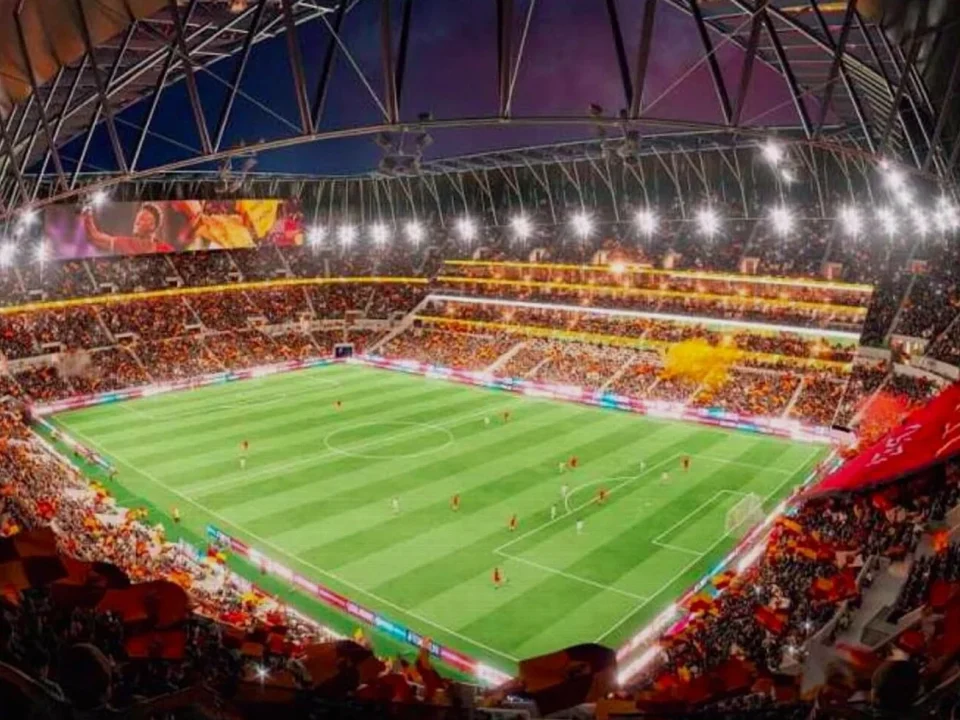
Roma’s proposed Pietralata stadium is being presented as more than a replacement venue: the club and the city administration want it to become a new daily centre for the eastern side of the capital, with parks, transport links and public areas alongside football. The project remains on a long timetable, but its intended scale is now clearer.
Key takeaways
- Construction is targeted for spring 2027, with 21 April, Rome’s traditional birthday, seen as an aspirational starting date.
- The planned opening is during the 2030-31 season.
- The stadium is designed for 60,605 spectators, including a 23,000-seat Curva Sud.
- The overall investment is expected to exceed €1.4 billion, including VAT.
- About 15 hectares of open public space, including two major parks, are part of the wider redevelopment.
- The Olimpico would remain in place as one of Rome’s principal sporting landmarks.
A stadium project built around a district
The Pietralata proposal is intended to give Roma a modern home comparable with leading European grounds, but the plans stretch well beyond the turnstiles. The area earmarked for development currently includes vegetation, an abandoned swing and archaeological excavation sites. In its place, the project envisages a regenerated neighbourhood with public spaces designed to be used throughout the week, rather than only on matchdays.
The centrepiece would be the new ground, with its 60,605-seat capacity and a Curva Sud projected to hold 23,000 supporters. That would make it Europe’s largest stand of its kind. Around it, the plans include roughly 15 hectares of outdoor public areas and two large parks.
Roma and the administration led by mayor Roberto Gualtieri see 21 April 2027 as the ideal date for work to begin. It would carry obvious civic symbolism, falling on Natale di Roma, although spring 2027 is the broader construction target. If the schedule is met, the club’s first season in the new stadium would be 2030-31.
The projected cost is more than €1.4 billion including VAT. The Olimpico, meanwhile, is not expected to disappear from the city’s sporting landscape. Roma’s proposed move would create another major venue rather than erase the historic stadium from Rome’s map.
Transport, parking and the matchday test
Access is central to the Pietralata plan. The site would be served by the Bologna, Quintiliani, Tiburtina and Monti Tiburtini stations on Metro B, while supporters willing to make a longer walk could also begin from Termini or Castro Pretorio.
From Termini, the projected journey to the Curva Sud entrance is estimated at 15 to 20 minutes using the metro and a pedestrian bridge. Monti Tiburtini and Quintiliani would each be around five minutes away on foot. Tiburtina would involve a longer walk, though the route is intended to run through green space. Sant’Agnese would be approximately 20 minutes from the ground, via Via Lanciani and the Monti Tiburtini pedestrian bridge.
Bus and rail services are also expected to be strengthened through existing infrastructure. For those arriving on foot or by bicycle, three pedestrian-cycle bridges are planned. The wider complex is designed to operate seven days a week, all year round, underlining the ambition for it to become part of the district’s ordinary life.
Private-car access has not been overlooked. More than 91,000 square metres have been allocated for parking, with seven access points for underground facilities. Yet the project’s stated direction is towards public transport taking a greater share of the matchday load.
That will be tested most sharply when a major European night arrives. A fixture such as Roma against Real Madrid would require separate routes for home and visiting fans, while the surrounding road network would need to cope with far heavier numbers than on an ordinary afternoon. The expectation is that the area can absorb that pressure once the planned mobility changes are in place.
The nearby Pertini Hospital is also identified as a priority. Dedicated preferential lanes are planned, with the intention that stadium traffic will neither obstruct access to the hospital nor block routes in and out of the site. In that balance lies the real measure of Pietralata: not simply whether Roma can build a new home, but whether the project can add a functioning new piece of city to the championship’s capital.