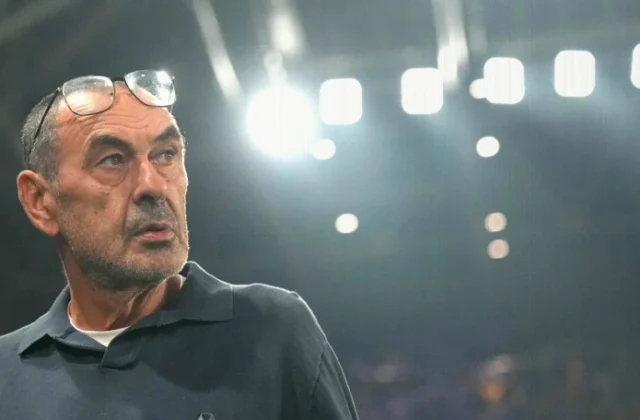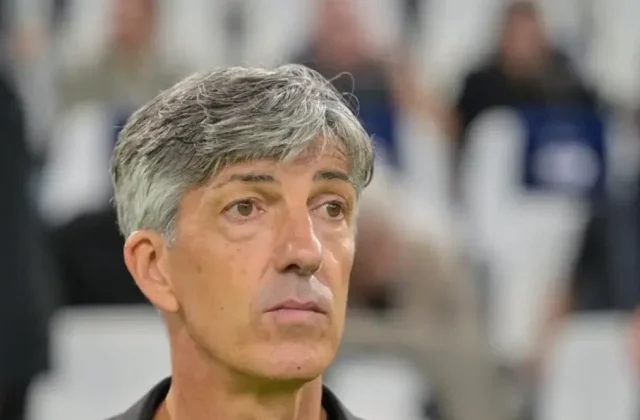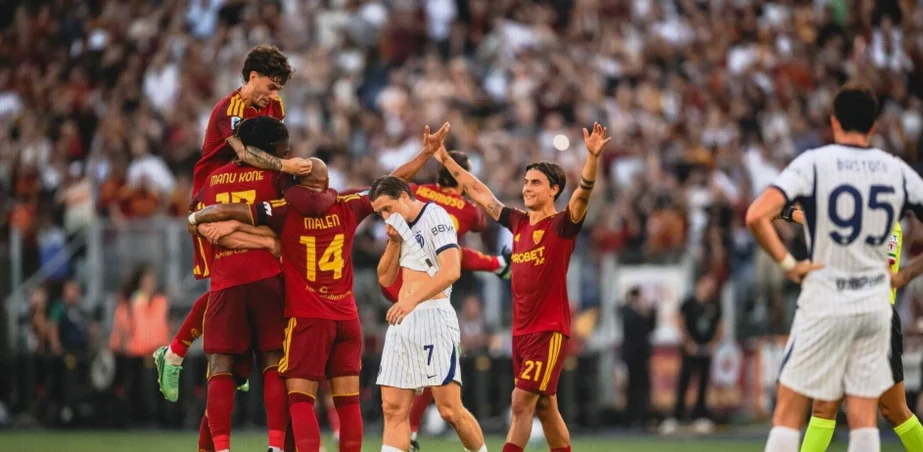
Roma’s meeting with Inter at the Olimpico did not end their season’s argument; it strengthened it. Against the team still regarded as the leading Scudetto contender, Gian Piero Gasperini’s side controlled the first half, absorbed Inter’s response after the interval and continued to play with ambition rather than retreating into caution.
The contrast with Roma’s recent experiences against the Nerazzurri was clear. The 5-2 defeat at San Siro remains a reminder of how difficult this fixture had become, but this time Roma matched Inter for long spells in a fast, open contest with chances at both ends. It followed a sequence of performances in which they had already imposed themselves on earlier opponents.
Roma remain top of the table not through a brief burst of form, but through a project that has begun to settle around the coach, the squad and the club’s decisions. Inter retain the stronger status in the title race, yet neither Gasperini nor Matías Soulé has sought to hide Roma’s intention. Their message after the match was that the team will remain in the fight until the end.
Gasperini’s intensity has become Roma’s foundation
The most visible change is physical and collective. Gasperini’s teams have long been associated with high running levels, but Roma’s aim is not merely to cover more ground than opponents. They are trying to maintain a greater average tempo while preserving clarity in possession and execution.
For extended periods, opponents have faced aggressive pressing and man-to-man assignments across the pitch. It is a demanding approach, requiring fitness, concentration and a group capable of sustaining it late into matches. Roma showed that capacity against Atalanta, when their energy remained decisive in the closing stages, and Inter midfielder Marcus Thuram acknowledged how difficult they can be when they reach their best level.
The work has also benefited from the growing understanding between Gasperini and his players. Talent gives the system substance: Paulo Dybala, Donyell Malen and Manu Koné are among those able to turn intensity into quality rather than simply effort.
A club moving in one direction
Roma’s position has been helped by a rare degree of internal alignment. Gasperini has persuaded the club to back his ideas, with the arrival of D’Amico as sporting director, a recruitment plan shaped around the coach’s requirements and additions to the medical and technical staff made at his request.
That matters at a club that has endured several internal tensions in recent years. The disputes involving José Mourinho and Tiago Pinto, Daniele De Rossi and Lina Souloukou, as well as earlier frictions around Walter Sabatini, Franco Baldini, Francesco Totti and Luciano Spalletti, belong to a different atmosphere.
The current squad is united behind its coach, while players unconvinced by the direction of travel have moved elsewhere. The supporters, too, are described as more united and more convinced by the path being taken than at any point in recent seasons. The mood recalls the coherence around the club’s last title-winning cycle.
Europe may shape the spring
Roma and Inter will also carry different pressures into the Champions League campaign. Inter, after reaching two finals, approach Europe with ambitions among the continent’s elite under Cristian Chivu. Roma are in their first Champions League season after a seven-year absence, and can approach it with less burden: reaching the next stage alone would represent a major sporting and financial achievement.
That distinction could become important as the calendar tightens. A long European run, particularly one reaching the quarter-finals or semi-finals, places a very different demand on a squad from having full midweeks to prepare for Serie A.
Dybala and a deeper group offer further reasons
Dybala has returned to a level associated with his best Juventus years, capable of influencing matches throughout the full 90 minutes. His current physical and technical condition is a significant asset, especially as he can undertake extra preparation during the international break after not receiving a national-team call-up, unlike Inter captain Lautaro Martínez.
Roma’s threat does not rest on the Argentine alone. Malen has found a productive scoring rhythm, Koné and Wesley are progressing, and the bench now gives Gasperini more options than it did earlier in the campaign.
The summer arrivals have also adapted quickly to the group’s identity. After Mora, Balerdi and Molina, attention will turn to Castro’s opportunity to make his impact. Roma are also expected to revisit the search for the left winger they pursued in the summer when the January window opens, unless plans change.
There is still a long championship road ahead, and Inter remain the reference point. But Roma’s response against them suggested that their leadership is not accidental. Gasperini’s side have the running power, internal stability, individual quality and growing depth to ensure that their place in the conversation lasts beyond one impressive Sunday afternoon.