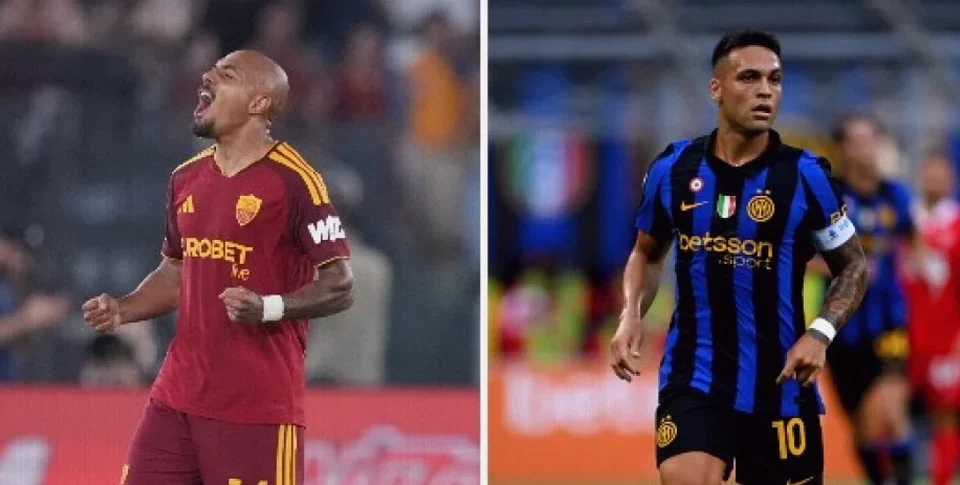
Roma and Inter arrive at the Olimpico with perfect records, the two leading sides in Serie A and the two most productive attacks of the opening five rounds. Their meeting is not yet a verdict on the title race, even if Inter are pursuing a second successive championship and Roma have begun to look capable of troubling the established order. It is, however, a useful test of a broader change in the league: the sides taking initiative and scoring freely are also collecting the points.
Gian Piero Gasperini’s Roma have scored 12 times, while Cristian Chivu’s Inter have managed 13. The return has been immediate. Roma’s attacking output has risen from three goals to 12 compared with this stage last season, bringing three additional points; Inter’s increase of two goals has translated into a six-point improvement. Across Serie A’s first 40 matches, 121 goals have been scored, 13 more than in the corresponding 2025 comparison.
That number matters beyond entertainment. Italian football has long had room for caution and improvisation, but clubs seeking a meaningful European place and a stronger supply of ambitious players for the national team need more than survival instincts. Playing higher up the pitch can improve defensive control as well as create better chances at the other end, and the early table has reflected that principle.
Different routes to the same summit
Roma and Inter both use a three-man defence, yet their football has little else in common. Gasperini’s side press man-to-man across the field, attempting to remove an opponent’s passing options before they can establish possession. Their principal finishing point has been Donyell Malen, who has struck six times this season and has scored 20 goals since January. Roma’s improved attacking picture has also been helped by Paulo Dybala’s recovery.
Inter’s strength lies less in one dominant scorer than in the depth of their alternatives. Nine Inter players have already found the net, and no individual has scored more than twice. Chivu has raised the tempo, encouraged higher pressure and sought quicker vertical attacks, while retaining the passing quality that can wear down opponents. His side also continue to work with zonal positioning as a central defensive reference.
The contrast gives the occasion its interest. Roma have a clear focal point in Malen; Inter can alter the source of their threat from one phase to another. Both approaches have produced results, and neither coach appears inclined to turn the evening into a conservative exercise.
The fixture itself has a long record of rewarding that instinct. Roma and Inter have produced 540 goals in 186 Serie A meetings: 235 for Roma and 305 for Inter, an average of 2.9 per game. In a season where scoreless draws have been scarce, helped in part by the new regulations and their refereeing interpretation, there is little reason to expect this contest to detach itself from the prevailing pattern.
There is also a quieter personal history behind the technical contest. Gasperini lasted only 60 days as Inter coach before being dismissed. Chivu spent four years as a Roma player before leaving for Inter only months before the expiry of a contract the Sensi family could not renew. Neither past appears to carry resentment now.
Gasperini has acknowledged Inter’s superior standing and resources, while using the challenge to feed a Roma crowd that has not felt so close to this level of occasion for some time. Chivu has chosen not to discuss the match publicly, but regards Roma as among Inter’s most dangerous competitors in the championship contest. At the Olimpico, the shared intention is likely to be simple: not to protect what is already in hand, but to find one more goal than the other side.