From Belo Horizonte to Eindhoven, Barcelona, Milan and Yokohama, Ronaldo Nazário’s career was built in sudden accelerations: a teenage scorer at Cruzeiro, a European force before 21, a player remade after injury and a World Cup winner again. As he marks his 50th birthday, the Brazilian’s route still runs through seven clubs, two World Cup triumphs and a collection of performances that gave “O Fenômeno” its lasting meaning.
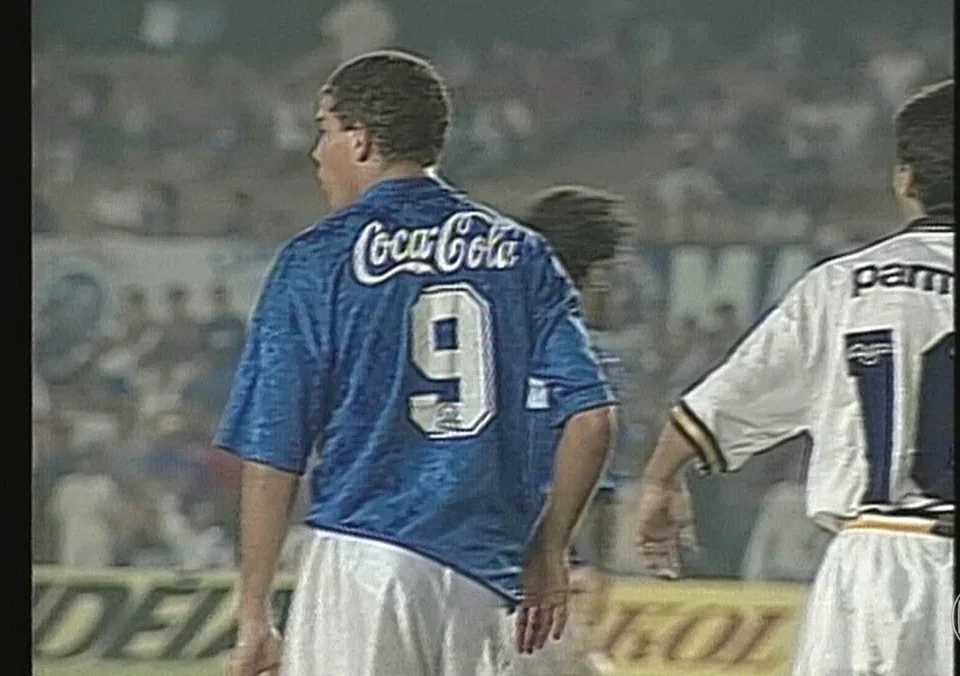
His senior story began at Cruzeiro on 25 May 1993, when the 17-year-old made his Campeonato Mineiro debut against Caldense. In that first professional season he delivered 20 goals in 21 appearances, a warning of the scale to come.
Quick facts
- Ronaldo played for Cruzeiro, PSV Eindhoven, Barcelona, Inter Milan, Real Madrid, Milan and Corinthians.
- He won the World Cup with Brazil in 1994 and 2002, ending his international career with 62 goals in 98 official matches.
- His individual honours included two Ballons d’Or, three FIFA World Player of the Year awards and the 2003 Laureus Comeback of the Year prize.
- He scored 15 World Cup goals, a tournament record until Miroslav Klose reached 16 in 2014.
- After retirement, he held controlling interests in Valladolid and Cruzeiro and has presented an SAF project for Inter de Limeira with Roberto Carlos.
The early figures in Minas Gerais were extraordinary. Ronaldo scored his first senior hat-trick in Cruzeiro’s 6-1 Supercopa Libertadores victory over Colo-Colo on 5 October 1993, then finished as the competition’s leading scorer with nine goals despite Cruzeiro exiting in the quarter-finals.
He also struck five times in a 6-0 Brazilian league win over Bahia, including one goal after Uruguay goalkeeper Rodolfo Rodríguez placed the ball on the turf following a save. Ronaldo noticed first, took possession and finished into an unguarded net.
There was already the solo brilliance, too. In April 1994, he ran through Boca Juniors’ defence to score in a 2-1 victory that sent Cruzeiro into the next round. His first trophy as a Cruzeiro regular was the 1993 Mineiro title, for which he scored 22 times in 18 matches; he had arrived too late to play in the Copa do Brasil final against Grêmio.
Brazil called within 10 months of his professional debut. Ronaldo first appeared against Argentina in Recife on 23 May 1994, and scored his first international goal in a 3-0 friendly win over Iceland on 4 May, shortly before the United States World Cup.
He did not play at that 1994 tournament, but celebrated the penalty-shootout final win over Italy as the squad’s youngest player, aged 17 years and 10 months. The experience would frame a far more central role four years later.
After the World Cup, Ronaldo crossed to PSV. He scored 30 goals in his opening Dutch season, prompting Rudi Völler to say he had never witnessed an 18-year-old play at that level after a standout UEFA Cup display against Bayer Leverkusen.
His first European silverware arrived with PSV’s 1995-96 Dutch Cup win. Barcelona then took him to Spain for 1996-97, the only season he would spend at the club but one that altered his status across the continent.
Ronaldo scored 34 league goals to finish as La Liga’s leading scorer, while Barcelona lifted the Copa del Rey, Spanish Super Cup and UEFA Cup Winners’ Cup. Luis Enrique, then a Barcelona player and now Paris Saint-Germain coach, has recalled seeing Ronaldo at PSV and being astonished by what followed in Catalonia, calling him the most spectacular footballer he had watched.
His defining Barcelona goal came against Compostela on 11 October 1996. Receiving near halfway, he surged beyond four opponents before placing his finish past the goalkeeper.
That year he became FIFA World Player of the Year at 20, still the youngest recipient of the award, before also claiming the European Golden Shoe for 1996-97. Inter signed him in 1997 and Italy gave him the name that endured: Il Fenomeno.
Rather than being contained by Serie A’s defensive reputation, he scored 25 goals in his first Inter campaign and was voted the league’s best player for 1997-98. Internationally, he led Brazil’s Copa América success in 1997, scoring five times, including in the 3-1 final victory over Bolivia in La Paz.
The 1997 Ballon d’Or followed, Ronaldo collecting 222 points to Predrag Mijatović’s 68 after finishing second to Matthias Sammer the year before by one point. He also won the FIFA world player prize for a second time, becoming the first player to take the award more than once since its creation in 1991.
At Inter, the European stage brought further proof. In April 1998 he scored twice on a mud-heavy Moscow pitch as Inter beat Spartak 2-1 in the UEFA Cup semi-final. Weeks later in Paris, he capped a 3-0 final win over Lazio with a finish after feinting past goalkeeper Luca Marchegiani.
France 1998 was Ronaldo’s first World Cup on the field. He opened his tournament account against Morocco, scored twice against Chile in the last 16 and struck against the Netherlands in the semi-final before converting in the shootout.
Brazil reached the final, where the hours before kick-off were overshadowed by Ronaldo’s convulsion at the team hotel. France won the final, but Ronaldo’s four-goal tournament brought him the Golden Ball as the competition’s top player; the vote was made before the final.
Brazil returned to Copa América glory in 1999. Ronaldo shared the scoring lead on five goals with Rivaldo and completed the 3-0 final defeat of Uruguay after Rivaldo had scored twice.
The next turning point was much darker. Ronaldo ruptured the patellar tendon in his right knee while at Inter in April 2000, an injury that kept him out for almost two years and raised serious doubts over whether he could return at elite level.
He answered in the most emphatic setting. Back with Brazil at the 2002 World Cup, Ronaldo adopted the distinctive front-fringe haircut that drew attention away from ongoing questions about his fitness during the decisive week.
In Yokohama, four years after the trauma of the 1998 final, he scored both goals as Brazil beat Germany 2-0 to secure a fifth World Cup. His eight goals made him the tournament’s leading scorer.
Real Madrid signed him after that victory, placing him among a new group of Galácticos alongside Zinedine Zidane, Luís Figo, David Beckham, Raúl and Roberto Carlos. Across five seasons, Ronaldo won La Liga in 2002-03 and 2006-07, the 2003 Spanish Super Cup and the 2002 Intercontinental Cup.
He scored in the latter final, a 2-0 win over Paraguay’s Olimpia in Yokohama less than six months after Brazil’s World Cup triumph there. The 2002 season also brought his third FIFA world player award and a second Ballon d’Or.
The return from injury was recognised with the 2003 Laureus Comeback of the Year honour. In April of that year, Ronaldo produced one of Real’s great European away displays, scoring all three goals in a 4-3 Champions League loss at Manchester United that still took Madrid through after a 3-1 first-leg victory.
Pelé included him in the FIFA 100 list in 2004, one of 15 Brazilians selected among 125 footballers. That June at Mineirão, Ronaldo scored every goal in Brazil’s 3-1 World Cup qualifying win over Argentina: three penalties, each won by Ronaldo himself.
Two months later, he joined Ronaldinho, Roberto Carlos and the Brazil side for the 6-0 Peace Match win over Haiti in Port-au-Prince, an occasion that brought thousands into the streets to greet the world champions.
Brazil’s 2006 World Cup ended below expectation, but Ronaldo left Germany with a historic milestone. His two goals against Japan and one against Ghana took him to 15 World Cup goals, a record that stood for eight years before Klose overtook it during Germany’s 2014 campaign.
In 2009, after 15 years in Europe, Ronaldo returned to Brazil with Corinthians. His first goal came in only his second match, a 47th-minute equaliser against Palmeiras on 8 March, headed in before he climbed the fence at the Prudentão in Presidente Prudente to celebrate with supporters.
Corinthians won both the Paulista Championship and Copa do Brasil that year. Ronaldo contributed memorable goals in the finals against Santos and Internacional, and those trophies remained the final club honours of his playing career.
His last Brazil appearance came at Pacaembu on 7 June 2011, when he replaced Fred in the first half of a 1-0 friendly victory over Romania and left at the interval. He departed the national team with 62 goals in 98 recognised matches.
His influence has extended beyond the footage of one-on-ones and finishes that continues to circulate across generations. Karim Benzema has said Ronaldo’s work as a striker cannot be replicated, while Zlatan Ibrahimović described him as a hero whose movements he tried to study and reproduce. Thierry Henry has called Ronaldo’s ability the finest he had seen, saying the Brazilian appeared to belong outside the ordinary game.
France Football selected Ronaldo at centre-forward in its 2020 Ballon d’Or Dream Team, joined by Lionel Messi and Cristiano Ronaldo in attack, with Pelé and Diego Maradona among the midfield choices. He had already become a familiar figure in advertising, appeared in the Goal! films and featured in The Simpsons.
His later football life has been spent in boardrooms as well as stadiums. Ronaldo bought a majority stake in Valladolid in 2018 and sold his holding in 2025, while at Cruzeiro he acquired 90 per cent of the club’s SAF in 2021 before relinquishing control in 2024.
His newest project has been presented alongside former Brazil, Real Madrid and Corinthians teammate Roberto Carlos: an SAF proposal for Inter de Limeira. Away from the administrative work, he also appeared with Ronaldinho beside Madonna during the half-time show at the World Cup final at MetLife Stadium, a different kind of stage for a player whose footballing journey has rarely lacked spectacle.