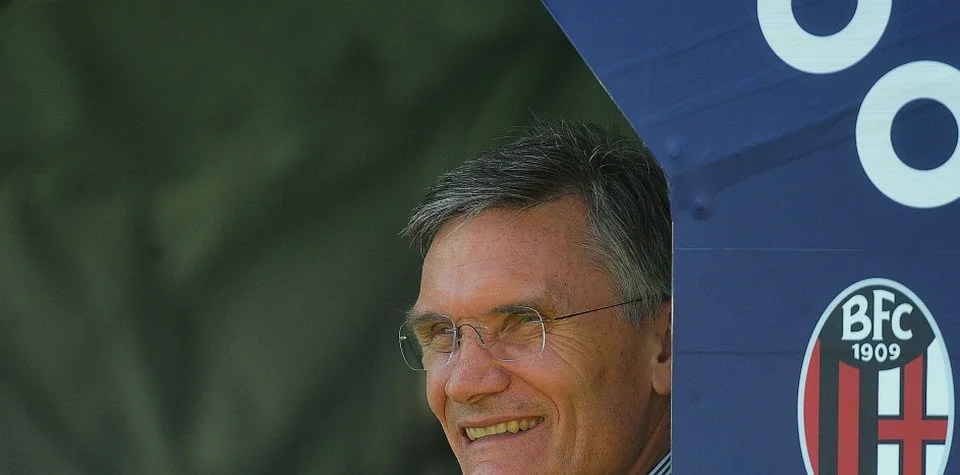
Giovanni Sartori has seen enough difficult starts to resist the panic gathering around Bologna. Five matches have produced two points, and the club is still searching for the balance lost over a summer in which four regulars — Jhon Lucumi, Santiago Castro, Remo Freuler and Jonathan Rowe — departed. Yet Bologna’s sporting director, in post since 2022, insists that a troubled opening does not settle the direction of a season.
“There is understandable concern, but the level of pessimism is excessive,” Sartori said. “A negative atmosphere has been around the club since the summer window. It is up to us to turn that into something positive.” He believes the present group needs time to absorb the loss of four established starters, rather than being judged solely on an early points total.
The memory of previous recoveries informs his position. Sartori recalled that Bologna had only three points after five games in his first season before eventually finishing within a point of the Conference League places. He also pointed to the departures of Joshua Zirkzee, Riccardo Calafiori, Sam Beukema and Dan Ndoye, players whose exits once appeared capable of disrupting the club’s rise but were followed by further progress and a trophy.
“The calculations are made at the end,” he said. “We have built football that is sustainable both financially and competitively. Now I am in my fifth year and we hope to get closer to perfection.” The reasons for confidence, in his view, are the coach, the time available to work and a squad he still considers to possess real value.
Palladino given the task of restoring continuity
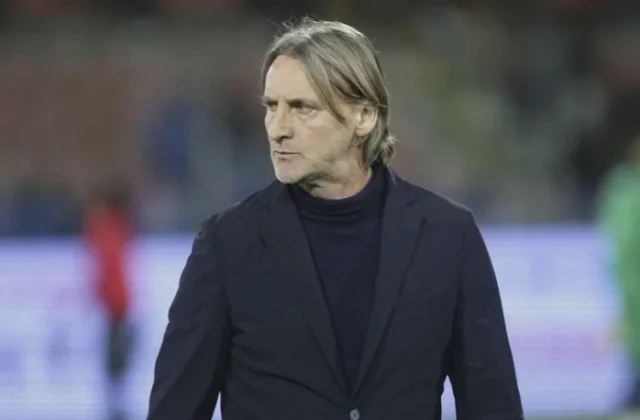
That faith now centres on Raffaele Palladino, appointed after Domenico Tedesco’s dismissal. Sartori described the decision to remove Tedesco as painful for everyone involved, particularly because he holds the former coach in high regard personally. But a meeting following the Napoli match brought the underlying concerns into sharper focus.
“It was a long discussion and serious doubts emerged,” Sartori explained. “A change of coach is a defeat for everybody. Sometimes the manager and the squad simply do not connect, and evidently that was the case here, including in their footballing principles.”
Palladino arrives with three years of tangible results behind him, Sartori said, and with an approach that offers a degree of continuity. He sees similarities between Palladino’s football and that of Vincenzo Italiano, while also finding it not far removed from Thiago Motta’s earlier work in Bologna. The club had already met Palladino two years ago, underlining that his arrival was not an improvised choice.
There has not yet been a demand for January reinforcements. Sartori believes the new coach must first assess the players available to him, although he made clear that the club would be ready to act if Palladino identifies a need.
He also rejected suggestions that owner Joey Saputo is stepping back. Sartori said Saputo remains closely involved in the club and participated in the summer market. Nor does he accept the idea of Bologna being divided into separate camps led by Saputo, chief executive Claudio Fenucci, Marco Di Vaio and himself. “There is only one group, and it is Bologna,” he said, stressing that collective decision-making has remained intact.
A market shaped by departures and patience
Rowe’s exit, Sartori said, was not planned early in the summer. With ten days left in the window, the player had received no market interest, and Bologna did not consider a sale appropriate at that point. The situation changed when Rowe repeatedly asked to leave, creating what Sartori called an uncomfortable environment both within the club and among team-mates. Bologna agreed to the move only when a significant offer arrived.
Freuler’s situation had a longer history. Bologna’s first renewal offer came in September 2025 and proposed a one-year extension with a further option, together with improved wages. Sartori said the midfielder hesitated, perhaps while waiting for an important opportunity ahead of the World Cup. He would not be drawn into speculation about a possible January return.
Alessandro Romano was a genuine target, Sartori confirmed, but Bologna ultimately chose to pursue Amondarain as a box-to-box midfielder instead. He regards Roberto Piccoli and Artem Dovbyk as proven assets rather than gambles, citing their recognised Serie A quality and physical presence. Enem, by contrast, is the player he considers a more speculative investment.
Concern over Lukasz Skorupski has also been played down. Sartori does not believe Bologna have a goalkeeping problem, provided the Poland international returns to the high standards he showed in previous seasons. Federico Bernardeschi has an option in his contract for an extension, leaving his future open.
Elsewhere, Bologna are watching Raimondo’s development at Frosinone with approval. The forward is on a straight loan, a pathway Sartori considers important for his growth. He compared it with the two seasons spent at Spezia by Pio Esposito before the striker’s rise.
Sartori’s own future is another subject he wants to settle calmly. His contract runs until 2027, while discussions over an extension are usually considered around March. For now, he has no intention of leaving. “I have said it before: I would like to stay here for life,” he said. “I am certainly not running away.”
In a season that has begun under a cloud, Bologna’s response will depend less on early noise than on whether Palladino can give a reshaped side time to become a team again. Sartori’s message is that the club should be measured not after five uneasy Sundays, but when the full course of the championship has been run.