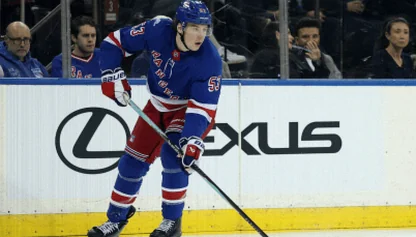

The Tampa Bay Lightning enter 2026-27 with the same pressure points that have kept them in the contender mix: Nikita Kucherov driving offense from every shooting lane, a deep group that can finish around the crease, and Andrei Vasilevskiy giving the club dependable work in net. The tracking numbers show a roster built to create chances from close range while still carrying enough pace and point-shot threat to stretch a defense.
SEO Title: Tampa Bay Lightning 2026-27 preview: Kucherov, Vasilevskiy and NHL EDGE trends
SEO Description: A rink-side look at the Tampa Bay Lightning’s 2026-27 outlook, including Nikita Kucherov’s shooting profile, the club’s scoring depth, John Carlson’s arrival and Andrei Vasilevskiy’s goaltending numbers.
Tampa Bay Lightning 2026-27 Preview: The numbers behind a familiar contender
Kucherov still drives the attack
Kucherov won the Hart Trophy last season after leading the NHL at 1.71 points per game, and his puck-tracking profile explains why Tampa Bay’s attack remains so difficult to contain. The 33-year-old scored 18 high-danger goals, 12 from mid-range and three from long range, placing at or above the 95th percentile among forwards in each shooting area. His three goals from distance were in the 97th percentile.
He was not merely finding soft ice near the net. Kucherov put 78 mid-range shots on goal, good for the 94th percentile among forwards, and his 38 long-range shots ranked ninth at the position.
- In 2024-25, Kucherov was eighth among forwards with 66 shot attempts clocked between 80 and 90 mph, and his hardest shot reached 96.28 mph, placing him in the 98th percentile.
- Last season, he tied for fifth among forwards with 131 attempts in the 70-80 mph range.
- He added 63 attempts between 80 and 90 mph, a 98th-percentile mark, plus three attempts from 90-100 mph, which ranked in the 94th percentile.
- His average shot speed was 62.49 mph, in the 95th percentile, while his top shot speed was 92.06 mph, in the 90th percentile.
Kucherov also carried a major skating load. He covered 244.04 miles at all strengths, a 95th-percentile total among forwards, and logged 41.98 miles on the power play, ninth-most at his position. Against the Boston Bruins on February 7, he skated 4.53 miles, the seventh-highest single-game distance by an NHL forward last season.
His 138 bursts above 20 mph put him in the 83rd percentile. He also ranked in the 95th percentile in offensive-zone start percentage at 44.0 percent and in the 92nd percentile in offensive-zone time percentage at 45.7 percent. Beyond his own finishing, Kucherov supplied 51 primary assists, third-most in the League.
Goals can come from every layer of the ice
Tampa Bay finished fourth in the NHL at 3.49 goals per game last season. The Lightning were second in high-danger goals with 154, 10th in high-danger shots on goal with 686, eighth in long-range goals with 21 and fifth in long-range shots on goal with 515.
Jake Guentzel has been Kucherov’s closest challenger in Tampa Bay’s goal column since the start of 2024-25. Kucherov has 81 goals over that span, while Guentzel has 79. Last season, Guentzel tied for third in the NHL with 26 high-danger goals and ranked third outright with 116 high-danger shots on goal.
- During his first Lightning season in 2024-25, Guentzel finished second in the NHL with 27 high-danger goals and tied for third with 114 high-danger shots.
- Last season, he added eight mid-range goals, an 86th-percentile figure among forwards, and 62 mid-range shots on goal, in the 88th percentile.
- The 31-year-old skated 252.15 miles at all strengths, placing in the 96th percentile, and covered 37.79 power-play miles, ranking in the 97th percentile.
- His 25 power-play goals across the past two seasons are tied for 10th in the NHL.
Brayden Point remains one of Tampa Bay’s most dangerous attackers in close. He led the NHL with 28 high-danger goals in 2024-25. Despite missing 19 games last season, Point still posted 13 high-danger goals, an 83rd-percentile result, and 69 high-danger shots on goal, in the 90th percentile.
The speed did not disappear while Point was sidelined. He ranked eighth in the League with 315 rushes above 20 mph and tied for sixth with 36 bursts above 22 mph. His top skating speed was 23.46 mph, placing in the 94th percentile among forwards. Point also ranked in the 93rd percentile in offensive-zone starts at 43.0 percent and in the 92nd percentile for power-play skating distance at 33.75 miles.
Brandon Hagel supplied a career-best 36 goals last season and brought production from multiple scoring zones. He had 20 high-danger goals and 14 mid-range goals, both in the 97th percentile among forwards. Hagel also posted 92 mid-range shots on goal, another 97th-percentile number, alongside 74 high-danger shots on goal in the 93rd percentile and 19 long-range shots on goal in the 89th percentile.
His two-way workload remained a central part of Tampa Bay’s identity. Hagel skated 21.30 miles on the penalty kill, a 92nd-percentile total, while recording 166 bursts above 20 mph and 12 above 22 mph. Those marks landed in the 89th and 92nd percentiles, respectively. His maximum speed was 23.22 mph, in the 90th percentile.
Anthony Cirelli, often alongside Hagel when the Lightning are shorthanded, covered 26.17 miles on the penalty kill. That ranked in the 98th percentile among NHL forwards. Cirelli also contributed 15 high-danger goals and 68 high-danger shots, both 90th-percentile totals, and scored two long-range goals, placing in the 93rd percentile.
Carlson fills a blue-line opening
The offseason changed Tampa Bay’s look at the point. Darren Raddysh, who led the NHL with nine long-range goals last season, was moved to the Toronto Maple Leafs. The Lightning responded by signing John Carlson to a two-year contract.
Carlson’s numbers suggest he can take a meaningful role on the first power-play unit. Last season, the defenseman recorded five long-range goals, in the 96th percentile at his position, and six mid-range goals, in the 94th percentile. He also generated 15 high-danger shots on goal, placing in the 97th percentile, 34 mid-range shots in the 92nd percentile and 67 long-range shots in the 87th percentile.
Vasilevskiy keeps the crease steady
At the other end, Vasilevskiy remains the backbone of the Lightning’s contender case. The reigning Vezina Trophy winner tied for second in the NHL with 35 quality starts last season, defined as starts with a save percentage above .900. He had ranked second with 39 quality starts in 2024-25.
His results held up across the three major shot locations. Vasilevskiy tied for sixth among NHL goaltenders with a .912 save percentage on mid-range attempts and tied for seventh at .844 on high-danger chances. His .969 long-range save percentage sat just outside the top 10.
- Mid-range saves: 414, fourth in the NHL.
- Long-range saves: 308, ninth in the NHL.
- High-danger saves: 352, 10th in the NHL.
- Thirty-win seasons in a row: nine.
Tampa Bay has finished among the NHL’s top five teams in goals allowed in each of the past two seasons. With Vasilevskiy still delivering quality starts, Kucherov controlling the offensive tempo and a supporting cast that can score from the slot, the crease and the perimeter, the Lightning again have the profile of a club built for a long spring.