Minnesota did not spend the summer trying to make a small adjustment. The Timberwolves pushed their chips toward Anthony Edwards’ prime, sending Naz Reid and Julius Randle out in a five-team trade for LaMelo Ball and adding Jonathan Kuminga to reshape a roster coming off a 49-33 season and a second-round playoff exit.
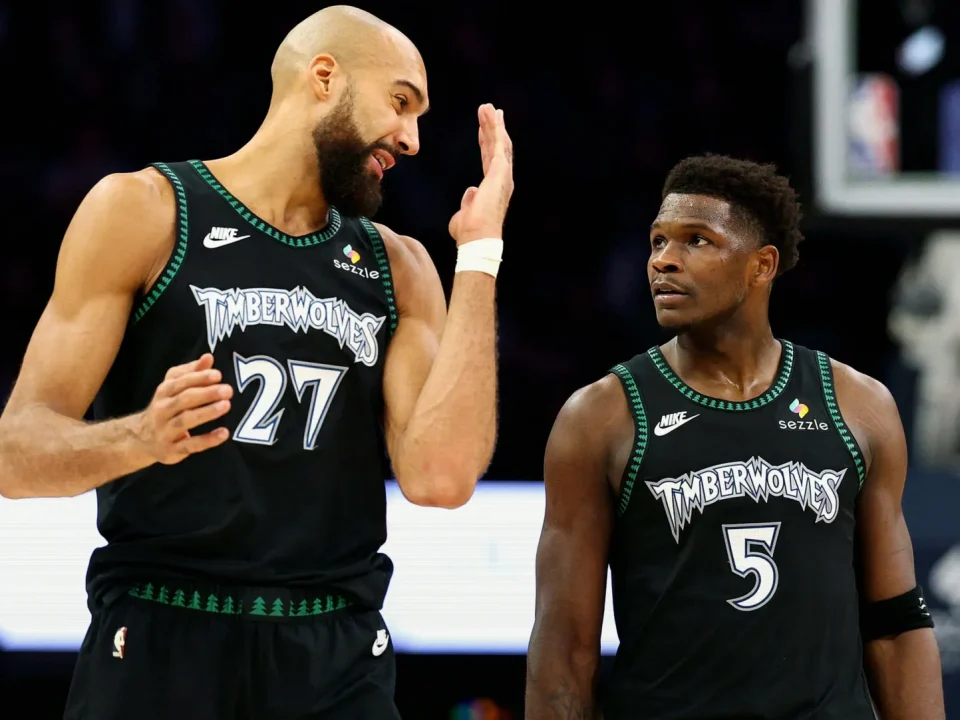
Ball, 25, arrives as the lead organizer Minnesota has lacked while Edwards has carried a growing share of the ball-handling burden. The two 2020 draft classmates are both entering their early-prime seasons, giving the Wolves a new backcourt partnership built around Ball’s passing flair and Edwards’ scoring force.
Minnesota has won five playoff series across the last three seasons after winning only two in the franchise’s first 34 years. President of basketball operations Tim Connelly has continued to operate with that urgency. His earlier Rudy Gobert trade created a twin-big experiment with Karl-Anthony Towns; this summer’s moves again altered the team’s core in pursuit of a deeper postseason run.
The Wolves also explored a pitch for LeBron James, envisioning Jaden McDaniels taking difficult perimeter defensive assignments and Gobert protecting the rim behind him. James did not join the club, leaving Minnesota to address its power-forward vacancy with Kuminga.
Ball can change Edwards’ workload
Edwards has become increasingly dependent on creating his own offense. His share of Minnesota’s possession time climbed from 16% in 2024-25 to 20% in 2025-26, the largest year-to-year increase of his career. Only 27% of his 3-point attempts came off the catch, the fourth-lowest rate among 307 players who took at least 100 3s last season.
That is the opening Ball is expected to provide. Edwards made 69 of 139 catch-and-shoot 3-pointers last season, a 49.6% clip that led 308 players with at least 75 such attempts. His accuracy on pull-up 3s was 35.3%.
More possessions initiated by Ball should mean more quick-release chances for Edwards, rather than asking him to begin every late-clock action from above the break. Edwards could also spend more minutes in the scoring-guard role where he has been most dangerous, putting a first scoring title within reach if the lineup finds balance.
Ball stayed healthy during Charlotte’s breakout campaign and brings a willingness to push tempo, hit difficult passes and hunt his own shot when needed. The fit will be tested quickly, but the talent level in Minnesota’s starting backcourt is clear.
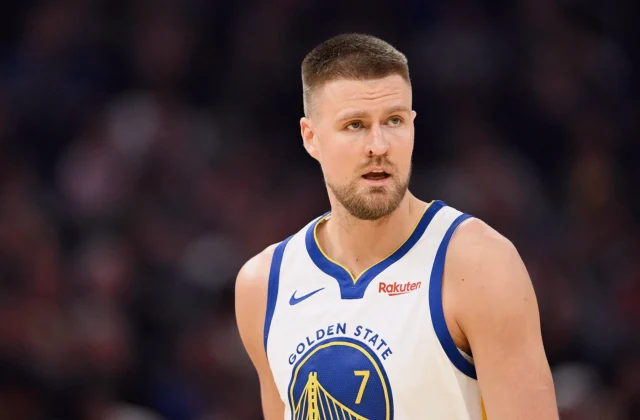
Kuminga has a new opening at power forward
Kuminga is already entering his sixth NBA season, though a settled role has remained elusive. He found inconsistent opportunities with Golden State and gained little traction in Atlanta last season, when the Hawks declined his team option.
The production has flashed whenever he has played: Kuminga owns career averages of 12.5 points in 22.1 minutes per game, equivalent to 20.3 points per 36 minutes. Minnesota’s immediate need, however, is less about showcasing his individual scoring than filling the physical work at power forward.
The Wolves need Kuminga to rebound, defend and complement McDaniels and Gobert. After declining a three-year offer from the Lakers, he is effectively playing to establish his next contract value. His season may turn on whether he embraces the assignment Minnesota needs rather than chasing the offensive freedom he has sought elsewhere.
McDaniels remains central to the defensive plan as Minnesota’s long perimeter stopper, and Ball’s arrival could also create more chances for him offensively. Gobert’s rim protection remains the safety net behind the Wolves’ aggressive wing defense.
Bench minutes open while DiVincenzo recovers
Donte DiVincenzo’s Achilles absence leaves a meaningful rotation gap in training camp and preseason. Ayo Dosunmu, Terrence Shannon Jr., Jaylen Clark and former lottery selection Cody Williams are among the reserves positioned to compete for those minutes.
Isaiah Evans and veteran forward Trey Lyles also join Ball, Kuminga and Williams among Minnesota’s offseason additions. How Finch divides the wing and guard minutes will be one of the central preseason questions, particularly with Ball expected to take over a large share of the point-guard responsibilities.
Dates that will frame the new season
-
Oct. 21, vs. Miami Heat: Minnesota opens against a Miami team featuring Giannis Antetokounmpo in his Heat debut, putting two major offseason additions on the floor immediately.
-
Oct. 31, vs. San Antonio Spurs: The Wolves meet the team that eliminated them in six games last spring. Three of Minnesota’s losses in that series came by at least 29 points.
-
Dec. 27, at Golden State Warriors: Minnesota and Golden State first meet Oct. 28, but the December return to the Warriors’ building gives Kuminga a later chance to face his original NBA club.
-
Dec. 31, vs. Denver Nuggets: The teams also play Dec. 28 in Denver, but both will be on the second night of a back-to-back. The New Year’s Eve rematch in Minnesota projects as the more charged setting.
-
Jan. 29, vs. Charlotte Hornets: Ball faces the franchise that traded him for the first time more than three months into the season. Reid is also set to receive a video tribute.
The Wolves have made their direction plain: put a real table-setter beside Edwards, restore size and defensive flexibility at forward, and see whether a roster built for this window can finally break through in the spring.