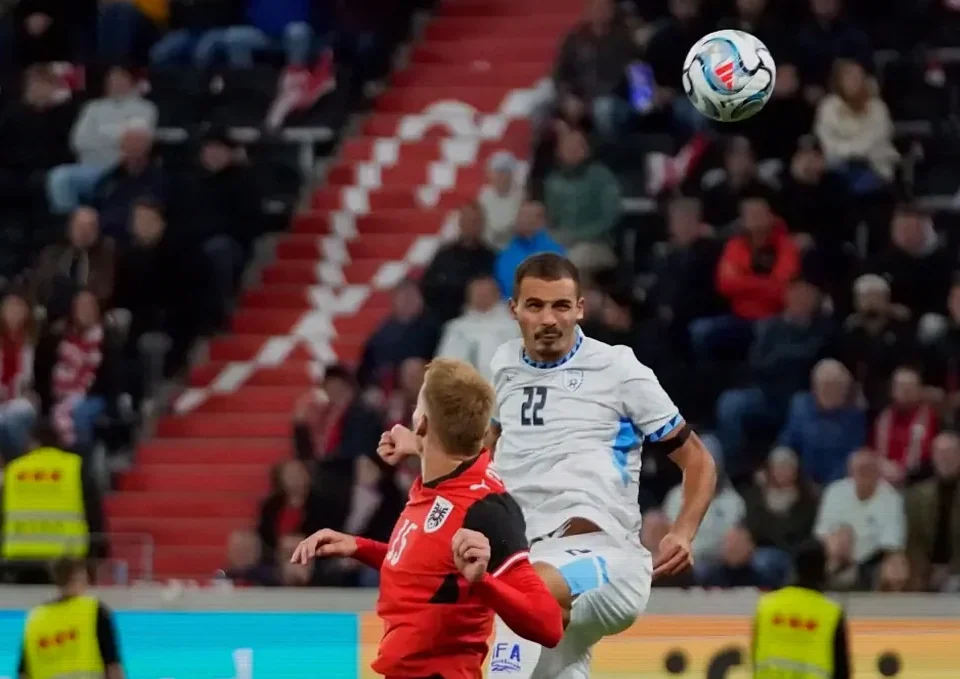
In an Austria-Israel match marked by an early second-half equaliser, Saied Abu Farchi’s celebration has become the central issue after the Israeli player was sent off for a gesture involving the corner flag. UEFA’s next steps will depend on how Bulgarian referee Georgi Kabakov describes the episode in his official report.
Key takeaways
- Abu Farchi levelled the match shortly after the restart, cancelling out Romano Schmid’s first-half goal for Austria.
- The Israeli player picked up the corner flag and made a motion resembling the firing of a weapon.
- He received a second yellow card and was dismissed, having already been booked earlier in the game.
- A one-match suspension is the likely outcome if the report treats the offence solely as improper use of the corner flag.
- A more serious UEFA disciplinary case could follow should the gesture be recorded as discriminatory or as bringing the game into disrepute.
The incident after Israel’s equaliser
Austria had gone ahead before half-time through Schmid, but Israel found their response almost immediately after the interval when Abu Farchi scored to make it level. Instead of returning directly towards midfield, he ran to the corner and incorporated the flag into his celebration.
Holding it, Abu Farchi performed a gesture that appeared to imitate shooting a firearm. Online discussion has also suggested that he may have been attempting to mimic a billiards stroke, but the disciplinary significance will rest not on social-media interpretation but on the referee’s account of what occurred.
Using the corner flag in that manner is prohibited. Kabakov showed Abu Farchi a yellow card, which became a red because it was his second caution of the evening.
What UEFA could consider
If the referee’s report limits the incident to the corner-flag offence and the resulting dismissal, Abu Farchi would ordinarily face a one-game ban. The prospect changes if Kabakov identifies the celebration as unsporting conduct of a more serious kind.
UEFA’s disciplinary rules allow punishment for behaviour judged to damage the reputation of football or UEFA. They also set a minimum sanction of ten matches, or a suspension for a specified period, for conduct that violates the dignity of an individual or group on grounds including skin colour, race, religion, ethnic origin, gender or sexual orientation.
In cases where the circumstances warrant it, the disciplinary body can impose further measures on the responsible association or club. Those options include matches behind closed doors, stadium closure, a forfeit, points deductions or removal from a competition. Sanctions may also be paired with community-football work or specific anti-discrimination measures, such as banners and preventive initiatives.
UEFA could open an exceptional disciplinary investigation to examine the celebration in fuller detail. Such a process would allow the governing body to seek Abu Farchi’s explanation before deciding whether the red card should remain a routine suspension or become a wider case.