October has a habit of introducing a bullpen arm to the wider baseball world. The postseason’s most important reliever is not always the closer with the biggest contract or the cleanest regular-season line. Sometimes it is the hard thrower who found a new shape on his fastball in June, the converted starter who can cover two innings, or the rookie with one unhittable secondary pitch. As the 2026 field begins to take shape, a handful of less obvious arms look capable of owning the tightest outs.
2026 Postseason Relief Breakout Candidates
Recent October runs make the point. Will Vest, Eric Lauer and Roki Sasaki carried major leverage for their clubs in 2025; Luke Weaver, Lucas Erceg and Alex Vesia stood out the year before. In 2023, Arizona’s Kevin Ginkel and Texas’ Josh Sborz were central figures on the way to the World Series, alongside Houston’s Ryan Pressly. Pressly, Emmanuel Clase and Bryan Abreu were the leading impact relievers in 2022, while Atlanta’s Tyler Matzek and Will Smith, plus Boston’s Garrett Whitlock, left their marks in 2021.
There is no clean blueprint in that group. Ginkel and Sborz arrived in 2023 without much national fanfare and have not matched those contributions consistently since. Sasaki and Sborz entered their October assignments with ERAs above 4.40, while Lauer had been used as a swingman. Clase and Pressly fit the familiar established-star profile, but the broader lesson is that postseason relief work can turn on opportunity as much as reputation. The schedule changes, managers shorten the leash, and a single reliever can suddenly be asked to protect the defining inning of a season.
That is also why dominant names such as Mason Miller, Josh Hader and Louis Varland are not the most interesting choices here. A reliever needs a team to create leads and a manager to hand him the ball. Mason Miller’s small postseason workload last year is a reminder: he was overpowering, but San Diego lost in the Division Series and he faced only nine hitters.
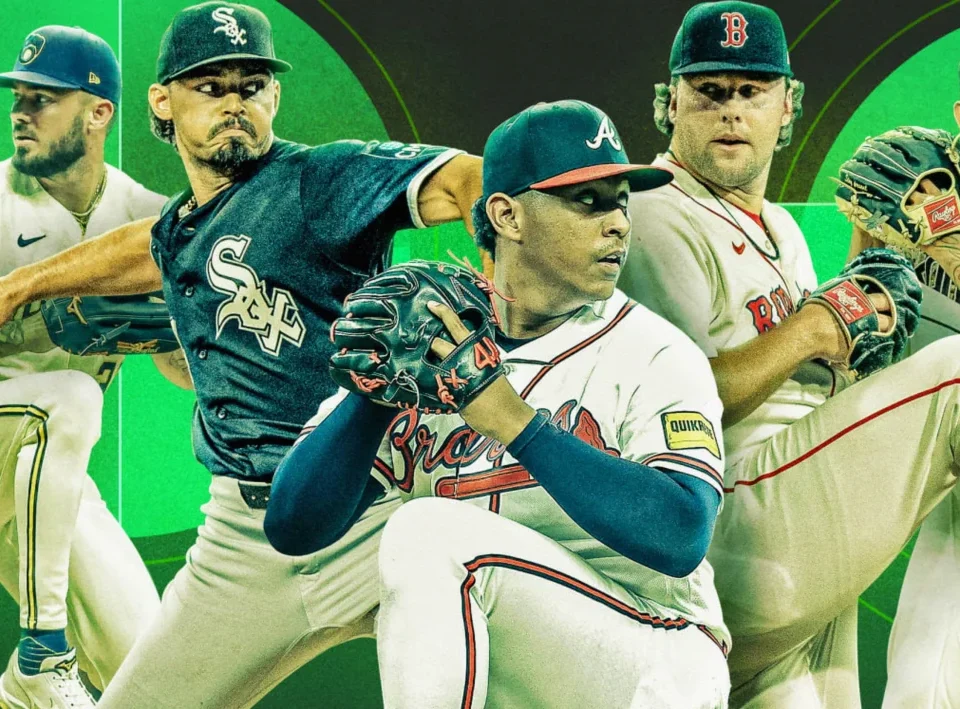
Jordan Hicks has rebuilt his case since coming back from a lat injury. The White Sox right-hander carried a 5.60 ERA when he went down in mid-May, after an uneven stretch that included shoulder trouble in 2025 and a 6.95 ERA between San Francisco and Boston. Since returning on June 21, however, Hicks has struck out 39 percent of opposing hitters, the sixth-best rate among relievers over that span. Before the injury, his strikeout rate was just 17 percent.
The adjustment has been more than raw velocity. Hicks still averages 99 mph with the four-seam fastball, but he has moved away from a mostly sinker-and-sweeper look by restoring the four-seamer to a more meaningful role. During his absence, he also altered his arm slot, adding five inches of induced break to the fastball. The result has been a far less predictable version of a pitcher who has always had premium heat. Chicago’s deep relief group also includes Hagen Smith, Bryan Hudson and Grant Taylor, but Hicks may have the highest October ceiling if the White Sox reach the tournament.
Erik Miller, who shared a San Francisco bullpen with Hicks in 2024 and 2025, has found another route to late-season dominance after his trade to Boston for Marcelo Mayer. Since June began, Miller owns a 39 percent strikeout rate, fourth among relievers in that period. His improvement did not begin only after reaching the Red Sox, though the trade brought a sharper change in approach: he has shelved his four-seamer and changeup and committed to sinkers and sliders.
That simplification has taken Miller from a 2.76 ERA before the trade to a 1.23 mark in Boston, while his strikeout rate rose from 32 percent to 40 percent. His walk rate remains a legitimate concern in the compressed, unforgiving atmosphere of October. Still, a left-hander missing that many bats while allowing less hard contact than any other pitcher in baseball is the sort of bullpen weapon that can alter a series.
Arizona’s Garcia has traveled a stranger road. Acquired from Seattle last summer in the Josh Naylor deal, he posted a 5.84 ERA across 12 appearances after joining the Diamondbacks and did not make the 2026 Opening Day roster. Since his May 1 recall, he has become one of Arizona’s most trusted high-leverage options, carrying a 2.03 ERA and a 32 percent strikeout rate.
The difference is a cutter. Garcia discarded last season’s changeup and slider, adding a cutter that comes in five mph harder than the old slider. It works alongside his 97 mph sinker and 88 mph sweeper, giving him a more coherent three-pitch mix. Arizona and San Diego close the regular season with three games at Petco Park, a set that could decide a Wild Card berth. For both clubs, that series may already carry an October pulse.
Fuentes has made an even more dramatic conversion from starter to relief piece. Called up shortly after his 20th birthday last year, he endured a brutal four-start introduction with a 13.85 ERA. A spot start in April brought four first-inning runs, and he has not returned to the rotation since. In 60 bullpen innings, Fuentes has produced a 1.79 ERA, frequently working more than one frame.
The youngest pitcher on any major league roster has become even more dangerous in the second half, raising his strikeout rate from 28 percent to 36 percent. His 97 mph velocity is paired with a low arm slot and a new gyro slider that replaced his former sweeper. What began as an emergency change of role has turned into a season of elite relief work.
San Diego, already loaded with Mason Miller and 2025 All-Star Adrián Morejón, has another difficult assignment for opposing lineups in rookie Bradgley Rodriguez. The 22-year-old owns a 2.38 ERA, one of the five best among rookie pitchers this season, and averages 98.2 mph on his fastball. Yet his fastball is not even his most common offering.
Rodriguez throws his changeup more than 40 percent of the time, a rare commitment shared by only a few pitchers, including 2026 All-Star Bryan Baker and Devin Williams. The pitch has held hitters to a .134 average and generated 12 runs of value, placing it fourth among changeups this season. Rodriguez is less about overwhelming strikeout totals than about turning contact into soft contact, and few pitchers have done that better. Even his name is singular in pro baseball records: Bradgley is the only one on file.
DL Hall is another left-hander whose season has changed on a pitch-selection decision. The 2017 first-round pick, once a centerpiece of the Corbin Burnes trade, entered 2026 with a 4.32 career ERA and without a 50-inning season because of repeated injuries. A pectoral strain cost him nearly two months again this year, but when healthy he has posted a 2.04 ERA and lifted his strikeout rate from 17 percent last season to 27 percent.
Hall’s sinker has helped him get there. His previous four-seamer was not ineffective, but it relied heavily on velocity and offered little unusual movement as his speed began to decline. The sinker has provided a more difficult look, with movement that has made it a better fit for his current arsenal.
Then there is Daniel Espino, whose return is one of the better human stories in any bullpen race. Espino entered Cleveland’s system in 2019, but shoulder injuries limited him to 134 2/3 innings across the next seven seasons. He missed 2023 and 2024 completely, then threw only two-thirds of an inning at Triple-A in 2025. His long-awaited major league debut finally came this June.
The workload remains small, but the talent is unmistakable. Espino has a 40 percent strikeout rate in 12 innings and averages 98.8 mph with his fastball. In five September appearances, he struck out nine hitters without issuing a walk. Among pitchers whose four-seamers have drawn at least 70 swings, his whiff rate ranks second, ahead of a group that includes Morejón, Jhoan Duran, Jacob Misiorowski and Mason Miller. Health has always been the question; the stuff never was.
The Dodgers may have the most precarious candidate in Edgardo Henriquez. Lower back pain sent the 24-year-old to the 15-day injured list Monday, ending his regular season and putting his October availability in doubt. Los Angeles has not ruled him out, which matters because Henriquez has been extraordinarily effective.
Only Misiorowski and Mason Miller have reached 100 mph more often this season, but Henriquez’s value has come from what happens when hitters do connect. His 29 percent strikeout rate is good rather than elite, yet only Tyler Rogers has done a better job of preventing quality contact. Henriquez has surrendered one home run all year, and that shot came at Coors Field. The Dodgers can shift starters to relief, as they did with Sasaki in 2025, but losing Henriquez would remove a quietly vital option from a staff full of more famous names. Last year, after all, it was Will Klein who supplied some of Los Angeles’ most consequential World Series innings.
October bullpens are rarely predictable. The next breakout arm may not be the reliever with the most saves or the loudest introduction. It may be the pitcher who gets one difficult inning in the first week, earns another the next night, and suddenly becomes the man everyone in the clubhouse wants waiting beyond the bullpen gate.
SEO Title: 2026 MLB Postseason Relief Breakout Candidates
SEO Description: A clubhouse look at bullpen arms such as Jordan Hicks, Erik Miller, Bradgley Rodriguez, Daniel Espino and Edgardo Henriquez who could shape the 2026 MLB postseason.