The first postseason meeting between the White Sox and Guardians carries a little extra dust from the game’s old floorboards. Long before Chicago and Cleveland arrived in the American League Division Series, their franchises stood near the center of the fight that turned Ban Johnson’s Western League into a major-league challenger.
Two clubs at the heart of a league war
In the late 1890s, the National League was professional baseball’s only major league. Founded in 1876 with an emphasis on orderly, family-oriented baseball, the NL had prohibited Sunday games and alcohol sales. But its expansion and absorption of rival circuits brought a different atmosphere. Ownership was spread thinner, umpire abuse became routine and fights from the grandstand could spill onto the field.
Johnson, a former newspaper sports editor running the Western League, saw an opening. He wanted a bigger league with a more polished public face, even if reaching that goal required taking on the National League in its own territory.
At a 1899 gathering, Johnson made the ambition plain: the proposed major league would move into the larger cities of the East. He urged his club officials not to be frightened by National League threats and to answer any intimidation in kind.
The Western League’s eight clubs at that point were:
- Indianapolis Hoosiers
- Minneapolis Millers
- Detroit Tigers
- Grand Rapids Furniture Makers
- St. Paul Apostles
- Milwaukee Brewers
- Buffalo Bisons
- Kansas City Blues
Grand Rapids and St. Paul were expected to relocate to larger markets for 1900. At the league’s annual meeting in the fall of 1899, the owners adopted the American League name, signaling that Johnson’s operation had designs well beyond its old regional footprint.
Chicago and Cleveland become the pressure points
Early reports had one relocated club headed for Chicago and another for Toronto. Chicago, naturally, was the real flashpoint. The National Agreement required minor leagues to recognize National League territorial claims, and the NL already had the Orphans there, the franchise now known as the Cubs.
National League officials responded by floating plans to install minor-league competition in American League cities, essentially building a replacement Western League. Chicago owner Jim Hart insisted the NL was not merely posturing and argued that organized baseball meant little without the National Agreement.
Johnson’s response was pure hardball. He joked that Hart would soon be arranging a trip across the Styx, where teams could throw snowballs and swing icicles.
The National League’s leverage was not what it once had been. Several of its clubs were struggling, and the circuit was reducing itself from 12 teams to eight. Cleveland was among the failures. The 1899 Spiders finished 20-134, still the worst record in Major League Baseball history, though the White Sox’s 121-loss 2024 season narrowed the historical conversation.
The Spiders’ collapse was not simply a failure of the players left behind. Owner Frank Robison also controlled the National League’s St. Louis Browns and transferred Cleveland’s strongest talent to St. Louis. The depleted Spiders played most of their schedule away from home, drew poorly at League Park and staggered through a season with little chance to compete.
Johnson abandoned the Toronto idea and chose Cleveland for the American League’s 1900 alignment. Robison, even as Cleveland was leaving the NL, would not freely hand League Park to the upstart. He offered use of the park only if Johnson and prospective Chicago owner Charles Comiskey gave up on putting a club in Chicago.
Johnson stayed put. Charles Somers and J.F. Kilfoyle, two wealthy businessmen, bought the Grand Rapids franchise and moved it to Cleveland. Plans called for a new ballpark to be built in only five weeks.
The American League stands its ground
On March 5, 1900, at Milwaukee’s Republican House Hotel, the American League was formally incorporated. The feared National League counterattack never materialized. Rather than invade American League markets, the NL proceeded with its own contraction to eight teams.
- Comiskey established his club on Chicago’s South Side.
- Hart accepted the new team’s formation, provided “Chicago” was not officially part of its name.
- The club could use White Stockings, an old National League name; it eventually became the Chicago White Sox.
- Cleveland’s club initially carried the Lake Shores name, then acquired League Park for roughly $10,000.
The 1900 American League season remains classified as minor-league baseball. The next year, however, Johnson pushed the circuit into larger Eastern markets. Buffalo, Indianapolis, Kansas City and Minneapolis were dropped, while clubs were placed in Baltimore as the Orioles, Boston as the Americans, Philadelphia as the Athletics and Washington as the Senators.
By Opening Day 1901, Johnson declared the American League a major league. The National League would not recognize the claim, so Johnson helped lure prominent NL players with better salaries. The battle continued for roughly two more years, until the American League’s growing popularity forced a settlement. A 1903 peace agreement cleared the way for the first World Series between league champions and the structure of Major League Baseball that followed.
Chicago beats Cleveland in the first AL major-league game
It was fitting that the first major-league game in American League history put Chicago and Cleveland on the same field. On April 24, 1901, the White Stockings met the Blues at South Side Park before about 9,000 spectators. Chicago won, 8-2, and went on to claim the league’s first major-league pennant.
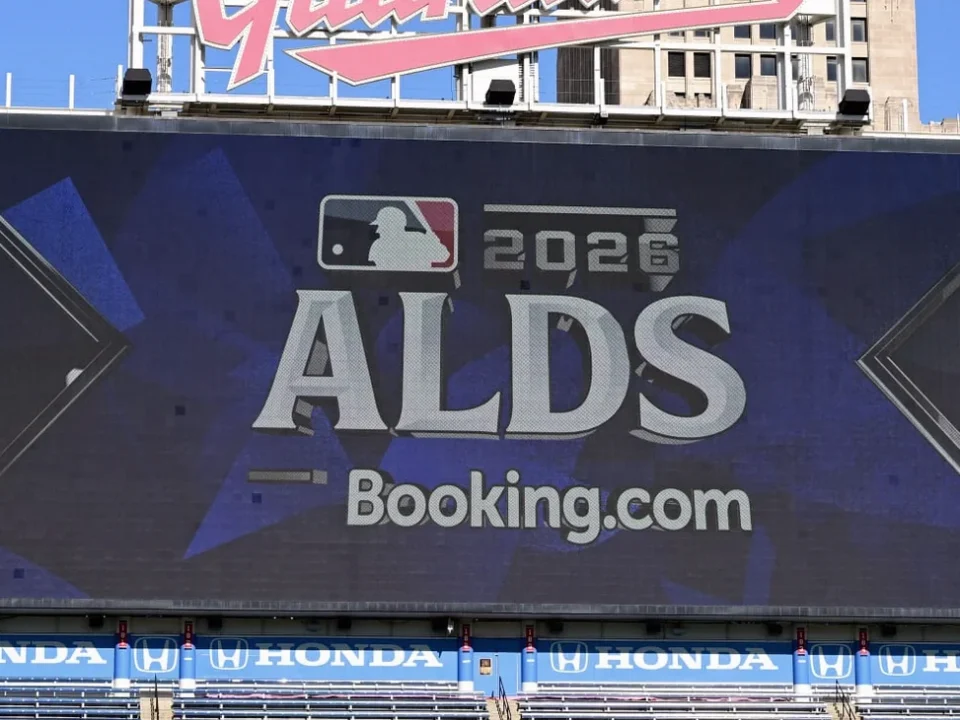
Now, 125 years later, the franchises that helped force the American League into existence are meeting in the AL postseason for the first time. Game 2 of the ALDS is scheduled for Monday at 5 p.m. ET, 4 p.m. CT, with TBS, truTV, UniMas and HBO Max carrying the broadcast.
For all the modern noise around an October series, this one comes with an old echo: Chicago and Cleveland have been tied together since the American League was still a risky idea and Ban Johnson was daring the National League to stop him.