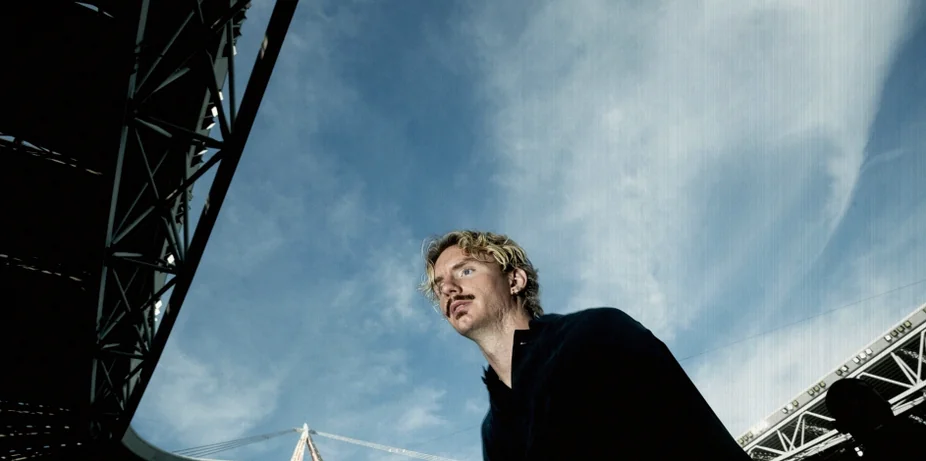
Juventus brought Nick Woltemade to Turin as a solution shaped as much by circumstance as by conviction. At nearly two metres tall, the German can look like the penalty-box striker Luciano Spalletti had wanted during the summer, yet his game points elsewhere: he is a player who links attacks, controls the ball under pressure and creates for those around him rather than a conventional No. 9.
That distinction explains both his difficult spell in England and Juventus’s decision to move late in the market. Woltemade had made his name at Stuttgart, scoring 17 times in 33 appearances before Newcastle spent around €80 million to take him in the summer of 2025. His time there did not meet expectations, in part because he was viewed through the lens of his physique rather than his actual profile. He is closer to a No. 10, or perhaps a supporting forward, than a pure centre-forward whose job is simply to finish moves.
Juventus entered the final part of the window with limited room to manoeuvre because of the financial fair-play commitments agreed with UEFA. The club had to examine opportunities that suited both its sporting needs and those restrictions. Woltemade, needing regular football and a stage on which to recover his standing, remained available.
Giovanni Carnevali and Frederic Massara had initially worked with Spalletti on the possibility of signing Joshua Zirkzee. The former Bologna forward also offers physical presence while naturally combining with team-mates, rather than living only on the last line of the opposition defence. When that route became complicated, Woltemade moved from an alternative into Juventus’s preferred option, with a loan deal that did not include an obligatory permanent purchase making the operation more straightforward.
Spalletti knew he was receiving a forward different from the one he had first envisaged. Still, Woltemade’s ability to connect play in the final third was seen as a way to preserve a certain technical level during the absence of Kenan Yildiz, who was ruled out for the opening months by injury. The German’s task was not only to score himself, but to bring others closer to goal.
Cristiano Conceição was among the attackers expected to benefit, while Jérémie Boga could have found more space in the attacking rotation and Weston McKennie could have been used behind the front line. Woltemade’s comfort with his back to goal was intended to give those players a reference point and a route into the box.
The early-season emergence of Nico González has changed the picture, however. With the Argentine becoming one of Juventus’s positive surprises, the balance of the forward department has shifted. The side now appears to have a stronger need for a direct scorer: a larger presence who can turn chances into goals rather than chiefly helping others construct them.
Woltemade therefore arrives as a reflection of Juventus’s changing season. He is not the classic striker Spalletti sought, nor a simple replacement for Yildiz. His value lies in the connections he can make in attack; whether that is enough will depend on how Juventus solve the separate need for a player capable of consistently finding the net.