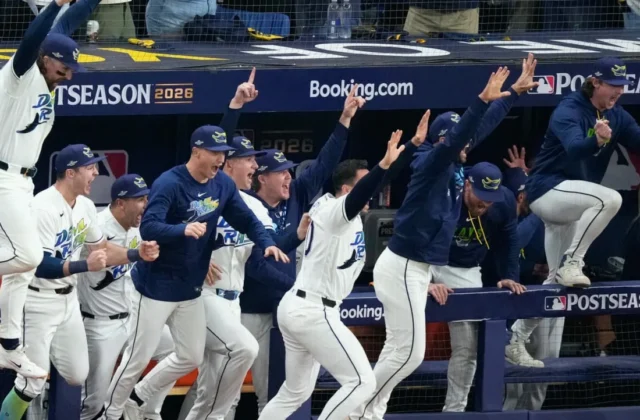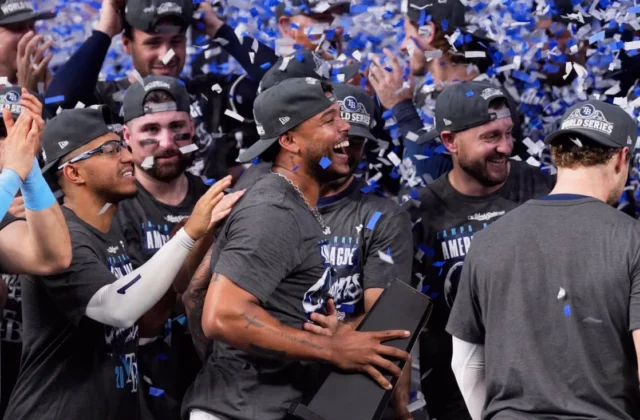
There will be real October noise when the Yankees and Rays open their American League Division Series on Saturday at Tropicana Field, a setting neither club has shared in a postseason series. Tampa Bay’s 2020 ALDS win over New York came entirely at San Diego’s empty Petco Park, a five-game neutral-site set played without fans. This time, a renovated Trop will have a full house before the series shifts to Yankee Stadium. Game 1 is scheduled for 6:30 p.m. ET, with TBS, truTV, UniMas and HBO Max carrying the broadcast.
A close division-series matchup
The Rays finished five wins ahead of the Yankees, earned the Division Series bye and took seven of 13 regular-season meetings. None of that settles much in a short October series. New York won three of four when the clubs met late in September, while earlier matchups came under very different conditions, including starts from Luis Gil and Steven Matz.
Tampa Bay arrives with a lineup built to put pressure on every throw, every relay and every extra base. The Yankees have more obvious power at several spots and a starting staff that posted the best ERA in baseball during the regular season. The margins look thin enough that one strange inning could decide a game, and perhaps the series.
The position groups
| Position | Yankees | Rays | Clubhouse edge |
|---|---|---|---|
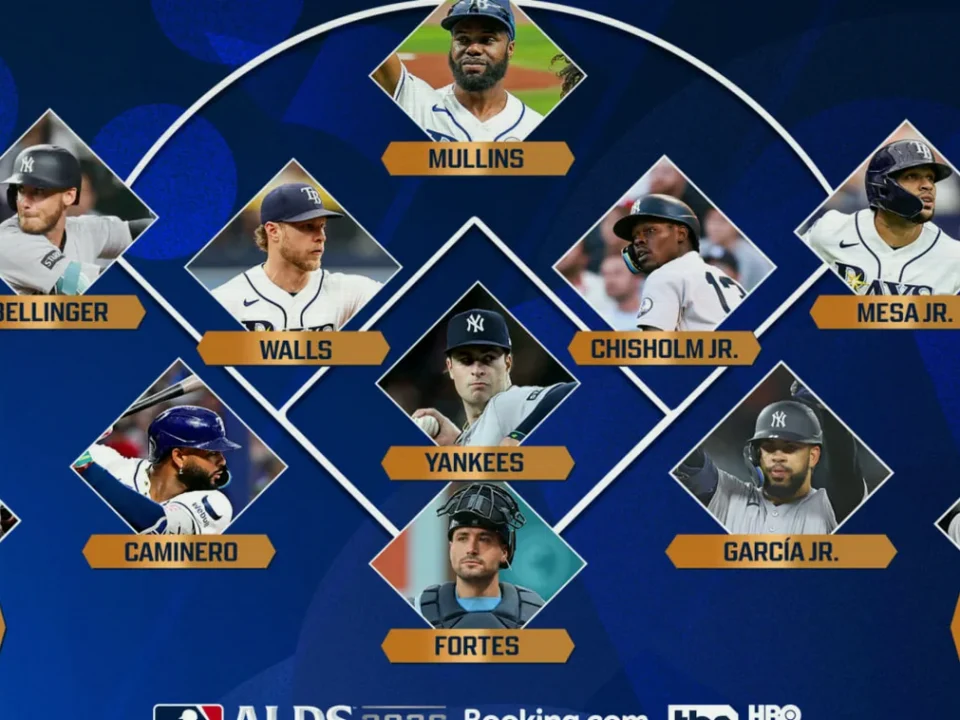
| Catcher | Austin Wells | Liam Hicks, Nick Fortes | Rays |
| First base | Luis García Jr., Paul Goldschmidt | Jonathan Aranda, Ryan Vilade | Yankees |
| Second base | Jazz Chisholm Jr., José Caballero, Anthony Volpe | Richie Palacios, Ben Williamson | Yankees |
| Shortstop | George Lombard Jr. | Taylor Walls | Rays, narrowly |
| Third base | Ryan McMahon | Junior Caminero | Rays |
| Center field | Trent Grisham or Spencer Jones | Cedric Mullins, Jonny DeLuca | Rays |
| Corner outfield | Jones, Heliot Ramos, Aaron Judge if available | Chandler Simpson, Victor Mesa Jr. | Matchup-dependent |
| Designated hitter | Ben Rice | Yandy Díaz | Yankees |
Wells endured a rough full season, carrying a .186 batting average and a 74 OPS+ into October. His second half was a different story. He performed 24 percent better than league average at the plate after the break and ranked among the game’s six best-hitting catchers in that span. Still, Tampa Bay has more flexibility behind the plate. Hicks posted an .801 OPS after arriving during the season, and Fortes gives the Rays another capable defensive option. New York appears reluctant to move away from Wells for Ali Sánchez unless necessary.
At first base, García’s 125 OPS+ and Aranda’s 121 OPS+ tell a story of two productive hitters taking different routes. García brings more damage on contact; Aranda has been much better at reaching base. New York’s advantage comes from the other side of its platoon. Goldschmidt is the better choice against left-handed pitching than Vilade, and the Yankees also have the sturdier defense. With Tampa Bay ace Shane McClanahan injured, the Rays may lean almost exclusively on right-handed starters, which could reduce Goldschmidt’s opportunities.
The Yankees have more answers at second. Chisholm did not have his best offensive season, but his established track record at the plate remains stronger than that of Palacios or Williamson, and he brings quality defense. Caballero and Volpe offer Boone other matchup choices. Palacios hit right-handers well, finishing with a .748 OPS against them, but was nearly unplayable against lefties at .158 with a .478 OPS. Williamson recorded a 74 OPS+ and did not show a meaningful split advantage against left-handed pitching. Tampa Bay’s second-base arrangement was also merely adequate in the field.
Shortstop is a less comfortable call for either club. Lombard put up a 92 OPS+ as a rookie, while Walls had a 71 OPS+ this season and owns a 68 OPS+ across six Major League years. Walls has been one of the weakest regular non-catcher hitters in the sport over his career, but Tampa Bay trusts his glove. Lombard’s defensive reputation took a hit during an August stretch in which he made errors in six straight games, although he has played cleaner defense since. Walls gets the slight nod because he is more likely to make the routine plays in a series where neither shortstop is expected to carry the offense.
Third base is more straightforward. Caminero hit 42 homers and is positioned for a top-five finish in American League MVP voting. McMahon is not in that class, and Tampa Bay holds one of the clearest advantages on the diamond.
Speed, power and an unsettled outfield
Simpson and Cody Bellinger offer sharply contrasting looks. Simpson has almost no over-the-fence game, but he is an elite contact hitter with game-changing speed. He has improved dramatically in the field, too, and can turn an ordinary baserunner situation into a hectic inning. Bellinger is the more complete player, pairing stronger defense and a better throwing arm with legitimate home-run ability. Still, Simpson is exactly the kind of player who can make a postseason opponent uncomfortable for a week.
Judge’s availability hangs over the Yankees’ entire outfield picture. If he cannot start or is limited to a bench role, New York may use left-handed hitter Trent Grisham against Tampa Bay’s expected righty-heavy rotation. Grisham had a strange year: a poor start, a hot May and June, then a hamstring injury that cost him much of September. He finished at .211 with a 95 OPS+, and his defense and speed slipped from their earlier standards.
Mullins, signed by Tampa Bay on a one-year gamble, had a 75 OPS+ apart from a productive June. His defense, however, returned to an excellent level. DeLuca may spell him at times after contributing league-average offense and high-end defense himself. Tampa Bay finished with baseball’s second-best center-field defense, an edge that matters if Judge remains unavailable and Spencer Jones has to handle more center-field work.
Jones started Game 2 of the Wild Card Series and may again be needed in the outfield. He struck out often, as expected, but his 105 OPS+ was an encouraging result for a rookie whose ability to make enough contact had been questioned. His defense is acceptable, though center field may be a demanding fit.
The Rays counter with Mesa, a quiet spring acquisition from Miami who became one of the season’s surprises. In 262 plate appearances, he produced a 127 OPS+ and earned American League Player of the Week honors in mid-September. His defense has been excellent. Tampa Bay may use Vilade in the mix, and Mesa does not have a long offensive record behind him, but neither does Jones. Judge’s status could reshape every one of these choices.
At designated hitter, Rice is the difference-maker. Díaz remains a fine hitter at age 34, producing 22 home runs and a 124 OPS+, and he has spent nearly a decade as one of the more dependable bats in the game. But Rice brings a higher ceiling to the Yankees’ lineup.
The rotation next
New York’s likely top four is Cam Schlittler, Max Fried, Gerrit Cole and Carlos Rodón, though the exact order behind the opener remains fluid. Tampa Bay is expected to begin with Drew Rasmussen, with Freddy Peralta, Nick Martinez, Griffin Jax and Ian Seymour among the other possible starters. Schlittler is not slated to start Game 1, but he and Rasmussen could each work twice if the series reaches a fifth game.
The Yankees led the majors in starting-pitcher ERA during the regular season. The Rays ranked third. Looking only at the likely postseason starters, the two groups posted almost identical Statcast expected ERAs in the second half, a measure designed to reduce the influence of defense and batted-ball fortune.
Schlittler is the most dominant starter available in the series, but Rasmussen has put together a season worthy of top-five consideration in the AL Cy Young Award race. It is a matchup for people who appreciate strong rotations: Tampa Bay has the depth to stay close, while New York’s top end may be the best in the league.
Late innings could be just as tight
Neither bullpen comes with an obvious flaw. David Bednar and Bryan Baker have both been outstanding, even if their ERAs suggest a larger gap than the underlying work does. Tampa Bay is weighing whether to include Tyler Wells and Garrett Cleavinger as they return from injuries. New York has a similar question with Ryan Weathers.
There are plenty of left-handed options for matchup work. The Rays could turn to Cam Booser, Cleavinger and Seymour, while the Yankees may carry Weathers, Ryan Yarbrough, Brent Headrick, Tim Hill and perhaps Rodón in relief. Neither club depends on overwhelming velocity throughout the bullpen, but both can create difficult pockets of matchups.
New York’s relief group added slightly more Win Probability during the second half than Tampa Bay’s, a narrow distinction rather than a decisive one. With only one pair of consecutive games on the schedule, between Game 3 and a potential Game 4, both managers should be able to use their best arms aggressively.
The human note
The Rays have more rest after their bye. The Yankees have enough room in the schedule to line up their rotation. Tampa Bay’s regular-season edge and New York’s late-September success both feel less important than the particular pressure this series will create.
Judge, even if he plays, may not be fully unrestricted. That leaves the Yankees trying to balance power and outfield coverage against a Rays club designed to force mistakes. Tampa Bay’s speed, defense and willingness to mix players through the lineup could steal one game that does not look available on paper.
That may be all it takes in a series that has very little separating the two clubs. The 2020 meeting was played in silence. This one will not be.