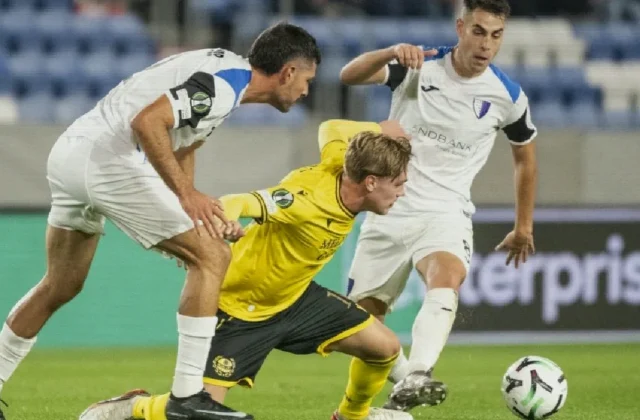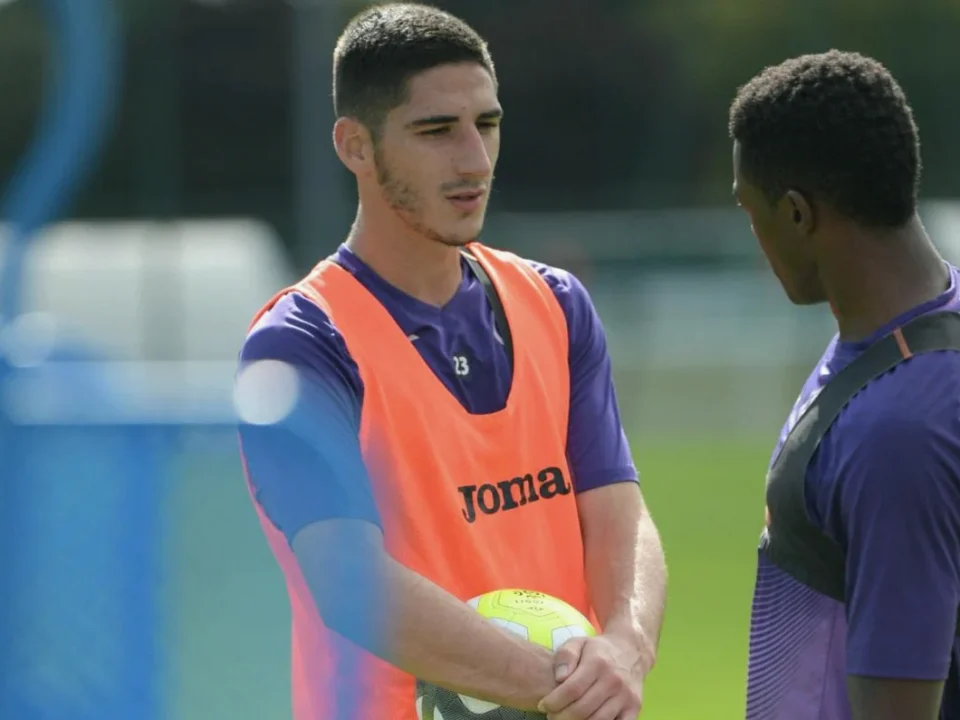
At the Alfonso Murube Stadium, football carries on within sight of a humanitarian emergency. Former Toulouse midfielder Yann Bodiger, now 31 and playing for AD Ceuta, says the Spanish enclave’s migration crisis abruptly altered daily life in a territory so small that, in his words, it feels like a place where everybody knows everybody.
Key takeaways
- Bodiger joined AD Ceuta in the summer of 2025 after seven years in Spanish football.
- Ceuta, home to about 80,000 people, saw an estimated 72,000 migrants enter illegally on 30 and 31 July, with most later returning to Morocco.
- The French midfielder says fear rose after reports of thefts and assaults, although he believes conditions have since become more settled.
- Ceuta’s players staged two brief pre-match protests in August to call for security and a return to normal life.
- Bodiger, who lives in Ceuta with his Spanish wife and their 18-month-old daughter, says he never considered leaving the club.
A small city confronted by a vast crisis
Ceuta lies at the north-western tip of Africa, a Spanish enclave covering less than 20 square kilometres, including uninhabited hillside areas close to the Moroccan border. Bodiger said the scale of arrivals over two days at the end of July was a shock for local residents.
“The population effectively doubled in 48 hours,” he said. “It felt like an invasion, and everyday life changed immediately.”
Bodiger and the Ceuta squad were away at a pre-season camp in Jerez de la Frontera, Andalusia, when the crisis began. They returned on 5 August after following events from afar. Once back, he saw migrants sleeping in parks and occupying public spaces which residents had previously used freely.
Conversations around the city also changed. Routine exchanges about work and family gave way to discussions dominated by the crisis, creating exhaustion among residents. Bodiger said there were reports of robberies and assaults, contributing to a sense of insecurity, but stressed that the situation has improved.
He credited Ceuta’s autonomous city authorities for their response, with increased police and Guardia Civil deployment, alongside military patrols. The city centre has been tightly controlled, he said, and neighbours helped reassure his family that it was safe to remain.
Bodiger also underlined the hardship faced by the migrants themselves. He spoke to some in the city during the early days of the crisis, when people were spread across Ceuta looking for food and water. “It is sad,” he said, while recognising that political issues have made a solution difficult and tensions inevitable.
Ceuta players make their position visible
AD Ceuta, bottom of Spain’s second division at the time of their upcoming home match against Real Valladolid, used the opening moments of two league games to make a public gesture. Before kick-off against UD Las Palmas on 23 August and away to Mallorca on 30 August, the players gathered together for around 30 seconds.
The intention, Bodiger said, was to use the visibility of football to support Ceuta’s desire for safety and normality. “Ceuta is Spanish,” he said. “When we train, we can see the migrant camps, and they can see us as well. We do our job; other people have to find answers to these problems.”
Asked about Kylian Mbappé’s decision to wear, then remove, a support T-shirt during the teams’ entrance before Real Madrid’s match at Elche on 15 September, Bodiger declined to offer a strong personal judgement. Mbappé, along with Ibrahima Konaté and Vinicius Jr, drew attention for the gesture.
Bodiger said every opinion should be respected and suggested that, given Mbappé’s profile, any choice would have attracted scrutiny. Whether the France captain had worn the shirt fully, not worn it at all, or worn it only partly, “people were always going to talk about it,” he said.