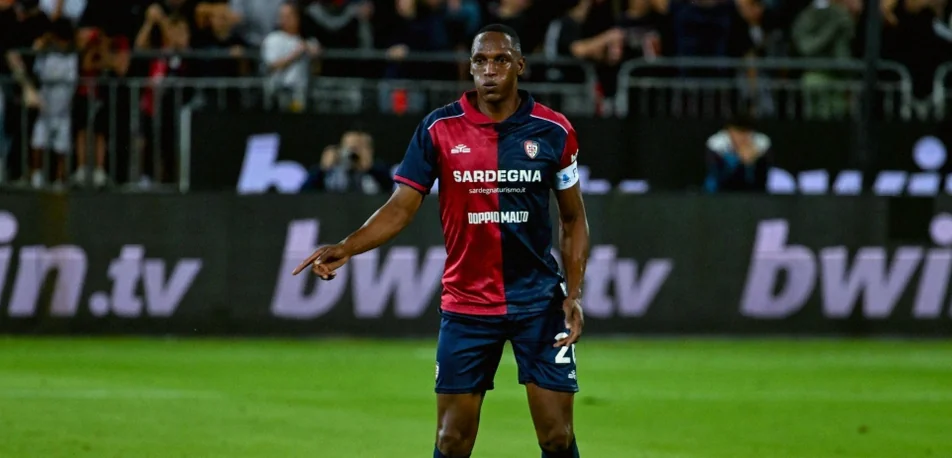
Yerry Mina’s latest confrontation has reopened a familiar argument in Serie A: where does competitive edge end and unsporting conduct begin? After Sunday evening’s match, Luciano Spalletti accused the Cagliari defender of being unsporting and of making fun of his side. Mina’s answer was as calm as it was revealing: “I play my football. I told Spalletti: ‘I care about you, coach.’”
For Mina, the duel is rarely confined to tackles, clearances and aerial battles. The 32-year-old Colombian has built a career around physical defending, relentless close attention and an ability to unsettle the forward standing beside him. He understands that a match can be decided not only by a tactical plan, but by the patience of the individuals asked to carry it out.
A defender who plays on the opponent’s nerves
Mina’s methods have often put him close to the limits of the laws of the game. He can celebrate a won corner directly in front of an opponent, go down after minimal contact, or continue a private battle long after the ball has moved elsewhere. The effect is usually the same: he creates tension, then waits to see who reacts first.
There is an old-school element to that approach, even in a game now watched from every angle by television cameras and VAR. Mina’s reputation is built on gestures, contact and words that can be difficult to capture fully, but which rarely go unnoticed by the player marking him.
Yet the record also shows a defender who usually avoids the final punishment. Mina has been sent off five times in his career: four dismissals for club teams and one with Colombia.
Episodes that shaped the reputation
- In Colombia, Mina first emerged with Deportivo Pasto and Santa Fe before making his name more widely.
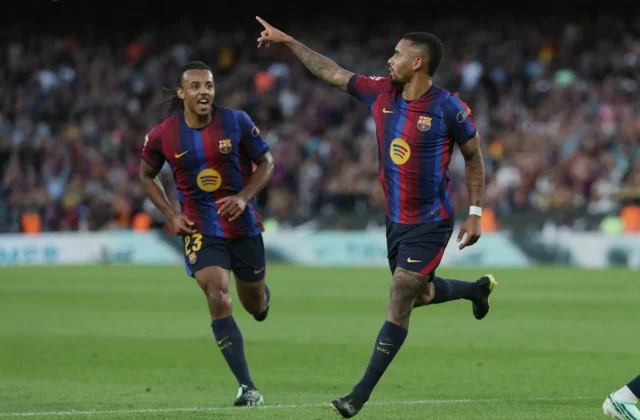
- His progress took him to Palmeiras in Brazil, followed by a short spell at Barcelona.
- He moved to Everton in 2018 and remained in England until 2023, where Pep Guardiola once told him he was good enough not to need certain behaviours during a Manchester City-Everton match. Mina’s response was consistent with his later comments: it was simply his football.
- After an unconvincing period at Fiorentina, he joined Cagliari in 2024 and has become a central figure for the Sardinian club.
His meetings with Juventus have supplied some of the clearest examples. Mina previously laughed at Dusan Vlahovic after the striker missed an open goal. When Cagliari later scored an equaliser in that match, Mina turned towards the Juventus supporters and mimed taking a photograph.
Forwards have responded in different ways. Taty Castellanos waved and smiled sarcastically at Mina when the Colombian was dismissed for two yellow cards during Lazio-Cagliari. In another Cagliari match, Alvaro Morata became so frustrated after kicking Mina and receiving a booking that he asked Como coach Cesc Fabregas to replace him.
From irritation to retaliation
Mina has also been accused of using contact that goes beyond conventional marking. Rasmus Hojlund complained on social media after an encounter with the defender, saying Mina did not play football and that referees allowed him too much. The Napoli striker was reacting to an incident in which Mina pinched him; Joshua Zirkzee and Victor Osimhen have also experienced similar treatment.
With Colombia, Mina’s contest with Edinson Cavani became another illustration of his approach. After repeatedly provoking the Uruguay striker over the course of the match, Mina went down dramatically when Cavani eventually grabbed him by the throat.
That ability to move quickly between aggressor and aggrieved player is central to Mina’s game. He invites a reaction, makes the confrontation personal and, more often than not, leaves the opponent carrying the greater visible cost.
Spalletti’s criticism therefore sits within a longer history rather than standing as an isolated complaint. Mina will continue to describe it as his way of playing; his opponents, and some coaches, will continue to see a defender whose influence begins well before the ball reaches his feet.