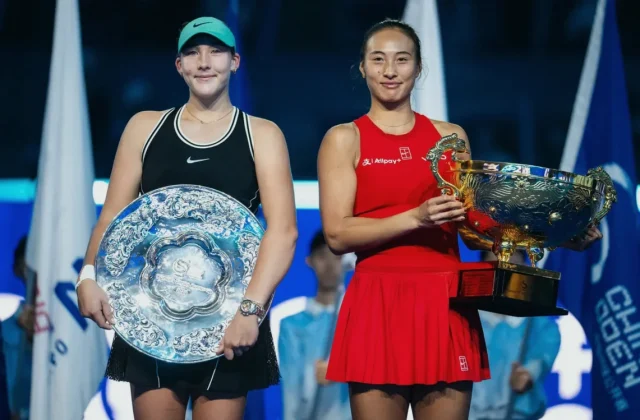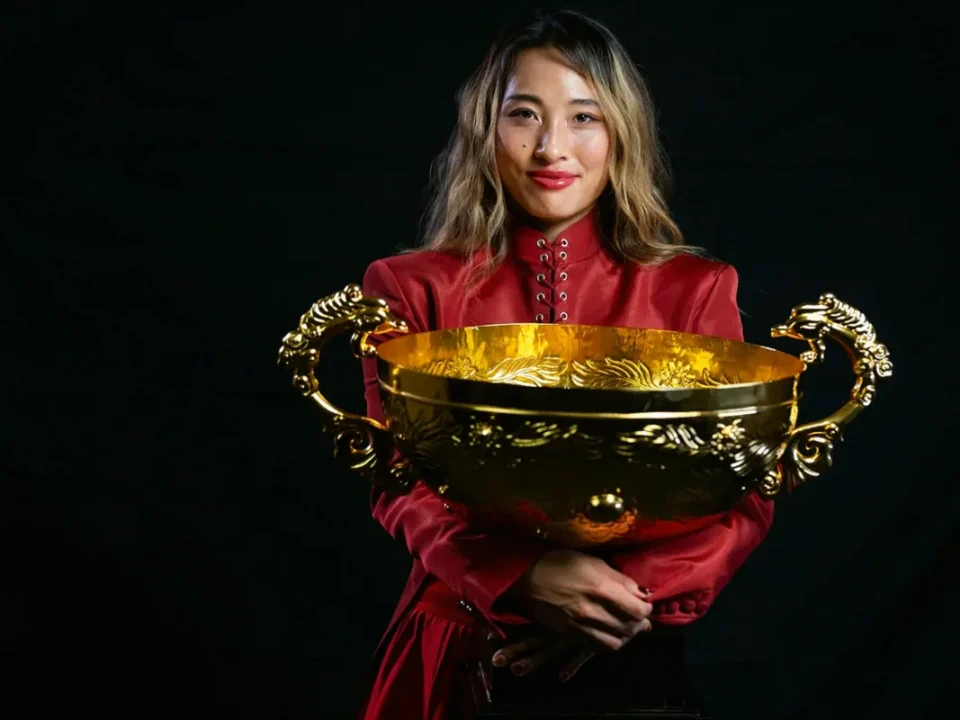
Zheng Qinwen completed a stirring homecoming at the China Open in Beijing, defeating Mirra Andreeva to become the first Chinese champion of the WTA 1000 event. The title, Zheng’s first at WTA 1000 level and her first since 2024, lifts her to მსოფლიო No. 23 after she had fallen as low as No. 160 in mid-June.
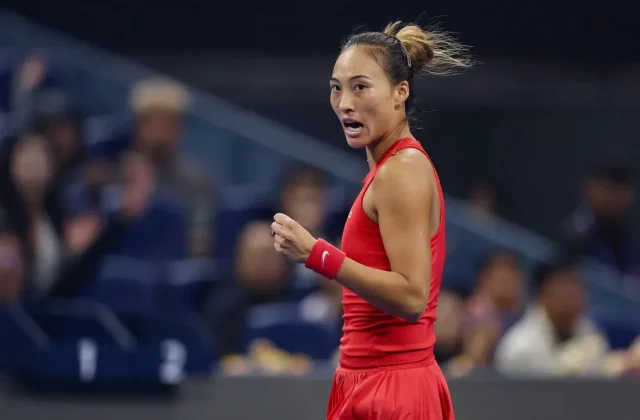
Playing in front of a packed stadium, Zheng produced the most productive attacking campaign of any player at a tour-level tournament this season, striking 243 winners across the fortnight. Her Beijing run leaves her with 13 victories in her last 14 WTA-level matches, following a US Open quarterfinal appearance from qualifying.
The match
The Beijing final delivered the defining result of Zheng’s recovery from a difficult 2026. She had been working back from right-elbow surgery in July 2025 and returned to the China Open last year before she was ready, retiring in the third round. Her comeback was then delayed until February in Doha, and she did not win three matches in succession until Toronto, where she lost in qualifying.
That Toronto defeat became a turning point. On the advice of coach Pere Riba, Zheng committed to an intensive training block and began rebuilding both her game and her ability to manage decisive moments.
“After so many losses, I found my fire again in competitive matches,” Zheng said. “Tennis is not only about striking the ball; it is also about how strongly you want to win. I am grateful to have found that inner fire again. Now I am trying to become the best version of myself.”
Her aggressive game was central to the run, although Zheng said she has had to learn how to pair that intent with greater control.
“I have always wanted to be an aggressive player, but when you play that way you can also make more unforced errors,” she said. “I have learned to manage my mistakes and find the balance between hitting winners and limiting errors.”
Zheng said the work before the tournament included specific tactical planning in practice, and that she was finally able to bring it into high-pressure matches. “The pressure does not control me anymore,” she said. “I control the pressure.”
The triumph carried particular weight in a country where Zheng has become one of the sport’s most recognisable figures. She wore a custom red Nike dress during the champion’s celebrations, a colour associated in Chinese culture with prosperity, energy and celebration.
“It is not easy to be a national icon,” Zheng said. “For the last two or three years, I have felt a big responsibility because I want to set a good example for young children.”
She cited Serena Williams as one of the players she watched growing up and said she hopes her own career can have a similarly positive effect on young fans in China.
Riba’s role has been decisive in the revival, Zheng said. She acknowledged that she initially struggled to accept difficult feedback and demanding work after her earlier success, but changed her outlook during the losing stretch.
“If you want to win, you have to stay humble and listen to your coach,” Zheng said. “At that moment, something clicked and we started working very well.”
With no seats left empty for the final, Zheng described the China Open as a tournament with the stature of a “fifth Grand Slam” for her. The support, she said, supplied extra energy on court and reinforced her wish to help bring more young people to tennis in China.
The Beijing crown is the clearest marker yet of a player who has emerged from a six-month slump with a changed perspective. Zheng said she would remind her younger self to remain modest in defeat, to keep her head up through poor spells and to remember what she had already accomplished.