Serie A’s leading-scorer conversation is no longer a solo performance. Lautaro Martinez remains a defining figure for Inter, but Donny Malen has arrived as another striker capable of changing the rhythm of a weekend, giving defenders and coaches a new problem to solve.
Malen adds a second focal point to the title race
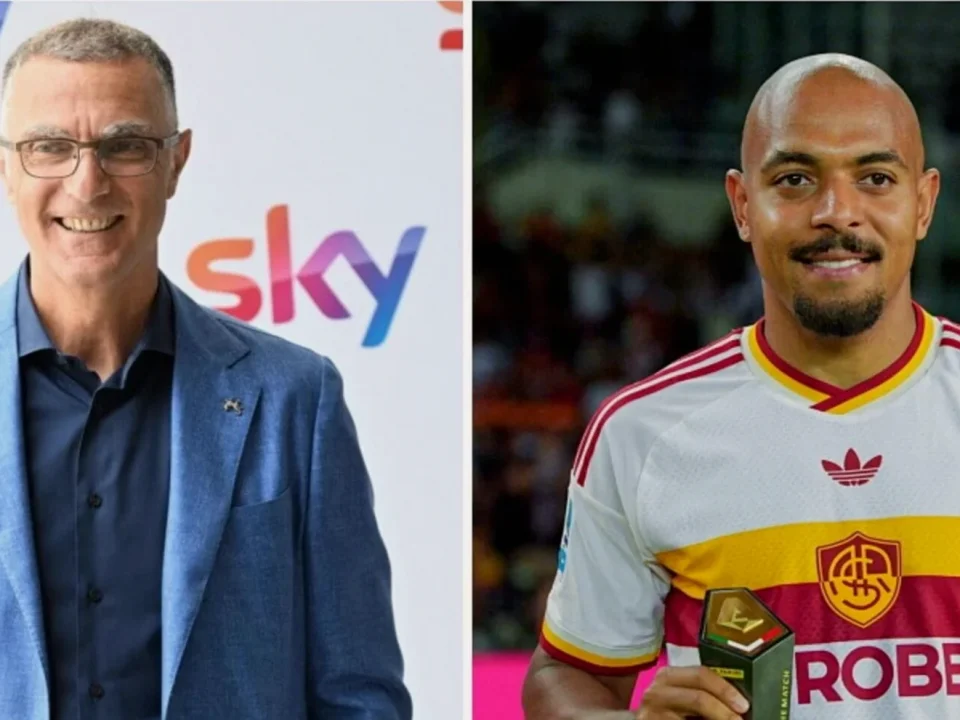
Beppe Bergomi sees Malen as the forward who has altered the picture since his January arrival. The former Inter defender was struck by one moment against the Nerazzurri in particular: Malen’s turn in the penalty area before a shot was stopped by the goalkeeper’s face.
For Bergomi, Lautaro’s excellence and Malen’s are built on different qualities. The Inter captain’s strength lies in his mentality, while Malen’s value is in the range of actions he can perform well during a match.
- Malen arrived with a clear request: he wanted to play as a centre-forward, a role also envisaged for him by Gian Piero Gasperini.
- His debut in Turin revealed movements away from defenders, runs both short and long, and an ability to create separation in different areas.
- Bergomi highlighted Malen’s reliable first touch, arguing that this makes finishing opportunities appear simpler.
- He described a complete attacking profile: close control, runs in behind, link play, movement into space and the ability to shoot.
- Although Malen is not one of the towering 190cm centre-forwards increasingly common in the game, Bergomi believes he has a powerful engine and movement reminiscent, in type rather than direct comparison, of Ronaldo Nazario.
Comparisons have already been made with the shooting of Gabriel Batistuta, the instinct of Gianluca Vialli, Thierry Henry’s movement and Diego Milito’s reading of attacking situations. Bergomi’s view is more cautious: Malen has inherited elements seen in many great scorers, but remains a distinctive player in his own right.
His previous use as a wide player in England may have obscured his best role. Football, Bergomi noted, is often shaped by the right combination of player, coach and circumstance. He recalled Inter’s Scudetto season, when the club had expected to sign Madjer before Ramon Diaz arrived late in the process and changed the side’s direction.
Several attacks are beginning to shape the season
The wider league picture is not simply about Inter and Malen. Bergomi has been particularly impressed by Frosinone’s attacking football, while believing Milan and Juventus are still searching for greater fluency.
- At Napoli, Rasmus Hojlund may be receiving the ball too often with his back to goal, but Bergomi still considers him a top-level forward.
- Como are expected to become even more compelling once Moise Kean plays more regularly.
- Como must also be judged against the demands of competing on two fronts, yet their matches already hold the audience’s attention.
- Juventus and Milan have an obligation to remain involved in the Scudetto contest.
- Roma and Napoli retain the standing and resources expected of major clubs.
- Gennaro Gattuso has been credited with doing strong work at Lazio.
Inter have shown an ability to recover even after falling two goals behind, a quality that can make a team feel untouchable. Bergomi also offered a warning: such recoveries can create confidence, but they cannot be treated as a permanent solution every Sunday.
Roma, in his assessment, remain the most credible alternative because of their defensive stability, physical midfield and strong attacking options.
Defending, refereeing and the next Italy generation
In defensive terms, Bergomi believes the game is moving back towards a more direct man-to-man approach. Gasperini remains its leading interpreter, in his view, while Massimiliano Alvini’s Frosinone are pursuing a similar route.
He also sees signs that Serie A has become closer in tempo to the Premier League. Fewer complaints, players getting up more quickly and a faster flow have all contributed. The same behaviour is filtering down to youth football, where Bergomi sees the Under-17 players he coaches copying the habits of senior professionals, for better and worse.
He hopes the direction of travel continues, recalling Vialli’s belief that football ideas can age quickly. Yet he does not believe a more permissive game should become uncontrolled. His preference is for referees to whistle more often when required, rather than allowing matches to turn into rugby, and he sees no realistic case for VAR disappearing.
Italy’s youth cycle requires patience
The national team’s renewed emphasis on younger players is, Bergomi believes, part of a familiar cycle. He pointed to the period after the 1974 World Cup, when the work of Enzo Bearzot and Ferruccio Valcareggi’s successor, Fulvio Bernardini, coincided with the emergence of players such as Claudio Gentile and Giancarlo Antognoni.
Now he is especially interested in Romano, and expects Niccolo Pisilli and Favasuli to receive opportunities soon. The message is not to demand instant perfection: Italy must experiment in this early phase, even if that means accepting defeats without turning them into a national drama.