A franchise-by-franchise Super Bowl roster exercise puts the spotlight on players who delivered when the stakes were highest, not simply those with the strongest regular-season résumés. The results span 23 teams with multiple Super Bowl appearances, from dynasties such as the Patriots, Steelers and 49ers to clubs still chasing their first Lombardi Trophy.
Key takeaways
- Tom Brady, Adam Vinatieri, Joe Thuney and Rob Gronkowski are among 13 players selected for two different franchise teams.
- Super Bowl MVPs carry major weight, including Larry Brown over Deion Sanders for Dallas and Jake Delhomme over Cam Newton for Carolina.
- The Chiefs’ recent title run places Patrick Mahomes, Travis Kelce and several current-era teammates beside stars from the franchise’s AFL championship years.
- Players from losing Super Bowl teams also earned spots when their game-day production warranted it, including Dan Marino, Chuck Howley and Terance Mathis.
- Special teams changed several decisions, from Tim Dwight’s 94-yard kickoff return touchdown for Atlanta to Kadarius Toney’s record punt return for Kansas City.
All-time Super Bowl teams by franchise
Atlanta Falcons
The Falcons’ team is dominated by the Super Bowl LI roster: Matt Ryan at quarterback; Devonta Freeman at running back; Julio Jones, Terance Mathis and Austin Hooper in the receiving group; and Bob Whitfield, Andy Levitre, Robbie Tobeck, Chris Chester and Ryan Schraeder up front. Ryan completed 17 of 23 passes for 284 yards, two touchdowns and no interceptions against New England, while Jones posted four receptions for 87 yards and Freeman ran for 75 yards and a touchdown.
Grady Jarrett, who recorded three sacks, anchors the defensive front with Dwight Freeney, Ra’Shede Hageman and Chuck Smith. Robert Alford’s pick-six, Deion Jones’ play at linebacker and Ronnie Bradford’s interception of John Elway also helped shape the unit. Tim Dwight is the return specialist after totaling 210 kickoff-return yards, including a 94-yard touchdown, in Super Bowl XXXIII.
Baltimore Ravens
Baltimore’s roster splits naturally between its two championship teams. Joe Flacco, Anquan Boldin, Dennis Pitta, Kelechi Osemele, Matt Birk, Marshal Yanda and Michael Oher represent the 2012 offense, while Jamal Lewis, Jonathan Ogden, Shannon Sharpe and Brandon Stokley come from the 2000 club. Lewis rushed for 102 yards and a touchdown, and Stokley scored the organization’s first Super Bowl touchdown.
Ray Lewis, the MVP of Super Bowl XXXV, leads a defense including Rob Burnett, Sam Adams, Tony Siragusa, Michael McCrary, Peter Boulware, Duane Starks, Chris McAlister, Rod Woodson and Ed Reed. Reed intercepted Colin Kaepernick in Super Bowl XLVII, while Jimmy Smith broke up a fourth-down pass late in that game. Jacoby Jones handles punts, Jermaine Lewis takes kickoff duties and Justin Tucker is the kicker.
Buffalo Bills
Buffalo’s roster is essentially the core of the four consecutive AFC champions of the early 1990s. Jim Kelly, Thurman Thomas, Andre Reed, Don Beebe, James Lofton, Keith McKeller and an offensive line featuring Will Wolford, Jim Ritcher, Kent Hull, Glenn Parker and Howard Ballard fill the offense.
Reed and Beebe combined for 39 catches, 494 yards and two touchdowns in Buffalo’s four Super Bowls. Thomas produced 348 yards from scrimmage. Bruce Smith had two sacks and a safety, while Jeff Wright finished with three sacks and 10 tackles. Steve Christie did not miss a Super Bowl field-goal attempt for Buffalo.
Carolina Panthers
Jake Delhomme gets the nod at quarterback after throwing for 323 yards and three touchdowns in Super Bowl XXXVIII. Cam Newton threw for 265 yards with an interception in Super Bowl 50, and his 55.4 passer rating was well behind Delhomme’s 113.6 mark. The offensive group also includes DeShaun Foster, Muhsin Muhammad, Steve Smith Sr., Ricky Proehl, Greg Olsen, Todd Steussie, Andrew Norwell, Ryan Kalil, Kevin Donnalley and Jordan Gross.
Julius Peppers, Kris Jenkins, Star Lotulelei, Kony Ealy, Luke Kuechly, Dan Morgan, Thomas Davis Sr., Reggie Howard, Josh Norman, Mike Minter and Deon Grant make up the defense. Morgan registered 18 tackles in Super Bowl XXXVIII. Ealy had three sacks, an interception and a forced fumble in Super Bowl 50. Muhammad, Smith and Proehl are the only Panthers with Super Bowl receiving touchdowns.
Chicago Bears
Jim McMahon quarterbacked the chosen offense, with Thomas Jones at running back and Matt Suhey at fullback. Willie Gault, Muhsin Muhammad and Desmond Clark join the receiving group, while Jimbo Covert, Mark Bortz, Olin Kreutz, Tom Thayer and Keith van Horne fill the offensive line.
The 1985 Bears did not allow a sack in Super Bowl XX and ran for 167 yards and four touchdowns. McMahon became the first quarterback to score two rushing touchdowns in a Super Bowl. Jones gained 112 yards against Indianapolis in Super Bowl XLI. Richard Dent, Dan Hampton, Steve McMichael, Tank Johnson, Mike Singletary, Brian Urlacher, Wilber Marshall, Charles Tillman and Gary Fencik headline the defense. Marshall shared a sack with Dent and recovered a fumble in Super Bowl XX.
Cincinnati Bengals
Ken Anderson is the quarterback after setting Super Bowl records at the time for 20 completions and a 73.5% completion rate in Super Bowl XVI. Joe Mixon, Ja’Marr Chase, Tee Higgins, Chris Collinsworth, Dan Ross, Anthony Muñoz, Dave Lapham, Bruce Kozerski, Max Montoya and Mike Wilson complete the offense.
Six defensive starters come from the Super Bowl LVI team, including Trey Hendrickson, DJ Reader, BJ Hill, Logan Wilson, Chidobe Awuzie and Jessie Bates III. The Bengals limited the Rams to 43 rushing yards on 23 attempts and forced two interceptions. Stanford Jennings earns the kickoff-return role as one of 10 players to take a Super Bowl kickoff back for a touchdown.
Dallas Cowboys
Troy Aikman, Emmitt Smith, Michael Irvin, Drew Pearson, Jay Novacek, Robert Newhouse, Erik Williams, Nate Newton, Mark Stepnoski, Blaine Nye and Rayfield Wright form the Dallas offense. Aikman threw four touchdown passes in Super Bowl XXVII, while Smith was MVP of Super Bowl XXVIII.
Larry Brown takes a cornerback spot despite Deion Sanders’ absence, based on his two second-half interceptions and MVP award in Super Bowl XXX. Chuck Howley, Randy White and Harvey Martin were also Super Bowl MVPs, with White and Martin sharing the honor in Super Bowl XII. James Washington’s fumble-return touchdown was a defining play in Super Bowl XXVIII, and Randy Hughes added an interception and two fumble recoveries in Super Bowl XII.
Denver Broncos
John Elway leads a roster built heavily around Denver’s three Super Bowl victories. Terrell Davis, Rod Smith, Demaryius Thomas, Shannon Sharpe, Gary Zimmerman, Mark Schlereth, Tom Nalen, Brian Habib and Tony Jones fill out the offense. Elway played in five of the Broncos’ eight Super Bowls and finished his career with consecutive championships.
Von Miller, DeMarcus Ware, Malik Jackson, Derek Wolfe, Danny Trevathan, Aqib Talib, T.J. Ward and Steve Atwater represent the Super Bowl 50 defense. The roster contains six Hall of Famers: Elway, Davis, Sharpe, Zimmerman, Ware and Atwater. Denver went 3-1 in its last four Super Bowl appearances after losing its first four trips.
Green Bay Packers
Aaron Rodgers is selected over Bart Starr and Brett Favre after throwing for 304 yards, three touchdowns and no interceptions in Super Bowl XLV. His supporting cast includes Elijah Pitts, Antonio Freeman, Jordy Nelson, Max McGee, Bob Skoronski, Gale Gillingham, Frank Winters, Jerry Kramer and Forrest Gregg.
McGee’s inclusion stems from an unlikely Super Bowl I performance. After unexpectedly entering when Boyd Dowler was injured, McGee caught seven passes for 138 yards and two touchdowns, including the first touchdown in Super Bowl history. Reggie White, Willie Davis, Henry Jordan, Ray Nitschke, Herb Adderley and Willie Wood headline the defense. Charles Woodson missed out after leaving Super Bowl XLV with a broken collarbone.
Indianapolis Colts
Peyton Manning earns the quarterback spot over Johnny Unitas. Unitas completed only 14 of 32 passes across two Super Bowl appearances, while Manning won MVP honors in Super Bowl XLI. Joseph Addai beat out Dominic Rhodes at running back after averaging 139 scrimmage yards across two Super Bowls.
Marvin Harrison, Reggie Wayne, John Mackey, Dallas Clark, Tarik Glenn, Ryan Lilja, Jeff Saturday and Adam Vinatieri are among the offensive selections. Dwight Freeney, Robert Mathis, Bob Sanders, Kelvin Hayden and Gary Brackett lead the defense. Rhodes’ 117 rushing yards in Super Bowl XLI still made the decision at running back particularly close.
Kansas City Chiefs
Patrick Mahomes, a three-time Super Bowl MVP, leads a group featuring Damien Williams, Otis Taylor, Tyreek Hill, Sammy Watkins, Travis Kelce, Joe Thuney, Creed Humphrey, Trey Smith and Mitchell Schwartz. Williams delivered 133 all-purpose yards and two touchdowns in Super Bowl LIV.
The defense blends eras through Bobby Bell, Buck Buchanan, Willie Lanier, Johnny Robinson, Emmitt Thomas, Chris Jones, Frank Clark, Nick Bolton, Trent McDuffie and Tyrann Mathieu. Lanier, Robinson and Thomas each intercepted a pass in Super Bowl IV. Kadarius Toney’s 65-yard return in Super Bowl LVII remains the longest punt return in Super Bowl history.
Miami Dolphins
Dan Marino is the quarterback despite the undefeated 1972 team’s championships, as Bob Griese completed only 14 passes over two Super Bowl games. Marino threw for 318 yards and a touchdown against San Francisco in Super Bowl XIX. Mark Clayton and Joe Rose each caught six passes in that game.
The offensive line from Miami’s two title teams remains intact: Wayne Moore, Bob Kuechenberg, Jim Langer, Larry Little and Norm Evans. Those teams combined for 380 rushing yards in their Super Bowl victories. Jake Scott and Nick Buoniconti had interceptions in Super Bowl VII, and Uwe von Schamann earns the kicking spot after making three field goals in Super Bowl XIX.
Minnesota Vikings
Minnesota’s four Super Bowl defeats came between 1968 and 1976, allowing the club to carry much of the same core through the run. Fran Tarkenton, Mick Tingelhoff, Ron Yary, Alan Page, Carl Eller and Paul Krause are Hall of Famers from that era, along with coach Bud Grant and general manager Jim Finks.
Chuck Foreman, Jim Marshall, Sammy White, Ahmad Rashad, Stu Voight, Grady Alderman and the rest of the Purple People Eaters-era cast comprise the team. The Vikings lost their four Super Bowls by an average of 15.25 points and scored 14, seven, seven and six points. Their 1975 team is often cited as the strongest of the period, despite its playoff loss on the first game-winning Hail Mary.
New England Patriots
Tom Brady headlines a roster drawn from 12 Super Bowl appearances. James White, Antowain Smith, Deion Branch, Julian Edelman, Rob Gronkowski, Matt Light, Joe Thuney, David Andrews, Shaq Mason and Sebastian Vollmer make the offensive group. Branch and Edelman receive automatic places as Super Bowl MVPs.
Willie McGinest, Richard Seymour, Vince Wilfork, Mike Vrabel, Tedy Bruschi, Dont’a Hightower, Ty Law, Malcolm Butler, Rodney Harrison and Patrick Chung represent the defense. Chung beat Devin McCourty because of his larger number of Super Bowl appearances. Adam Vinatieri is the kicker, while Danny Amendola and Troy Brown fill return roles because of their postseason impact.
New York Giants
Eli Manning was chosen over Phil Simms despite Simms’ record 150.9 passer rating in Super Bowl XXI. Manning’s two Super Bowl victories, both over New England, settled the debate. Ottis Anderson, Hakeem Nicks, David Tyree, Mark Bavaro, David Diehl, Bart Oates and Chris Snee are among the offensive selections.
Lawrence Taylor edges Michael Strahan despite recording no Super Bowl sacks. Taylor won two titles and posted four tackles, including two tackles for loss, in Super Bowl XXI. Justin Tuck, Leonard Marshall, Carl Banks, Harry Carson, Antonio Pierce, Corey Webster and Kenny Phillips also make the unit.
Raiders
Jim Plunkett, Marcus Allen and Fred Biletnikoff are the Raiders’ three Super Bowl MVPs on offense. Plunkett threw for 261 yards and three touchdowns in Super Bowl XV. Allen rushed for 191 yards and two touchdowns on 20 carries in Super Bowl XVIII, while Biletnikoff had four catches for 79 yards in Super Bowl XI.
Art Shell and Gene Upshaw lead the offensive line. Rod Martin headlines the defense after recording three interceptions and five tackles in Super Bowl XV; he also had a sack in Super Bowl XVIII. Todd Christensen is listed as long snapper because that was his role in Super Bowl XV before his later career as a Hall of Fame tight end.
Philadelphia Eagles
Jalen Hurts is the quarterback after appearing in two Super Bowls and producing standout performances against Kansas City. The offense includes Corey Clement, Terrell Owens, DeVonta Smith, Zach Ertz, Jason Kelce, Lane Johnson, Brandon Brooks and Landon Dickerson.
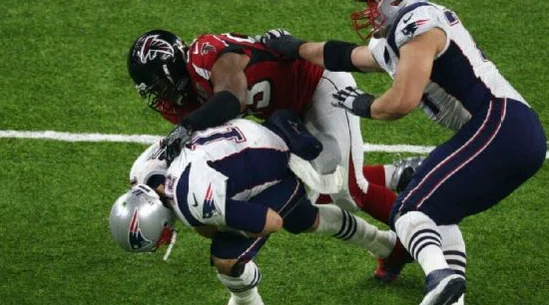
Owens had nine catches for 122 yards against New England while playing through injury in Super Bowl XXXIX. Brandon Graham’s strip-sack of Brady in Super Bowl LII, Smith’s touchdown catch in Super Bowl LIX and Clement’s championship-game impact all shaped the choices. Nick Foles’ Super Bowl LII heroics were acknowledged, but Hurts received the quarterback slot.
Pittsburgh Steelers
Terry Bradshaw, Franco Harris, Willie Parker, John Stallworth, Lynn Swann, Heath Miller, Mike Webster and Alan Faneca lead the Pittsburgh offense. Santonio Holmes missed out despite his Super Bowl XLIII MVP, as Stallworth and Swann each won four titles. Parker’s 75-yard scoring run in Super Bowl XL remains the longest touchdown run in the game’s history.
Joe Greene, L.C. Greenwood, Jack Ham, Jack Lambert, James Harrison, Mel Blount, Troy Polamalu and Casey Hampton are among the defensive selections. Harrison’s 100-yard interception return touchdown in Super Bowl XLIII helped push him ahead of defensive end Aaron Smith.
San Francisco 49ers
Joe Montana gets the quarterback slot over Steve Young, whose six-touchdown outing in Super Bowl XXIX remains one of the greatest title-game performances. Montana’s perfect Super Bowl record and body of work give him the edge. Jerry Rice, John Taylor, Roger Craig, Tom Rathman, Vernon Davis and the line of Steve Wallace, Guy McIntyre, Jesse Sapolu, Randy Cross and Harris Barton round out the offense.
Wallace was selected over Bubba Paris, Joe Staley and Trent Williams because of his work in multiple Super Bowls. Ronnie Lott, Charles Haley, Bryant Young, DeForest Buckner, Nick Bosa, Fred Warner and Deion Sanders anchor the defense. Dan Bunz is placed at outside linebacker after his goal-line stand in Super Bowl XVI.
Seattle Seahawks
Russell Wilson starts at quarterback, with Marshawn Lynch and Super Bowl LX MVP Kenneth Walker III both included in the backfield. Lynch gained 172 yards from scrimmage and scored twice across Super Bowls XLVIII and XLIX. Chris Matthews makes the receiving group because of his Super Bowl XLIX performance, while Jaxon Smith-Njigba did not after recording 27 yards in Super Bowl LX.
The defense deploys three safeties: Kam Chancellor, Earl Thomas II and Julian Love. Bobby Wagner, Malcolm Smith, Richard Sherman, Devon Witherspoon, Byron Murphy II, Derick Hall and Chris Clemons are also selected. Chancellor was viewed as a strong MVP candidate in Super Bowl XLVIII, while Witherspoon, Murphy, Hall and Jason Myers all had cases for the honor in Super Bowl LX.
Los Angeles Rams
Kurt Warner wins the quarterback decision over Matthew Stafford after playing in two Super Bowls and earning MVP honors in Super Bowl XXXIV. Warner completed 24 of 45 throws for 414 yards and two touchdowns in that game. Stafford went 26-of-40 for 283 yards, three touchdowns and two interceptions in Super Bowl LVI.
Isaac Bruce, Torry Holt and Cooper Kupp give the Rams an elite receiver group. Bruce had six receptions for 162 yards and a touchdown in Super Bowl XXXIV, while Holt added seven catches for 109 yards and a score. Aaron Donald, Von Miller, Jalen Ramsey, Leonard Little and Ernest Jones IV form the defensive core.
Tampa Bay Buccaneers
Tom Brady, Leonard Fournette, Mike Evans, Joe Jurevicius, Rob Gronkowski, Tristan Wirfs and Ali Marpet represent the offense. Jurevicius was selected over Chris Godwin because of his 71-yard reception in the NFC Championship Game that preceded Tampa Bay’s Super Bowl XXXVII victory.
The defense features Warren Sapp, Ndamukong Suh, Simeon Rice, Derrick Brooks, Lavonte David, Devin White, Ronde Barber, Dwight Smith and Dexter Jackson. Jackson was Super Bowl XXXVII MVP, while Smith returned two interceptions for touchdowns. Suh’s 1.5 sacks earned him a spot over Vita Vea. John Lynch was a notable omission.
Washington
Doug Williams is the quarterback because of his historic Super Bowl XXII performance, including a record-setting second quarter. Timmy Smith joins him after rushing for a Super Bowl-record 204 yards, while Ricky Sanders set a Super Bowl record with 193 receiving yards in the 42-10 win over Denver.
John Riggins, Gary Clark, Art Monk, Joe Jacoby, Russ Grimm, Jeff Bostic and Mark May complete the offensive core. Jacoby, Grimm, Bostic and May each won at least two titles. On defense, Chris Hanburger is the lone player selected from a Super Bowl loss after helping hold Miami to 14 points in Super Bowl VII. Mark Murphy intercepted a pass against Miami, Barry Wilburn picked off two throws against Denver and Brad Edwards had two interceptions against Buffalo.
Super Bowl performance remains the deciding factor
The selection standard favors production in the championship game over career reputation. That explains why Dallas chose Brown ahead of Sanders, why Carolina favored Delhomme over Newton, and why Marino was placed ahead of Griese in Miami despite Griese quarterbacking the unbeaten 1972 Dolphins.
The exercise also rewards players whose defining contributions were brief but decisive. Washington’s Timmy Smith did little else at an NFL star level but owns one of the most enduring rushing records in Super Bowl history. Green Bay’s McGee turned an unexpected opportunity into a historic debut-game performance. Pittsburgh’s Parker, Kansas City’s Toney and Atlanta’s Dwight each made the roster through game-breaking returns or touchdown runs on football’s biggest stage.