Milwaukee did not reach a second straight National League Championship Series by accident. The Brewers have received breakout seasons from Jacob Misiorowski, another leap from young outfielder Jackson Chourio and a major offensive contribution from Jake Bauers, but their October path still runs through the bullpen.
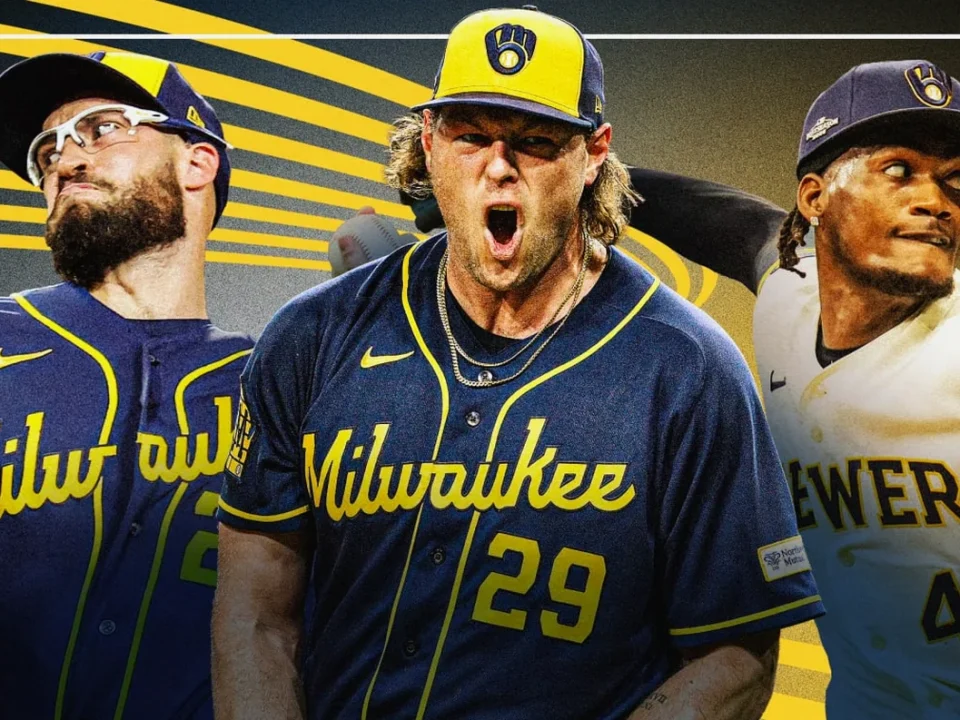
As the Brewers prepare to face the Dodgers in Game 1 on Sunday at 8 p.m. ET at 7 p.m. in Milwaukee, their late-inning formula is clear: Trevor Megill, Abner Uribe and Aaron Ashby have turned games into short nights for opposing lineups. The trio will be asked to do it again against a Los Angeles club chasing a third consecutive World Series championship.
Milwaukee’s front office has watched high-end bullpen talent leave in recent years, including Josh Hader and Devin Williams. Yet the relief pipeline has kept moving. Megill, Uribe and Ashby combined for 210 1/3 regular-season innings, a 2.65 ERA and 247 strikeouts.
They were just as central in the Division Series against San Diego. Brewers relievers worked 19 innings in that round, and those three covered 12 2/3 of them. The only run charged against the group was unearned.
Megill owns the ninth
Megill has become the familiar final image of a Brewers win. The 6-foot-8 right-hander is Milwaukee’s primary closer for a club that has led the Majors in victories in each of the last two seasons.
Milwaukee picked him up from Minnesota in a minor early-season trade in 2023, a move that has paid off handsomely. Across four partial seasons with the Brewers, Megill has posted a 2.80 ERA, struck out 231 hitters in 189 2/3 innings and collected 81 saves.
His fastball averaged 97.9 mph this season, and the pitch carried an average of 19 inches of induced vertical break. Among qualified four-seam fastballs, that movement ranked 19th. It gave Megill a heater that arrived hard and stayed above barrels longer than hitters expect, producing a .200 opponent average and 34 strikeouts.
The curveball is the finishing pitch. It averaged 88 mph and drew misses on 46.5 percent of swings this year. Since 2023, hitters have whiffed on 49.8 percent of their swings against his curve, the third-highest rate among curveballs with at least 250 swings.
Just as important, Megill has trimmed the free passes. After walking 8.9 percent of opponents last season, the highest rate of his career, he lowered that figure to 6.2 percent this year.
“He is very comfortable out there and he is locating the ball,” pitching coach Chris Hook said following the NLDS clinch. “That has been the biggest change. He understands the moment, works both sides of the plate and has excellent secondary stuff.”
Uribe brings a different kind of heat
Megill may get the saves, but Uribe has made a strong case as Milwaukee’s most overpowering reliever over the past two seasons. Since the start of 2025, his 1.80 ERA ranks second among 110 relievers with at least 100 innings. Only Aroldis Chapman, at 1.51, has been better in that group.
Uribe attacks with a sinker that reaches 99 mph, plus an upper-80s slider that averages 10 inches of horizontal movement. While Megill works from a towering frame and a 54-degree arm angle, Uribe is about five inches shorter and delivers from a 37-degree slot.
That lower release helps him keep the ball on the ground. Uribe recorded a 54.6 percent ground-ball rate, placing him in the 93rd percentile among qualified pitchers. He also gave up barrels on only 2 percent of balls put in play against him, a 99th-percentile mark.
The command has caught up to the stuff. Uribe walked 32 batters over 45 innings during 2023 and 2024. His walk rate fell below 10 percent for the first time in 2025, at 9.1 percent, and dropped again to 8.1 percent this season—better than the league average.
Ashby supplies the long bridge
Ashby gives Milwaukee something different from its two right-handed power arms: length, a left-handed look and a starter’s menu of pitches.
The former starter threw 89 1/3 innings this season, with 87 coming out of the bullpen. That was the second-highest relief-inning total in baseball. He finished with a 3.12 ERA, 116 strikeouts and 1.5 WAR.
His value was on display in Game 4 against the Padres, when he delivered three scoreless innings after Robert Gasser departed. Ashby handed the game forward to Megill and Uribe without allowing San Diego a way back in.
“Ash did what he did, and he did not want to leave the game,” Hook said. “He was upset coming out because he believed he could continue.”
At six feet, Ashby is the smallest member of the group, but he owns perhaps the broadest arsenal. His primary offering is a 97.7 mph sinker that he uses about half the time. The pitch helped him produce ground balls at a 56.3 percent rate, good for the 96th percentile.
Then come three swing-and-miss options: a slider, curveball and changeup. Among pitches that drew at least 50 swings in 2026, Ashby’s slider produced a 56.6 percent miss rate, third-best among individual pitch types. His curveball registered a 52.4 percent rate, eighth-best, while his changeup came in at 48.9 percent and ranked in the top 25.
No other pitcher had three offerings so close to a 50 percent whiff rate. That variety allows Ashby to cover multiple innings, work through either side of an order and give manager Pat Murphy options before the closer enters.
October often comes down to how many outs a club can trust after its starter exits. For Milwaukee, Megill, Uribe and Ashby have made that answer unusually simple. If they keep controlling the late innings against the Dodgers, the Brewers will have a real route to the franchise’s first World Series title.