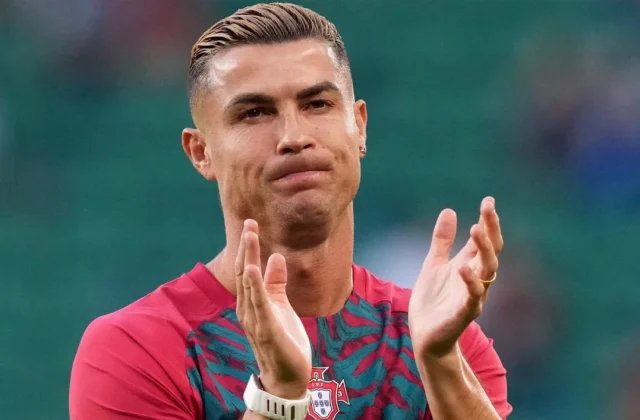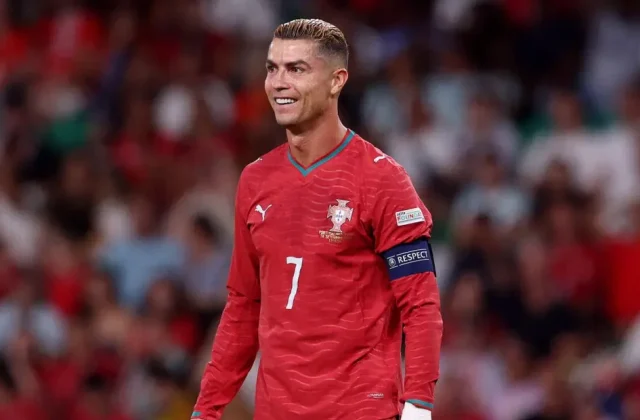
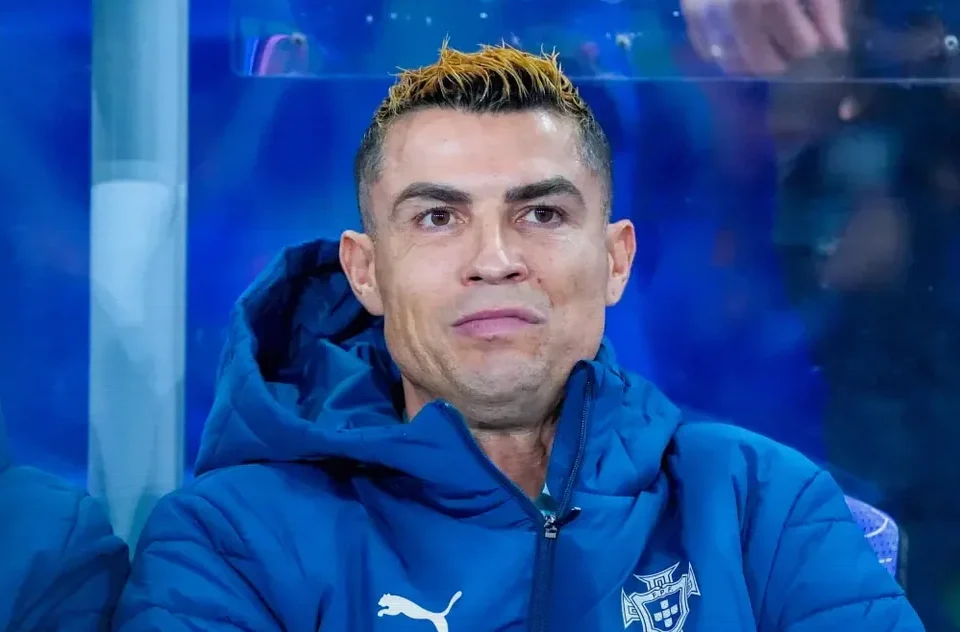
In Lisbon, where a national-team captaincy has long carried more than a footballing weight, Cristiano Ronaldo has explained why he left Portugal’s camp in Copenhagen before a Nations League fixture. The 41-year-old said a breakdown of trust with head coach Jorge Jesus, rather than a dispute over selection or playing time alone, led him to pack his bags and depart.
Ronaldo’s detailed statement came a week after his exit from the squad. He accepted personal responsibility for leaving the camp and for not greeting supporters after the match in Norway, while insisting that Jesus twice failed to honour agreements made between them.
A plan made after the World Cup
Ronaldo said he had considered ending his Portugal career after the 2026 World Cup and had written a letter to the Portuguese public which he still keeps. On the return flight from the United States, he said, the Portuguese Football Federation president urged him to reconsider, telling him that the federation wanted him to continue.
The president then sought Ronaldo’s view on Jorge Jesus, who was among the coaching candidates. Ronaldo said he endorsed the appointment and was pleased when Jesus was unveiled, believing the choice had since been supported by results.
Jesus subsequently contacted Ronaldo and arranged to meet him at Cidade do Futebol, while Al Nassr were holding their pre-season camp there. Ronaldo said the coach told him that he remained essential to the project and outlined a physical-management programme: he would start the first and last matches of each camp, with three or four changes expected in every game.
The coach also suggested that Ronaldo should play the opening match but remain in Portugal rather than travel for the Norway and Denmark fixtures, before rejoining the group for a game at the Dragão. Ronaldo said he rejected the proposal immediately, arguing that a Portugal captain could not stay behind merely because he was being rested for away matches. Jesus accepted that view, Ronaldo said.
Simão Coutinho, Al Nassr’s sporting director, was present for that meeting. Ronaldo noted that Coutinho had worked with Jesus during the previous season and had been involved in the coach’s move to the Saudi club in 2025.
Norway frustration
On the eve of the next camp, Jesus visited Ronaldo at his Lisbon home for another conversation. Ronaldo said the meeting was calm and preserved the principles agreed in August. He played at Alvalade, was substituted without complaint, and handed the captain’s armband to Bruno Fernandes himself.
At lunchtime on the day of the Norway match, however, an assistant informed Ronaldo that Jesus wanted to speak to him. The coach asked whether he could play for 30 minutes. Ronaldo said he had been following the previously agreed recovery programme and expected not to feature until the Dragão match, but he agreed to be ready.
“He told me I had to be prepared because I would play 30 minutes,” Ronaldo said. “I warmed up from half-time, watched the minutes go by and was never called on. The coach had not kept his word.”
Ronaldo did not go over to acknowledge the travelling support after the match. He described that as an error for which he alone was responsible, apologising to Portuguese supporters, other fans and those who may have travelled specifically to see him.
Meeting, press conference and departure
Forty-eight hours later, Ronaldo, Jesus and Coutinho met to address the episode. Ronaldo said they agreed that the coach would open his next press conference by clarifying that the plan for the camp had come from Jesus, that Ronaldo had not demanded minutes, and that it had been a mistake to send him to warm up without using him.
Ronaldo said Jesus embraced him, promised to make those points publicly and confirmed that Ronaldo would miss Denmark before returning for the Dragão fixture. A later video call involving Jesus, Coutinho and Tiago Craveiro reviewed the agreement. Ronaldo said a short text was drafted, approved by him and passed to the coach at Jesus’s request.
The proposed remarks, as set out by Ronaldo, would have said that the coach had designed and agreed the seasonal plan with the captain; that Ronaldo had been loyal, professional and never questioned the coach’s choices; and that the Norway match had not originally been part of Ronaldo’s programme.
They also stated that Jesus had reconsidered Ronaldo’s fitness after the first match, warned him that he might be required, and received his agreement. The notes described it as an error to make “a player of the stature of Pelé or Maradona” warm up and then leave him unused, adding that the coach would not repeat it.
The text would also have stressed Jesus’s desire to keep Ronaldo in the squad, cited the player’s positive influence over 24 consecutive years with Portugal, and dismissed the missed fan greeting as a moment of frustration rather than a sign of insufficient commitment to the country.
Ronaldo said the press conference did not reflect what had been settled in private. He felt Jesus adopted an unnecessarily aggressive “I decide, I can, I command” approach that he had not shown the previous day. He added that the approved notes did not require the coach to apologise to him.
“It was the second time he had failed to keep his word,” Ronaldo said. “I chose to leave the camp rather than wait for another failure.”
Captain accepts responsibility
Ronaldo said he had told both the federation president and Jesus on the morning of that press conference that they only needed to be honest if they no longer wanted him in the group. He said he would have accepted such a decision and hoped an appropriate farewell could have been prepared without bitterness.
Both men replied that his place remained in the Portugal squad, Ronaldo said. He rejected any suggestion that he had sought to influence a coach’s technical or tactical decisions, stating that in almost 25 years as a professional he had accepted the roles assigned to him.
He nevertheless apologised to his Portugal team-mates for abandoning the camp and said the Portuguese Football Federation should judge and punish his conduct. Ronaldo argued that his status should not mitigate any sanction; as captain, he said, it should make the offence more serious.
“I am not just any player; I am the captain,” he said. “Rules are the same for everyone, whatever their status.”
No farewell yet
Ronaldo addressed speculation over a farewell match, saying Portugal supporters would eventually have one or more occasions to mark the end of his international career. But he made clear that he still sees the national side primarily as a place to compete.
He recalled remaining with Portugal after learning of his father’s death while on international duty, staying until the following day’s match. It was, he said, something he would never have done for a club.
If he is physically fit, playing regularly for Al Nassr and scoring goals after serving any suspension imposed, Ronaldo said he expects to remain available for Portugal. His position, despite the Copenhagen departure, is that he still wants to compete and win for the country he has represented in more than 230 internationals.