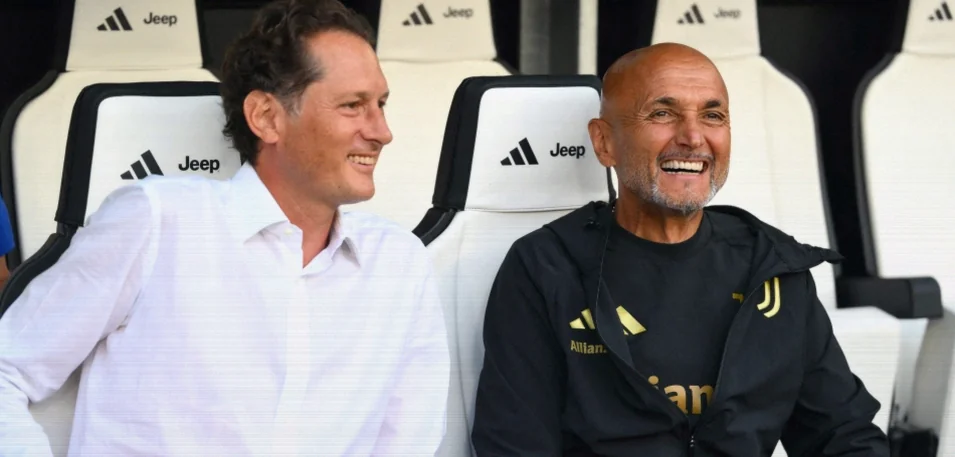
Juventus begin another financial chapter with the same family name at its centre. After a ninth consecutive year of losses, the club’s board has proposed a capital increase of up to €250 million for shareholder approval on 3 November, with Exor prepared to take up its share and again place the ownership’s resources behind the club’s next phase.
The coach and the club
This is not a decision shaped solely by one season’s results, but the scale of the latest loss explains the urgency. Juventus closed the 2025/26 financial year with a €66 million deficit, following a €58.1 million loss in the preceding year. Revenue fell by 10.4%, from €529.6 million to €474.7 million, with failure to reach the Champions League and absence from the Club World Cup among the factors behind the reduction.
Net financial debt rose to €331.1 million. Juventus have presented the planned increase as a means of strengthening their equity base and sporting competitiveness, while also allowing for possible work on strategic real-estate assets, beginning with Allianz Stadium. Brand development and a route towards financial sustainability are also part of the stated plan.
Exor, Juventus’ majority shareholder, has already advanced €60 million against the proposed future increase. It has also indicated that it will subscribe to its entitlement, estimated at about €164 million if the operation reaches its maximum €250 million value.
The vote on 3 November will therefore be another important moment for all shareholders. For Exor, however, it continues a much longer pattern of direct intervention in the club’s capital.
A long record of support
Since 2019, Juventus have completed four recapitalisations which raised €998 million from shareholders, including €637 million from the majority owner. The most recent operation also brought participation from Tether, which invested approximately €11 million and became Juventus’ second-largest shareholder with an 11.5% stake.
If the new proposal is approved and Exor subscribes around €164 million, the Elkann-Agnelli family’s contribution through capital increases since 2019 would approach €800 million. Total funds raised from all shareholders over that period would reach roughly €1.2 billion.
The relationship predates the recent cycle by decades. The family’s former holding companies, IFI and IFIL, and subsequently Exor, have supported Juventus through direct capital measures for more than 30 years.
- In 1993/94, the club recorded a €17.04 million payment from the ownership structure.
- The first capital increase in this sequence followed in 1996/97, when €9.55 million was provided by the owners.
- After Juventus became a listed company, further interventions included €62.89 million in 2006/07 and €77.65 million in 2011/12.
- The scale changed markedly in the modern era, with €191.2 million in 2019/20, €255.2 million in 2021/22, €128 million in 2023/24 and a further €64 million in 2024/25.
The club’s accounts place the total attributed to ownership through the listed capital injections and payments at €969.5 million from 1993/94 onward.
Beyond the share capital
The family’s economic connection with Juventus has not been limited to recapitalisations. The accounts also include commercial income from related-party arrangements with companies in the same ownership orbit.
Sponsorship has been the principal example. Jeep, first within FCA and later Stellantis, was for years one of the most significant commercial relationships between Juventus and the industrial groups associated with the Agnelli family.
When capital contributions, increases and related-party commercial revenue are considered together, the value of that support is estimated at around €1.4 billion: about €969 million in capital payments and increases, plus approximately €450 million in sponsorship income.
For Juventus, the proposed €250 million operation is intended to give the club room to rebuild its financial base and protect its position on the sporting side. For Exor, it is another commitment in a story that runs from the interventions of the 1990s through the far larger recapitalisations of the past decade.