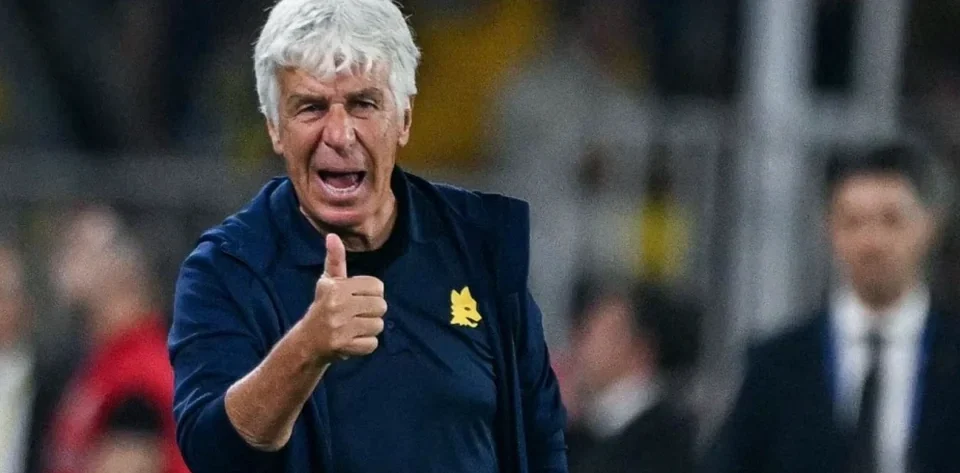
Gian Piero Gasperini returned to the vineyards of Asti during the international break, but Roma’s next demands were never far from his thoughts. Speaking at his family winery while presenting a new wine, the coach looked ahead to Como, reflected on the club’s growing rhythm, discussed Bryan Cristante’s fitness and made clear that his first months in the capital have been built on the response of his players and the support of the Friedkin ownership.
Roma return from an unusual break
-
Gasperini described the lengthy international pause as an unfamiliar interruption to the domestic campaign. He recalled the Qatar World Cup as the only comparable stoppage, although that break came for a major tournament rather than a regular international window.
-
He suggested that the experiment had not found much approval and said football’s authorities would decide whether such a pause should be repeated.
-
Roma had too few available players to arrange friendlies, so the squad continued working through the first week before being given a short rest period. Training will resume with the team seeking to pick up from a positive position in the league.
-
The return begins at Como, before a crowded spell in which Roma will play roughly every three days. Gasperini believes five substitutions can help distribute minutes across the squad, although he noted that four changes tend to have greater impact than the fifth.
The coach said the workload is demanding, but squad management becomes more manageable when he can rotate players and use the full group. The greater concern is the risk of injury: prevention can reduce danger, he said, but football has always carried that uncertainty when fixtures accumulate.
Cristante will not immediately be available. The midfielder is recovering from a medial collateral ligament issue, and Gasperini would not confirm whether he will miss both Como and the subsequent Real Madrid match. Roma will not hurry his return, with so many games approaching and the player needed at full fitness.
Como provide the first test
Roma’s trip to Como carries particular weight because Gasperini sees Cesc Fabregas’ side as one of the championship’s most convincing projects. He credited the club not merely for the investment provided by wealthy owners, but for the quality of football they have developed.
Gasperini did not place Como among the outright favourites for the Scudetto, arguing that Inter remain ahead of the field. Yet he believes Como belong among the clubs capable of competing near the top.
Fabregas had previously used a Subbuteo board to illustrate Roma’s game at the Trento Festival, and Gasperini met the episode with humour. He said he would now study Como in return and look for answers, noting that Fabregas had won the miniature version of the contest. “Hopefully Sunday will be different,” he said.
Trust, ownership and a changing relationship with Roma
Gasperini admitted that his appointment initially met scepticism from a fanbase that had viewed him as an opponent. He believes several details have altered that relationship, beginning with the willingness of the squad to absorb his ideas.
The players arrived after a strong end to the previous season, but Gasperini said they immediately showed conviction in pursuing a different style of football. Their enthusiasm, together with the club’s confidence in his work, has helped him earn greater appreciation in Rome.
His relationship with the Friedkin family differs from the daily contact he enjoyed with the Percassi family at Atalanta, where the connection often extended beyond work. The Roma owners are not regularly present in the city, but Gasperini said he feels their backing from a distance.
He identified Galantic as the closer link between Roma and the Friedkins, and said he wants to bring the owners more deeply into the life of the club. His aim is not simply personal: he believes greater involvement would matter to both supporters and ownership as Roma approach their centenary and continue work towards a new stadium.
January questions and individual progress
Roma may revisit the search for a left-sided attacking player after pursuing that role in the summer. Gasperini stressed that forwards are expensive and widely sought, while also insisting Roma are not without options in the current squad.
He highlighted Matias Soulé’s development. The Argentine produced an outstanding first half of last season before pubalgia slowed him down. After treatment, he arrived at pre-season camp overweight, but Gasperini said he is now performing at a high level.
Soulé’s Argentina debut was described as a reward for the entire team rather than only the player. Gasperini also offered encouraging words on Paulo Dybala, who has trained consistently since early July. He said the forward is happy, eager to play and visibly different from the periods when injuries forced him to miss matches and sessions.
Roma declined to allow Dybala and Molina to attend Lionel Messi’s farewell celebration in Argentina because of the proximity of the important Como fixture and the logistical demands of travelling so far. Gasperini said he regretted Messi’s departure, calling him the finest player he has seen, if only by a narrow margin, and said his gifts can appear unreal.
The coach also addressed the late-window possibility of Manu Koné joining Chelsea. Roma could not realistically have replaced him with so little time remaining, he said, particularly given the number of people involved in completing a major transfer. Gasperini was pleased that the move did not happen and believes Koné can continue increasing his value at Roma.
Mourinho’s return and a wine rooted in Asti
Roma are due to welcome José Mourinho’s Real Madrid on 14 October. Gasperini recognised the special connection between Mourinho and the Roman public, pointing to the Conference League triumph and a European final during his time at the club. League results may have been less significant, he said, but the affection Mourinho received showed his distinct character.
Away from Trigoria, Gasperini used the occasion to introduce Fresa 3-4-3, a wine named after both a local grape variety and the system that has accompanied much of his coaching career. The label traces his route as a player and manager across Italy.
He described the Asti area as a place of peace where he can step away from the tension of matchdays. His son Davide’s interest in wine drew him closer to the natural setting, while the Fresa itself carries memories of his childhood because it was enjoyed by his parents and uncles. The local wine comes in several versions, including a sparkling one.