
Italian football’s season is not decided only by Sunday results. Behind the tables, promotions and relegations, the financial condition of clubs remains a decisive part of the championship’s wider order. The Independent Commission for the Review of the Economic and Financial Balance of Professional Sports Clubs has set out the scale of its work in its 2026 annual report, after a year in which penalties, emergency measures and concerns over ownership again shaped the landscape.
The coach and the club
The report was presented at the Sala Regina of the Chamber of Deputies in the presence of Sports and Youth Minister Andrea Abodi and leading figures from the Italian game, including Ezio Simonelli, Giuseppe Marotta, Claudio Lotito, Paolo Bedin, Matteo Marani, Giancarlo Abete and Umberto Calcagno.
The Commission, which took over from Covisoc and Comtec a year ago in supervising the accounts of professional football and basketball clubs, examined 2,688 cases between 1 October 2025 and 31 August 2026. Of those checks, 2,432 concerned football and 256 basketball.
Its work identified 20 breaches: 15 within the FIGC system and five in basketball. In football, sanctions added up to 113 points across the 2025-26 and 2026-27 seasons. Ninety-seven of those points had an effective impact, although Brescia and Lucchese subsequently failed to enter their respective competitions. Eighty-three points affected professional league standings, while Messina served a 14-point deduction in Serie D after being relegated. A further 20 points have already been imposed for 2026-27.
Basketball accounted for another 10 penalty points, all assigned to Shark Trapani, who were later removed from the competition.
There were no difficulties this year in issuing national licences to professional clubs in either football or basketball. Even so, the Commission adopted 55 urgent measures during the period under review.
A warning before the crisis
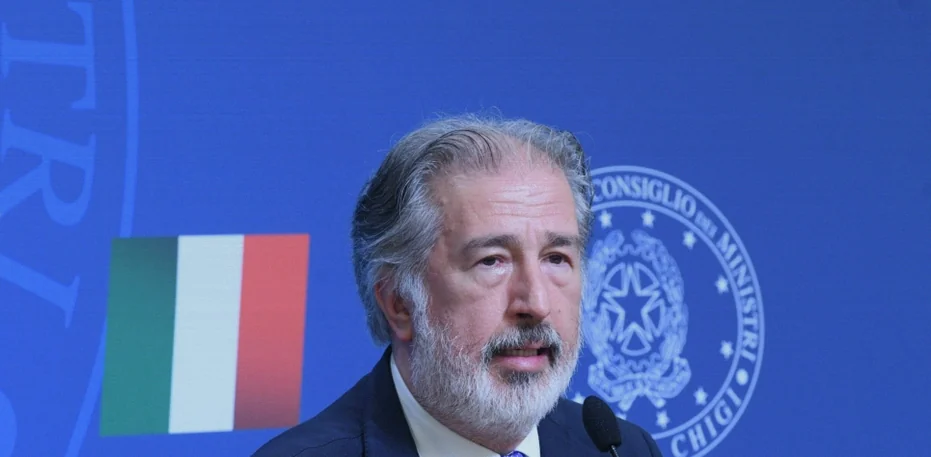
Commission president Massimiliano Atelli said the body’s central purpose is to recognise weaknesses before they become irreversible.
“The Commission’s main task is to help the system identify signs of vulnerability in good time,” Atelli said. “It is in clubs’ interests to act before a crisis becomes established. Reform and oversight are there to protect balance and transparency.”
In its advisory capacity, the Commission issued one opinion requested by the FIGC and two initiatives of its own. These addressed the relationship between public money in sport and the development of youth academies, as well as financial-strength requirements for clubs.
Its conclusion on the latter was particularly pointed: the current asset-based indicators are too limited to ensure that clubs admitted to competitions have the means to complete them.
Atelli noted that football’s recurring financial cases have traditionally been concentrated in Serie C, where repeat offences have been common. He also pointed to the financial dominance of the Premier League, Italy’s comparatively large number of professional sides, and the risk of organised-crime involvement in the game.
For that reason, he called for the Commission’s authority to be broadened so it can examine the personal suitability and financial reliability of club owners. The report also considered the economic criteria used for checks, the uninterrupted running of competitions and fair sporting competition, all of which are recognised as matters of public interest under European law.
European legislative developments on anti-money-laundering rules and multi-club ownership were included in the review, alongside the transition away from the former Covisoc and Comtec model.
The limits of the new system
Atelli stressed that the federation procedures following the Commission’s mandatory opinions have not changed. But he questioned the practical role of the federal prosecutor in that process, arguing that it carries out no investigative work and describing its involvement as substantially superfluous.
The report therefore leaves Italian football with a familiar challenge. Licensing may have passed without disruption this season, but the Commission’s figures show how quickly administrative and financial failures can enter the competitive story of a club. In a championship where every point has a consequence, balance-sheet control remains part of the game’s final table.