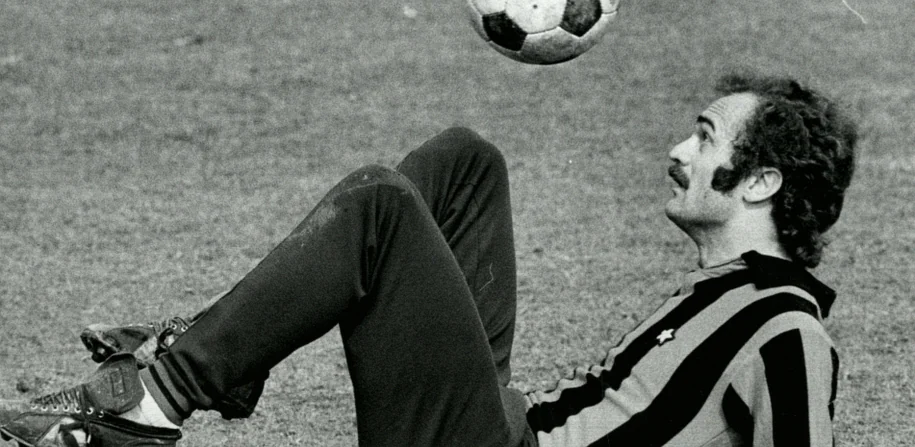
Inter and Italian football are mourning Sandro Mazzola, a figure whose life carried the weight of two great clubs: the Grande Torino of his father Valentino, lost in the Superga disaster, and the Grande Inter that he helped take across Europe. Mazzola spent 17 seasons as an Inter player before returning for 11 years in executive roles, while his Italy career brought 70 caps, 22 goals and the European Championship of 1968.
From Superga’s shadow to Inter’s first team
Mazzola was six when Valentino Mazzola, captain and symbol of Grande Torino, died in the Superga air disaster. His brother Ferruccio was three years younger. The two boys found an early football home at Inter, where Benito Lorenzi, grateful for Valentino’s support during his own international career, looked after them closely.
- Before matches at San Siro, the Mazzola brothers would enter the pitch in Inter kit as mascots.
- President Carlo Masseroni awarded them 5,000 lire after a win and 2,500 after a draw.
- Sandro joined Inter’s youth system at 15 and was coached at Rogoredo by Giuseppe Meazza.
- Helenio Herrera, then in charge of the senior side, monitored his progress and challenged him with a simple message: his father had been a great player, and now Sandro would have to show what he could do.
His Serie A debut came at 18 in one of the most unusual chapters of the Juventus-Inter rivalry. A title-deciding meeting had been stopped because overcrowding caused spectators to spill onto the field. The original forfeit imposed on Juventus was overturned, and the match was ordered to be replayed.
Angelo Moratti protested by sending Inter’s De Martino youth side to Turin. On the morning of 10 June 1961, Mazzola was still at school, due to sit oral examinations in English, banking technique and political economy. A taxi took him from Milan to join his teammates at their restaurant before the game.
Juventus won 9-1, but Mazzola scored Inter’s penalty and made an immediate impression. Giampiero Boniperti, who had played alongside Valentino in the Italy side, told him before the match that his father had been the finest of them all. Afterwards, he offered an even more personal verdict: Sandro had lived up to Valentino’s name.
The forward at the heart of Grande Inter
From the 1962-63 season, Herrera made Mazzola a regular in the first team. The young forward became one of the defining attacking players in a side built around defensive control and rapid breaks: quick, technically gifted and relentlessly ready to attack space.
The European Cup final of 27 May 1964 in Vienna placed him at the centre of Inter’s rise. Against Real Madrid at the Prater, Mazzola scored twice in a 3-1 victory. Giacinto Facchetti supplied the pass for the first goal, a connection between two young players who became central to Herrera’s Inter.
Ferenc Puskás, who had faced Valentino during his own career, gave Mazzola his number 10 shirt after the final and echoed Boniperti’s assessment of his father. For Sandro, only 21 at the time, it was a moment of joy bound inevitably to the memory of Valentino.
- He scored against Independiente as Inter won their first Intercontinental Cup.
- In the following European Cup campaign, he struck in Inter’s 3-1 semi-final defeat at Liverpool; Facchetti then scored in the 3-0 return at San Siro which completed the turnaround.
- Mazzola found the net again against Independiente when Inter collected a second Intercontinental Cup.
- He was therefore a decisive presence in each of the four major international trophies won by Grande Inter.
His relationship with Facchetti was not always straightforward. When Herrera handed the Inter captaincy to Mazzola, Facchetti—already Italy captain—did not take the decision easily. A direct conversation eventually repaired the tension between them.
One of Mazzola’s most celebrated individual goals arrived against Vasas Budapest in the 1966-67 European Cup. He beat five opponents, including the goalkeeper, carrying the ball through a maze of challenges before scoring. The run became a lasting image of his ability to combine pace with close control.
In 1971, he finished second to Johan Cruyff in the Ballon d’Or voting. He remains the only Italian to have finished as European Cup top scorer, doing so in 1963-64, and he scored in two finals, in 1964 and 1967.
An Italy career, a derby rival and life after the pitch
Mazzola made his Italy debut at 20 in a 3-0 friendly victory over Pelé’s Brazil at San Siro, scoring from the penalty spot. He was part of the Italy side that won the European Championship in 1968, but his international story is also inseparable from the long-running debate around Gianni Rivera.
The two Milan rivals became the emblematic figures of their respective clubs during nearly two decades of derbies. Their contrasting public profiles fed the comparison: Rivera was associated with celebrity glamour, while Mazzola married Graziella at 21, having known her since his youth. She came from a comfortable background and drove a sports car, while he travelled by tram; together they had three children.
The Mexico 1970 World Cup made the Mazzola-Rivera issue a national argument. The alternating use of the pair restricted Mazzola to only six minutes in the final against Brazil, a choice that left a lasting mark on how his Azzurri career was remembered. In later years, the two men moved closer through shared union-minded interests and football discussion, while Mazzola increasingly operated as a number 10.
His final match came against Rivera’s Milan: the Coppa Italia final on 3 July 1977, won 2-0 by Milan. Mazzola left the field still combative, quoting Dante after believing the refereeing of Gussoni had been influenced from above.
Inter’s man beyond his playing years
After retirement, Mazzola served Inter in two separate executive spells. He played an active part in bringing Ronaldo and Álvaro Recoba to the club’s training ground at Pinetina.
- Two targets he wanted did not arrive: Michel Platini, whom Ivanoe Fraizzoli chose not to sign, and Paulo Roberto Falcão, whose route instead led to Roma.
- He also held roles with Genoa and Torino.
- For many years, he worked as a television commentator.
For Inter, Mazzola’s passing closes another living link to an era that made the club a European force. He was the son of a lost captain, then a champion in his own right: a player who carried his father’s legacy without being confined by it, and who gave Grande Inter some of its most enduring goals.