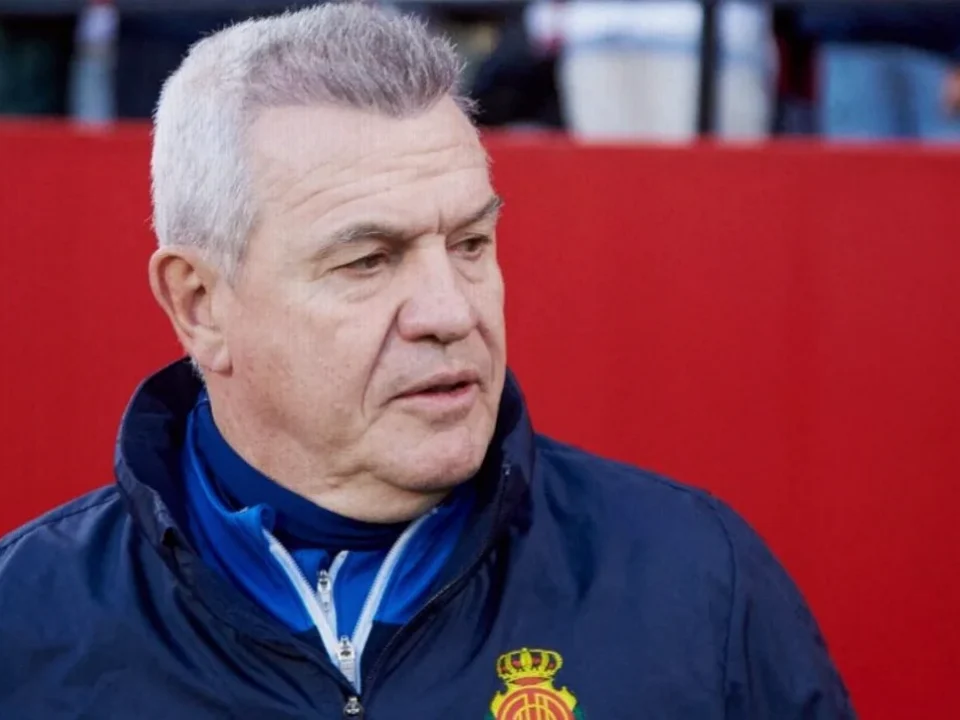
Valencia have turned to Javier Aguirre, the Mexican coach whose long relationship with Spanish football has repeatedly led him into dressing rooms where survival, rather than spectacle, was the immediate concern. Returning to LaLiga after two years away, Aguirre takes charge of a club navigating a difficult spell and becomes the seventh Spanish team of his career.
Known as “El Vasco”, Aguirre arrives in the Mediterranean city with a reputation built across two decades in Spain: a manager capable of handling the anxiety of relegation battles, but also one who has worked with sides chasing European places. His appointment brings him back to a league he first entered with Osasuna in 2002.
A long Spanish record
After Osasuna, Aguirre went on to manage Atlético de Madrid, Real Zaragoza, Espanyol, Leganés and Mallorca. His time in the country has included two Copa del Rey final appearances, while his work has regularly centred on clubs requiring fast results to remain in the top division.
At Zaragoza, he helped the club stay up in the 2010-11 campaign. He later took over Espanyol while they were bottom of the table and again secured safety. Leganés also retained their Primera División status under him in 2020.
His most recent Spanish assignment, at Mallorca, added another important chapter. Aguirre kept the island club in LaLiga and led them to the 2024 Copa del Rey final, reinforcing the standing he has earned among teams operating under pressure.
Experience for a demanding Valencia job
Spanish journalist Nacho Sanchis believes Aguirre’s age, authority and extensive background could be central at Valencia, particularly in a squad that needs a manager capable of commanding respect.
“Javier Aguirre’s arrival can give Valencia what it needs: maturity, experience and, above all, the character that makes players look up to their coach,” Sanchis said. “He has coached at World Cups, managed several LaLiga clubs and worked in other leagues. He has enormous experience in football.”
Aguirre’s profile extends beyond his results record. Throughout his career, he has been associated with close daily contact with his players, direct conversations and an interest in their condition away from purely football matters. That approach has allowed him to combine personal rapport with firm demands inside the squad.
He is also known for taking responsibility openly when results go badly rather than distancing himself from difficult decisions. In press conferences, Aguirre has generally been frank, sometimes humorous and accessible with reporters, traits that became familiar during his spells around Spain.
For Valencia, the attraction is therefore not simply a coach with a rescue record. Aguirre knows the rhythm of LaLiga, the shifting pressures around its clubs and the way a run of results can quickly transform a season’s priorities. In a city where expectation rarely disappears, his return offers experience shaped by nearly a quarter-century of Spanish football.