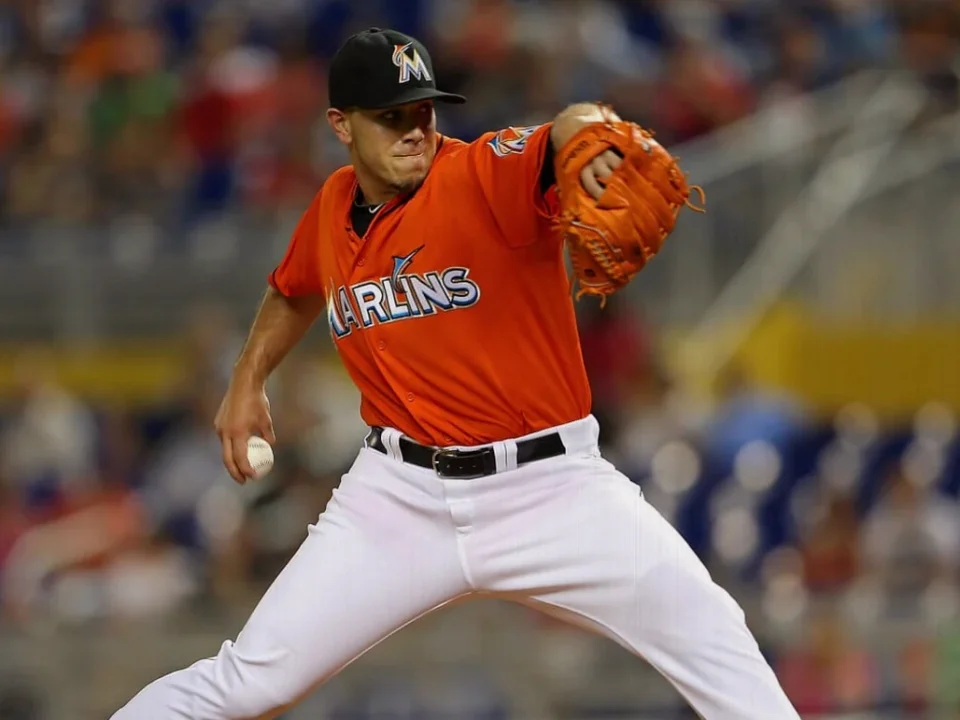
Ten years after José Fernández’s death, the Marlins’ clubhouse still carries the echo of a pitcher who made every fifth day feel like an event. Before the sport’s current wave of must-watch young arms, Miami had its own electricity on “José Day,” when a 20-year-old Cuban-born right-hander could turn the ballpark in Little Havana into South Florida’s place to be.
The pitcher who filled a ballpark
Fernández reached the Major Leagues at 20 years and 250 days old and immediately looked built for the stage. His arsenal mattered, but teammates remembered the spirit that came with it: the grin, the competitiveness, the energy that followed him from the clubhouse to the mound.
He had arrived in the United States after fleeing Cuba by boat with his mother as a child. That history gave teammates the sense that baseball pressure was never going to overwhelm him. He played with joy, but there was steel underneath it.
- Former Marlins reliever A.J. Ramos described Fernández as a constant source of energy whose presence was impossible to miss.
- Ramos believed Fernández drew both devoted baseball fans and casual spectators because every start was entertaining.
- His teammates saw more than raw ability in him; they saw an uncommon intensity that made his talent play even larger.
That promise was cut short on Sept. 25, 2016. Fernández was 24 when he and two other people died in a boating accident, a loss that changed the franchise and stayed with the players, coaches and staff who had known him.
A Sunday morning no one knew how to handle
The night before the accident, Miami had beaten Atlanta. Fernández asked teammates whether they wanted to join him at American Social, a waterfront restaurant and bar, on his boat. Ramos passed because the club had a Sunday afternoon game ahead.
Ramos could not settle down that night. At home, he found his roommate, Giancarlo Stanton, awake as well. By morning, the clubhouse began receiving the news in different ways. Ramos heard from his agent. Christian Yelich learned and told his roommate, J.T. Realmuto. Justin Bour received a message from Tom Koehler.
Koehler had just returned from the paternity list when he saw manager Don Mattingly, general manager Michael Hill and president David Samson in a grave conversation. He recalled seeing blank expressions around the room before instructions went out to summon everyone to the ballpark and cancel the game without initially explaining why.
The players assembled quietly in a clubhouse circle while Samson explained what was known and what the day would require. Veteran catcher Jeff Mathis had experienced the loss of Angels teammate Nick Adenhart in 2009, but there was no real blueprint for the group.
Mattingly’s approach was to listen rather than impose a script. If players wanted to honor Fernández in a particular way, he felt they should be allowed to do it. The first trip was together, by bus, to visit Fernández’s mother, who had been a familiar presence at games as her son’s biggest supporter.
For Ramos, now a parent himself, that visit remains nearly impossible to put into words. There was nothing adequate to say to a mother confronting that kind of loss.
A night at Marlins Park that went beyond the score
Miami still had six regular-season games remaining and only a slim postseason chance. The following evening, the Marlins returned to face the Mets while still trying to absorb what had happened.
- A trumpet played “Take Me Out to the Ball Game” over a Fernández tribute video.
- All personnel on the field wore black No. 16 Fernández jerseys.
- Fans rose to applaud players during pregame warmups.
- The Marlins gathered around the mound and left personal messages before first pitch, while the Mets offered their condolences.
- There was no pregame soundtrack and no walk-up music.
Then Dee Strange-Gordon supplied one of the most indelible moments in franchise history. Before facing Bartolo Colon, the left-handed hitter briefly copied Fernández’s right-handed stance. He then returned to his usual side of the plate and sent the next pitch into the second deck.
It was Strange-Gordon’s first home run of that season and the ninth of his career. He cried as he circled the bases, then was met at home by Marcell Ozuna and Martín Prado before teammates gathered around him in the dugout.
Yelich, watching from the dugout steps, said he had a clear view and initially could not believe the ball had enough to leave the park. Mattingly saw something more than coincidence in the timing of it.
| Sept. 26, 2016: Marlins vs. Mets | Key moment |
|---|---|
| Dee Strange-Gordon | Hit his first homer of the season after honoring Fernández’s stance |
| Justin Bour | Recorded his first Major League triple, sliding headfirst into third |
| A.J. Ramos | Worked a scoreless ninth inning |
| Miami | Defeated New York, 7-3 |
Bour’s dive into third brought a release from the crowd. Ramos, an All-Star alongside Fernández that season, handled the ninth but said it was among the most difficult innings of his career because every No. 16 jersey brought a fresh reminder of who was missing.
Yelich felt the club had to win that first game back. Once it was over, he said, the group felt spent. Baseball continued, but the season no longer felt the same.
Two days later, players in white shirts bearing “RIP” and Fernández’s name walked beside his hearse as it traveled from the ballpark to the church for the funeral. Fans covered temporary walls around the stadium pillars with notes. Images of a lone cloud above the park, and later a rainbow seeming to end there, made their way around social media.
Miami lost to the Mets, 5-2, later that day, then flew to Washington to finish the schedule. Before departing, the club shared a dinner meant to celebrate Fernández’s life. Ramos said the experience taught him to make sure the people around him know they are loved, because no one can know when a final conversation will come.
The roster that never got its chance
Fernández’s absence was felt immediately in roster planning. Trying to support a young core that included Yelich, Stanton, Strange-Gordon, Realmuto, Bour and Ozuna, Miami signed Edinson Volquez and sent three prospects — including Luis Castillo — away for Dan Straily to help rebuild the rotation.
The offense still carried plenty of punch the next year:
- Stanton became the first Marlin to win National League MVP.
- Ozuna emerged as another serious MVP candidate.
- Strange-Gordon batted .308 and led the Majors in stolen bases.
- Bour hit 25 home runs.
- Yelich and Realmuto combined for 35 more homers.
Yet Miami finished 77-85, second in the NL East, and missed the postseason for a 14th consecutive year. Mattingly later reflected on how hard it was to replace a frontline pitcher in Miami, particularly without simply signing several expensive free agents. The need for immediate help meant moving young Minor League talent that might have made the organization stronger later.
Koehler put it more bluntly: Fernández was not someone anyone had expected to replace. The expectation had been that he would be there for a long time.
The club soon broke apart. Jeffrey Loria sold the team after the 2017 season, and within two years Yelich, Stanton, Ramos, Ozuna, Bour and Realmuto had all been traded. Yelich became an NL MVP and the Brewers’ central figure. Stanton joined Aaron Judge with the Yankees and developed into one of the game’s most reliable postseason performers. Mattingly helped Miami end a lengthy playoff drought in 2020, and this season he reunited with Realmuto in Philadelphia.
Fernández also left quieter lessons behind. Mattingly remembered a conversation about leadership that became something closer to a father speaking with a son, as Fernández tearfully shared personal struggles. It taught Mattingly to look beyond the uniform and better understand what players may be carrying.
Bour, now working in Brewers player development, keeps Fernández’s jersey, bat and photographs from the Mets game in his office. Having also lost former Angels teammate Tyler Skaggs in 2019, Bour said he notices flashes of Fernández whenever a young player combines exceptional talent with a special kind of energy.
For the 2016 Marlins, the lingering question remains the same: what might have happened? Yelich said the group understood where the organization was headed after Fernández’s death, while wishing his family and the other victims’ families had never had to endure the tragedy. A decade later, that feeling has not disappeared.