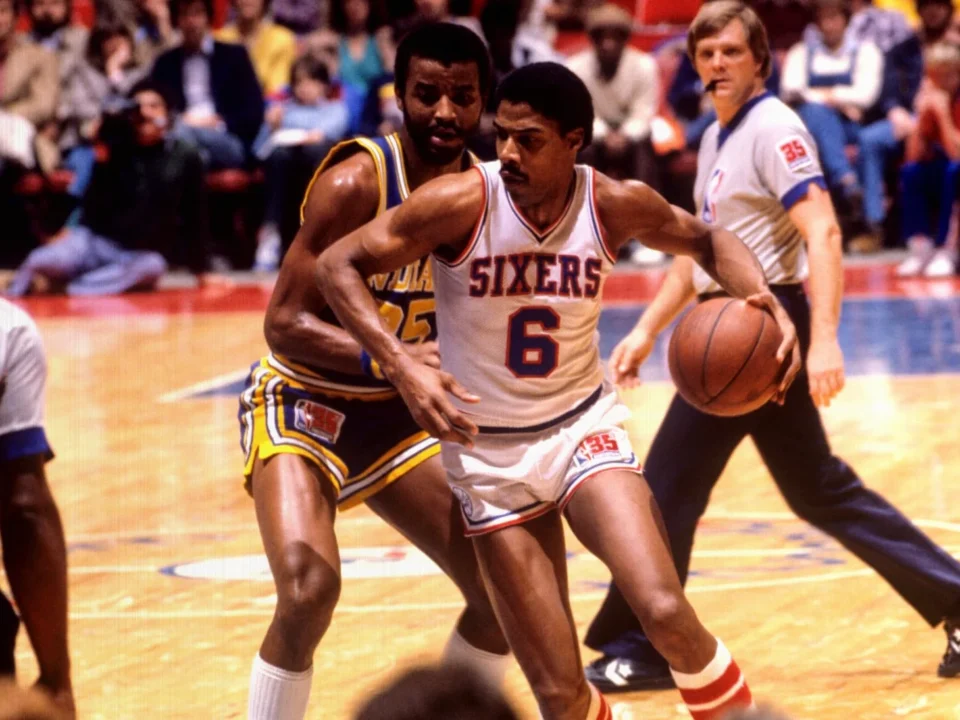
Julius Erving’s game was built on flight, but his view of basketball remains grounded in the people and leagues that came before him. As the ABA-NBA merger reaches its 50th anniversary, Dr. J. wants the league’s record to make room for the players, teams and style that helped shape the modern game.
The ABA belongs in the league’s memory
Erving, a Hall of Famer who became a star in both the ABA and NBA, said basketball history should not begin only with the moments that have the cleanest film or the biggest current audience. The NBA’s early years, beginning in 1946-47, deserve to be included even if the footage has aged, he said, because those players created the base for everything that followed.
That same standard applies to the ABA, whose influence is being revisited through classic uniforms and courts during the anniversary season. Erving’s point was simple: the ABA need not dominate every historical discussion, but it cannot be treated as though it never existed.
- Erving played in the ABA before joining the NBA and later became the 1980-81 NBA MVP.
- He won the 1983 NBA title with Philadelphia.
- The ABA franchises that entered the NBA were the San Antonio Spurs, Denver Nuggets, Indiana Pacers and New York Nets.
- Erving said he still roots for each of those surviving ABA clubs, regardless of its opponent.
That allegiance even overrides his New York roots at times. When San Antonio faced New York this year, Erving said he found himself pulling for the Spurs because of their ABA lineage.
Baylor and Russell set the example
Before Erving became one of the sport’s great open-floor artists, Elgin Baylor was the player who stopped him in his tracks. Erving remembered watching the Lakers visit the Knicks on a Saturday television broadcast when he was about 10 or 11. Baylor took a rebound, pushed the ball up the floor, maneuvered around defenders and finished with a reverse layup.
Erving went to the park to try it himself. He did not have immediate success, but eventually added the move to his own game.
Years later, he got the chance to play golf with Baylor in Las Vegas. Erving said the experience of being around his childhood hero affected an already shaky golf game, but the memory stayed with him. Bill Russell also became an important figure, first extending friendship and then serving as both mentor and role model.
- Elgin Baylor was Erving’s earliest basketball hero.
- Bill Russell became a mentor as well as a model for him.
- Erving identified those two players as the biggest influences from their generation.
Summer runs helped unlock Dr. J.
Erving’s ABA years were also the point where his professional identity began to take shape. He played in Harlem’s Rucker League during the summers for five years, using those outdoor games to expand his skill set and sharpen the attacking game that would become his signature.
His former college teammates noticed the difference. They came to watch and wondered who the more explosive player was, because he no longer resembled the teammate they remembered. Erving called that period a coming-out stage.
In college, dunking had been prohibited under the Lew Alcindor rule. Once he turned pro, Erving said, the dunk became a weapon, and he kept working on new ways to get to the rim and finish above it.
When asked to define the ABA’s appeal, Erving pointed to former Virginia Squires teammate George Gervin. Gervin’s answer, Erving said, captured the league: players performed for the crowd and aimed to make sure fans felt they had received value for their ticket.
Philadelphia’s long chase ended with Malone
Erving spent 11 seasons with the 76ers, and he described Philadelphia as a place where the fans felt ownership of the club no matter who officially held the franchise. The city always had something stirring around the team, he said, and the fan base treated the Sixers as its own.
Those Philadelphia teams made four Finals in seven years, a run Erving noted would be difficult to match in any era. The 1976 club reached the championship series, won the first two games, then dropped four straight. The Sixers made more Finals without securing the title before the roster found its missing piece in Moses Malone.
Malone brought a level of urgency Erving had not seen from another teammate. Erving recalled seeing Malone already drenched in sweat before a practice or game had truly started. Malone’s explanation was direct: he was preparing to work.
Maurice Cheeks was so confident after Malone arrived that he said during training camp he did not expect the Sixers to lose. Erving understood the feeling behind the optimism. Philadelphia went on to win the 1983 championship.
Erving on the current Sixers’ questions
In discussing the current Philadelphia group mentioned as being led by LeBron, Joel, Jalen and Tyrese, Erving said he liked hearing players speak about the sacrifices required to win. He stressed that late-game hierarchy has to be settled before the pressure arrives.
Teams can debate whether the final possession belongs to the player already holding the ball or to a designated closer, he said. Sometimes the apparent open man is open because the defense wants him taking that shot. Erving expects teams to face a limited number of true last-shot games over a season, perhaps six to 10, but said they should know whose hands the ball belongs in when those possessions appear.
- Erving said sacrifice is central to a winning roster.
- Closing-game responsibilities should be clarified through discussion and practice.
- His preference is for enough 10-, 15- or 20-point wins that the final possession does not decide many nights.
For Erving, no career is a solo project. He credited teammates, mentors and inspirations beyond basketball, while also recognizing the doctors, nurses and advisers who help players stay healthy and extend their lives after the game.
His personal standard is what he calls the “complete package”: physical, mental, emotional and spiritual health kept as close to full strength as possible. The game’s spectacular finishes may endure on replay, but Erving’s larger message is about the support system that makes a career—and a life—whole.