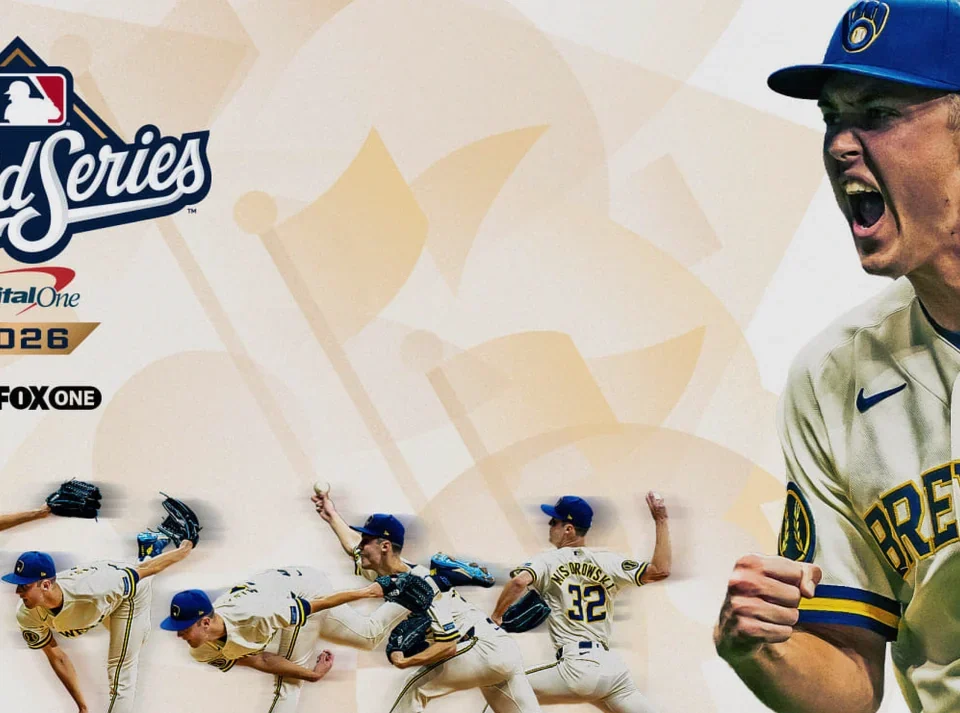
Jacob Misiorowski will take the ball for Milwaukee in Game 1 of the World Series on Friday night, carrying the Brewers’ October hopes and a fastball that has still touched 104 mph. The club has won each of his first two postseason starts, helping roll through the National League bracket, but neither outing has looked like the full-force version of Miz that owned hitters during the season.
Milwaukee is chasing its first World Series title, and its hardest-throwing starter has a chance to set the tone against Tampa Bay. First pitch is scheduled for 8 p.m. ET, with FOX, FOX Deportes and FOX One carrying the opener.
Quick facts
- Misiorowski has not completed five innings in either of his two playoff starts.
- He has thrown 182 postseason pitches; opponents have fouled off 51 of them.
- His four-seam fastball whiff rate has fallen from 40% in the regular season to 16% in October.
- He has averaged 101 mph with the fastball in the playoffs, with 96 of 122 heaters reaching at least 100 mph.
- Tampa Bay enters the Series as baseball’s strongest contact club and has already beaten high-velocity arms this postseason.
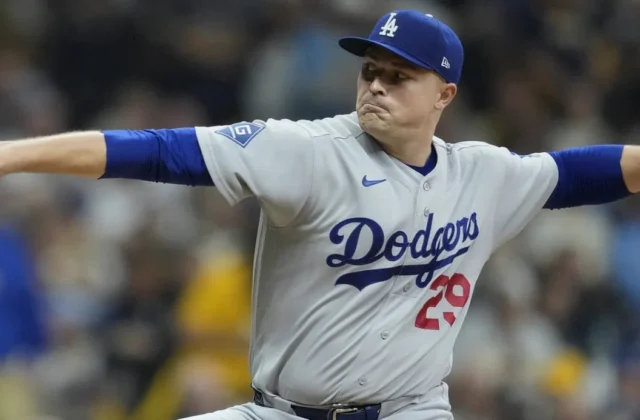
The Padres and Dodgers did not knock the life out of Misiorowski’s stuff. They simply refused to let it beat them cleanly. They extended at-bats, fouled off pitches and pushed his pitch count high enough to get him out before the fifth inning was finished.
That has been the October pattern. Of the 94 swings against Misiorowski, 51 have produced foul balls, meaning more than half of the swings have kept an at-bat alive. For a pitcher whose regular-season identity was built around hitters missing entirely, that is a meaningful shift.
The fastball remains fast
Everything starts with the four-seamer for Misiorowski. He uses it more than 60% of the time, the highest share among starting pitchers, and during the regular season it produced a 40% swing-and-miss rate. That put his heater in rare company, even alongside power arms such as Mason Miller and Cam Schlittler.
In the postseason, the whiff rate on that same pitch is 16%, a 24-point decline. The velocity has not gone anywhere. Misiorowski topped 104 mph in both his NLDS and NLCS appearances, and his playoff fastball average sits at 101 mph.
The difference has been in the quality of the swings. Right-handed hitters swung below his four-seamer 47% of the time during the season, but that figure is down to 36% in the playoffs. Left-handed hitters were late on 34% of their swings in the regular season; in October, only 14% have been late.
There are signs the fastball has drifted into more hittable lanes. Against right-handers, pitches that are best when elevated and away have too often come toward the middle-in portion of the plate. Lefties have seen more heaters lower and nearer the heart of the zone.
At 100 mph, even an imperfect fastball remains a difficult assignment. But slightly friendlier locations can turn a miss into a foul ball, and a foul ball into another chance for an opponent to see the pitch.
Chases are not becoming outs
Opponents have also shown more restraint. Misiorowski drew chases on 34% of his four-seamers in the regular season, compared with 27% during the playoffs. On high fastballs, the chase figure has dropped from 41% to 32%.
More strikingly, hitters who do chase have managed to survive. Batters missed 56% of the time when they chased his four-seamer during the season. In the postseason, that rate has fallen to 7%.
Misiorowski has generated one whiff on 15 swings at four-seam fastballs outside the strike zone, despite those pitches averaging 101.1 mph. That is the kind of survival work that can make a dominant pitcher look merely good for four innings.
The approach appears deliberate. Opponents have shortened their swings against him, particularly once they reach two strikes. Their average swing length has gone from 7.0 feet in the regular season to 6.8 feet in the playoffs, while two-strike swings have contracted from 6.9 to 6.7 feet.
No playoff pitcher has faced more shortened-up two-strike swings than Misiorowski. The assignment now gets no simpler against a Rays lineup built around putting the ball in play and one that has shown it can handle elite velocity in a small postseason sample.
Still, Milwaukee does not need to reinvent its Game 1 starter. Misiorowski’s advantage remains enormous if he can get the fastball back to its preferred edges, especially up in the zone and away from barrels. Tampa Bay may foul off some heaters, as San Diego and Los Angeles did, but sustaining that against triple-digit velocity is a demanding way to play.
The Brewers have reached the Fall Classic without a signature Misiorowski masterpiece. A few more missed bats Friday would change the feel of the Series quickly. For Miz, the task is simple enough: reclaim the four-seamer, get deeper into the night, and make the Rays deal with the kind of heat that usually leaves hitters wishing they had never swung.