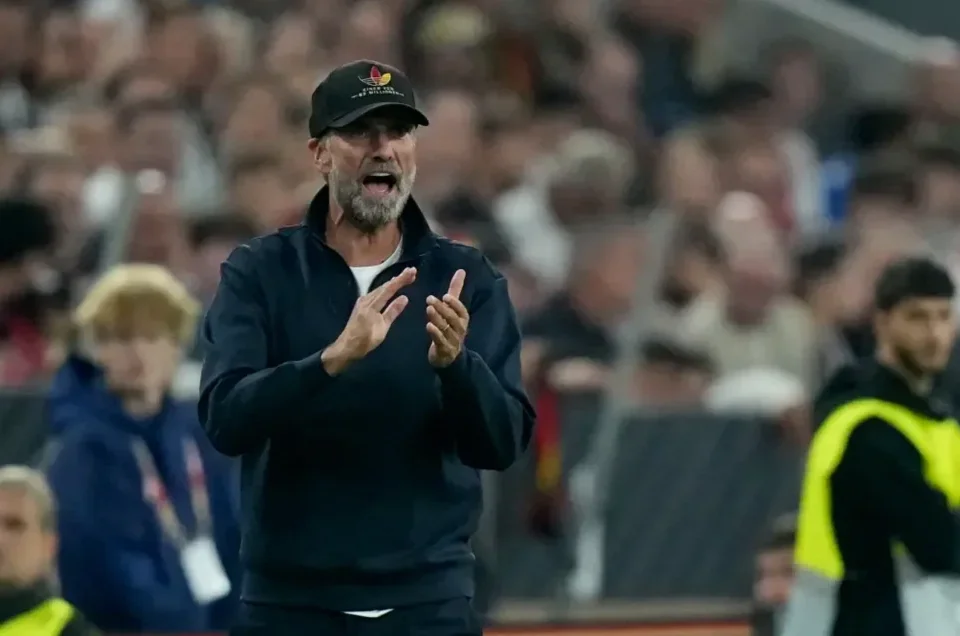
Germany’s new international cycle is still searching for a decisive result, but Jürgen Klopp sees evidence of a deeper change taking shape. Four Nations League matches into his tenure, the national coach has overseen one win, two draws and a defeat, a modest return that has nevertheless come with extensive experimentation and an attempt to shift the mood around a side bruised by recent tournament disappointments.
The 0-0 draw with Greece followed a 2-0 victory over Serbia and left Germany needing a strong finish to their group campaign. Klopp’s team controlled much of the contest against Greece but could not turn possession and pressure into a goal. They now face the Netherlands at home before travelling to Serbia, with victories required if Germany are to finish second in the section.
Klopp was encouraged by what he saw before the interval against Greece. “Had someone told me a week ago that we would be able to produce a first half like that, I would not have believed it,” he said after the match. “I had never seen anything like it. The players delivered an incredible game.”
He judged Germany’s immediate pressing after losing possession to have worked around 90 per cent of the time. The rhythm faded after the 60th minute, however, and the home side’s command of the game became less convincing as Greece held on for the draw.
The wider point of Klopp’s early months is the scale of his reshaping of the squad. He has handed senior international debuts to 10 players in four fixtures, used three different goalkeepers and selected two squads that were close to entirely different across the latest pair of matches. Rather than protecting established hierarchy, he has placed value on collective work, physical output and a more aggressive reaction when the ball is lost.
Several familiar names were absent from the most recent group. Niko Schlotterbeck was unavailable through injury, while Jonathan Tah, Joshua Kimmich, Jamal Musiala and Karim Adeyemi were also missing. The selection suggested Klopp is looking beyond the next Nations League evening and towards a longer rebuild.
That approach fits the pattern of his club career, where his football required time before it took full hold, most notably during his years at Borussia Dortmund. Germany’s need for renewal has been sharpened by a difficult sequence on the world stage: a group-stage departure in Russia in 2018, a poor campaign in Qatar and a round-of-32 elimination at the most recent World Cup.
Klopp was appointed to lead a return to the top level, but the process remains unfinished. The draws and defeat have limited the immediate optimism, while the performance against Greece offered a glimpse of the intensity he wants. The meetings with the Netherlands and Serbia will test whether Germany’s new direction can begin to bring the results demanded of it.