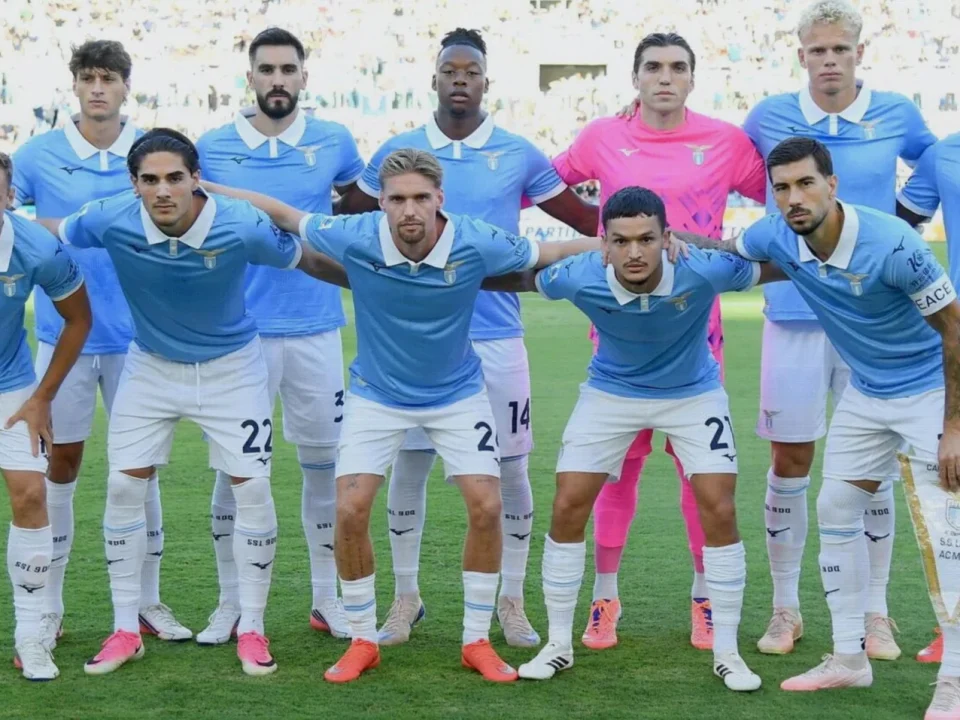
Lazio’s latest accounts describe a club trying to steady its financial position while the relationship between board and supporters continues to shape the season beyond the pitch. The financial year ending on 30 June 2026 closed with a €10 million loss, an improvement on the €17.2 million deficit recorded a year earlier, but the reduction was driven by asset revaluation and player trading rather than stronger recurring income.
Claudio Lotito’s decision to revalue the Formello training complex in 2025 transformed Lazio’s net equity. The figure moved from a negative €16.8 million to a positive €113.6 million without a capital increase from shareholders. It was a significant accounting intervention, though one that cannot simply be repeated in future years.
Sporting director Angelo Fabiani’s sales also helped contain the deficit. Deals involving Taty Castellanos, Matteo Guendouzi and, earlier, Loum Tchaouna produced combined capital gains of €39.3 million between summer 2025 and the January 2026 window. They offered breathing space in the accounts, but also underlined how dependent the club remains on the market when ordinary revenues fall short.
Television income dropped from €94.5 million in 2024-25 to €88.5 million, with the absence of European football carrying a clear cost. Matchday revenue fell more sharply, from €22.9 million to €18.1 million. That category includes ticket sales from 2025 fixtures and season-ticket income, alongside the limited cup programme available during a campaign without continental competition.
The reduction has also been linked to the supporter protest that began on 30 January. Lazio did not publish a confirmed subscription total for 2026-27, but the working estimate is that some 25,000 to 26,000 season-ticket holders have not renewed compared with the 29,918 recorded in the previous year. The full financial effect will be visible only in the next set of accounts, yet the potential shortfall from season tickets, individual tickets and merchandise has been put at between €15 million and €20 million.
Commercial income has not offered enough protection. Sponsorship and advertising revenue stood at €17.8 million, while merchandise brought in around €2 million. The agreement with Polymarket ended, although Lazio received compensation following the termination of that contract.
At the same time, costs rose. Operating expenditure increased from €174 million to €187.4 million, while staff costs climbed from €98.2 million to €104.6 million. Lazio attributed the rise to higher fixed commitments for players and technical staff, as well as increased individual and collective bonuses.
The change from Maurizio Sarri to Gennaro Gattuso is expected to lower the coaching salary bill by roughly €1.5 million, but it would not on its own bring down the overall wage structure. Several departing players had benefited from Italy’s former growth-decree tax arrangements, while incoming players are on full salary terms, adding pressure to the wider employment cost.
The next financial snapshot will come on 30 September, while the consequences of the January market will be clearer in December. Another break-even transfer window remains a possibility if the club cannot create room through sales. Lazio’s cash position, meanwhile, had already fallen to €1.84 million by 30 June 2026, down from €6.06 million.
The accounts therefore leave a familiar question hanging over Formello. The property revaluation repaired the balance sheet and transfer gains softened the annual loss, but neither can replace regular European football, a full stadium and a settled commercial environment. For Lazio, the next phase of the season will concern not only results on Sunday, but whether the club can rebuild the revenues that make those results sustainable.