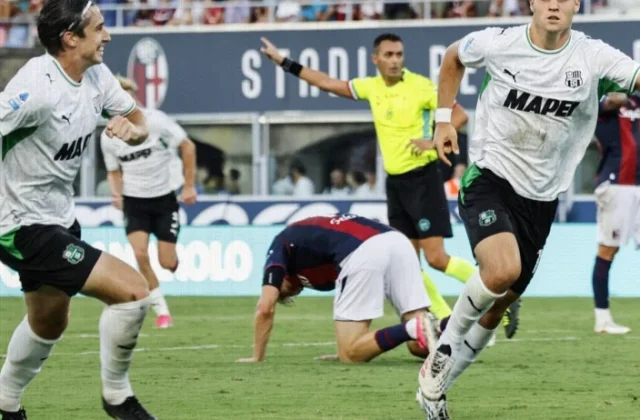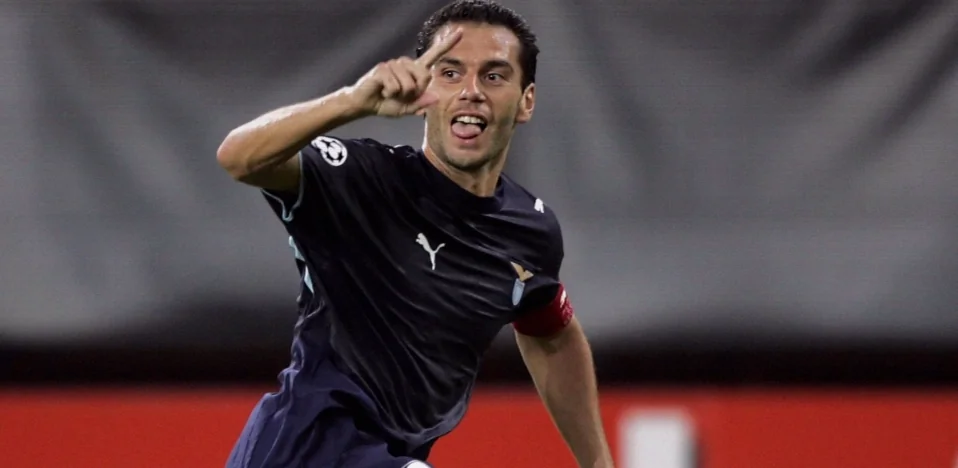
Luciano Zauri’s football life has moved from the dressing rooms of Atalanta and Lazio to the uncertainty of a coach seeking his next bench, but one afternoon in Rome remains outside the usual measure of a career. On his 48th birthday, 20 January 2013, the former defender climbed into a deep opening beneath a restaurant to bring a frightened seven-year-old girl, Giulia Santopadre, back to safety. It is the memory that has most clearly reordered his sense of what matters: family and children first, football afterwards.
The coach and the club
Zauri’s most recent chapter ended at Campobasso despite a Serie C play-off place, a target the club had not reached for 40 years. His contract contained an automatic extension clause should the play-offs be secured, but the same protection did not apply to his staff.
The former Italy international asked the club to improve the terms offered to his assistants. The answer was a firm no, and he decided not to continue. He is now waiting for another opportunity in management.
It is a familiar position for someone whose playing career was built on adaptation. Zauri operated on either side of defence, in the centre and further forward, although he considers right-back the role that gave him his greatest satisfaction. At Atalanta, it was coach Giovanni Vavassori who saw that possibility in him.
There are no regrets in his assessment of a career that brought more than he had expected. His clubs included Atalanta, Chievo, Lazio, Fiorentina, Sampdoria and Pescara, while Italy gave him five senior appearances.
A day beyond football
On 20 January 2013, Zauri was celebrating his birthday at a restaurant when he noticed people moving urgently towards the toilets. A hole, estimated at around six metres deep, had opened up, and Giulia Santopadre had fallen inside.
“I could not see anything at first; I could only hear her,” Zauri recalled. His first attempt to get down did not work. He then pressed his back against the wall and lowered himself using his elbows, eventually finding an iron bar on which he could place his feet.
Using his phone for light, he found the child crouched below, scared and calling out. He took hold of her, she embraced him, and they climbed out together. Water at the bottom softened the impact of her fall.
Only later did he understand the family connection: Giulia was the granddaughter of Zbigniew Boniek and the daughter of Vincenzo Santopadre, the former coach of Matteo Berrettini. That evening, Boniek sent him a message of gratitude, and the two still exchange messages every 20 January.
For Zauri, the episode became a lasting lesson rather than an anecdote from a former player’s life. It clarified, he said, that football has its proper place, but not the first one.
From Pescina to Serie A
His beginnings were in Pescina, in Abruzzo. His father worked as a plumber and his mother ran a shop; both had imagined a different path for him, perhaps one involving the accordion he might have played full-time had he followed their advice.
Instead, football took him to Bergamo at the age of 12. He cried daily in those early months away from home, until his parents left their own life behind to join him there.
Zauri made his Serie A debut against Roma in May 1997, aged 19. Emiliano Mondonico looked at the young player and effectively decided to throw him into the match.
Among the teammates who shaped those years, Zauri singles out Domenico Morfeo, another Abruzzese. The pair experienced difficult moments together in the youth residence, far from their families. Zauri believes Morfeo possessed the natural brilliance associated with figures such as Francesco Totti and Alessandro Del Piero, even if his talent was not fully appreciated.
Atalanta also brought Zauri into the Italy squad. On his first train journey to Coverciano, he sat alongside Paolo Maldini and said virtually nothing for the entire trip.
Juventus showed an interest during his Atalanta period. Marcello Lippi watched him in Bergamo as the Turin club sought a full-back, while Luciano Moggi publicly made clear his admiration. Atalanta’s valuation, however, prevented a deal.
Lazio, a changing club
Lazio altered the scale of Zauri’s career. He arrived during the final period of Sergio Cragnotti’s ownership and remained through the beginning of Claudio Lotito’s reconstruction.
His first day at Formello brought an intimidating collection of established names: Jaap Stam, Dejan Stankovic, Angelo Peruzzi, Fernando Couto, Simone Inzaghi and Sinisa Mihajlovic. Respect sat alongside relentless dressing-room pranks. Players wagered on challenges such as keeping the ball up with a shin or completing touches with a medicine ball, while Mihajlovic was said to stake the full tank of his Ferrari on free-kick contests that nobody could win.
In the summer of 2004, shortly after Lazio had won the Coppa Italia, only around 10 senior players assembled before a tour of Japan supplemented by many Primavera footballers. Once back in Rome, they met Lotito, who seemed to manage three phones at once.
Zauri would later be collected in an armoured car and taken at night to Villa San Sebastiano to discuss his renewal with the president. His wife Vanessa understandably wondered about these late departures, but the explanation was precisely as he gave it: contract talks.
He still lives in Rome with Vanessa and their two children, Giulia, 18, and Lorenzo, 14. Lorenzo is part of Lazio’s youth system and plays in defence, following his father’s position.
Dressing-room memories and difficult turns
Zauri remembers Paolo Di Canio showing the squad the film
Braveheart
before a derby. He also recalls Miroslav Klose arriving in Pescina with Federico Marchetti and Antonio Candreva for a local pig-slaughtering tradition. Klose came in boots and jeans, believing he was expected to carry out the task himself; Zauri had to explain that he had misunderstood, although the German said a similar custom existed in his own village.
There was also a controversial moment against Fiorentina, when Zauri stopped the ball from entering Lazio’s goal with his hand. It remains an action he does not view proudly. When he later joined Fiorentina, supporters greeted him with an ironic banner asking whether he had come to lend them a hand. Fiorentina finished fourth during his time there, amid a lively squad atmosphere in which Juan Manuel Vargas would throw Franco Semioli into the pool.
At Sampdoria, the rise and fall came quickly. In his first season, a side given little credit reached the Champions League qualifying rounds through the attacking force of Giampaolo Pazzini and Antonio Cassano. Cassano’s pranks included overturning mattresses in teammates’ rooms.
Sampdoria also defeated Roma in a result that ended the capital club’s title hopes. Zauri had initially been considering a night out after the game, but after the victory he instead sought assurances over the team’s security. Former Lazio teammates among the Roma group greeted him warmly.
The following season, Sampdoria were relegated. Zauri described it as a painful blow, particularly after the departures of Pazzini and Cassano.
Now, after Campobasso, his attention is on the next job. The career that began with a homesick teenager in Bergamo and crossed some of Italian football’s most recognisable dressing rooms has entered another waiting period, this time with Zauri responsible for the work around him as well as his own future.